
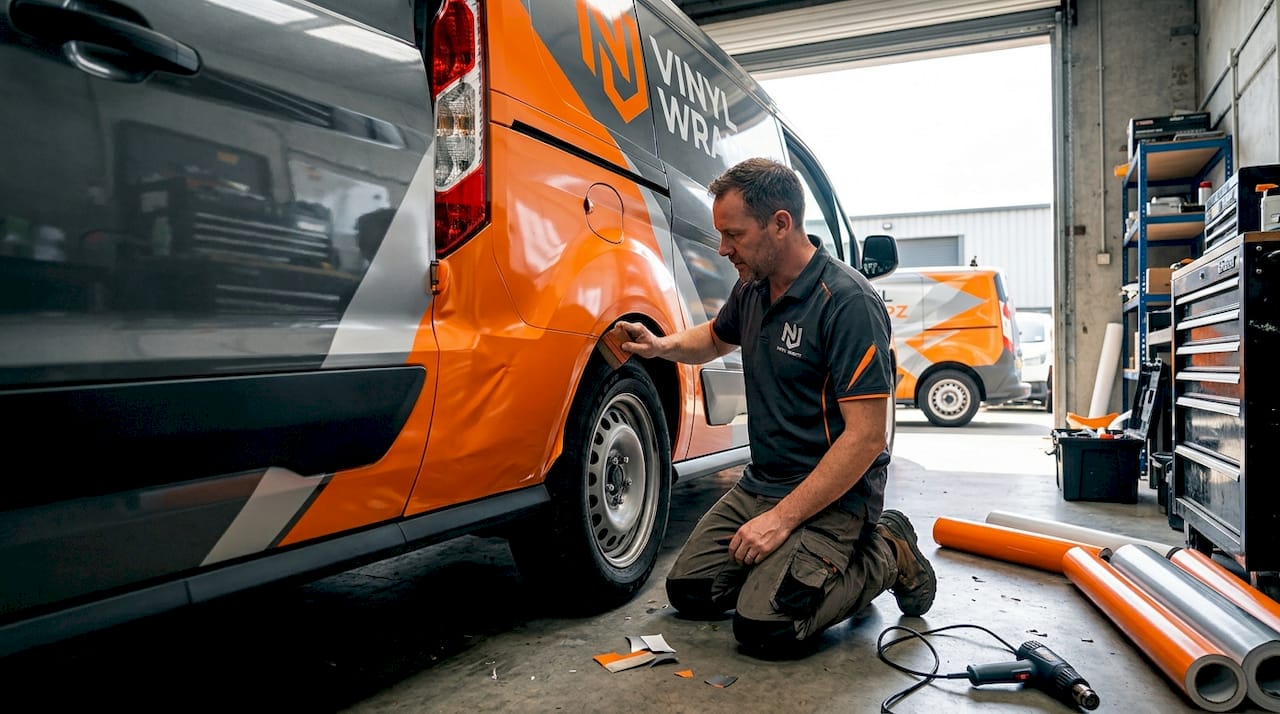
Fleet managers across New Jersey often assume all vinyl wraps are created equal, buying on price and discovering too late that their branded vehicles look faded and peeling within a year. The material behind your wrap is not a minor detail. It determines how long your brand looks sharp on the road, how well it survives New Jersey winters, and whether you spend money replacing wraps every couple of years or every half decade. This guide breaks down exactly what premium vinyl material means, how it compares to standard options, and when it makes sense for your fleet.
Table of Contents
- What is premium vinyl material?
- How premium vinyl compares to standard options
- Advantages of premium vinyl for fleet branding
- Application scenarios: When premium vinyl is the right choice
- Why premium vinyl is underestimated in fleet branding
- Explore premium vinyl solutions for your fleet
- Frequently asked questions
Key Takeaways
| Point | Details |
|---|---|
| Cast vs. calendered vinyl | Cast vinyl is thinner, more stable, and ideal for premium wraps compared to calendered options. |
| Long-term value | Premium vinyl reduces maintenance costs and keeps fleet branding sharp for years. |
| Best for complex surfaces | Premium vinyl is the top choice for vehicles with contours, curves, and high-traffic exposure. |
| ROI on branding | Investing in premium material leads to stronger brand presence and fewer replacements. |
What is premium vinyl material?
Premium vinyl material, in the context of vehicle wraps, refers to a class of film produced through a specific manufacturing method called casting. Understanding how this differs from ordinary vinyl is the foundation for every smart branding decision you make.
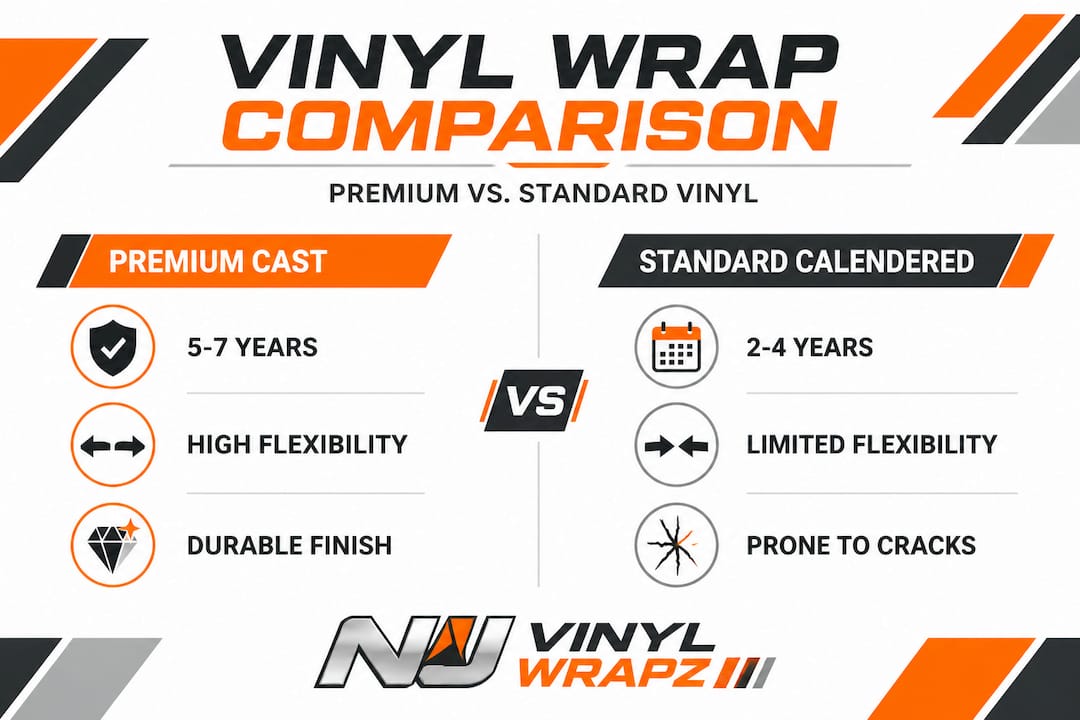
Vinyl wraps fall into two main categories: cast vinyl and calendered vinyl. Cast vinyl is produced by casting liquid vinyl onto a surface and curing it, resulting in a thinner (2-4 mil), more conformable, dimensionally stable material. Calendered vinyl, by contrast, is made by rolling warm vinyl through heavy rollers, which makes it thicker, less flexible, and prone to shrinkage over time. That difference in production creates a very different end product on your fleet vehicles.
Here is what sets premium cast vinyl apart in practical terms:
- Thickness: 2-4 mil, thin enough to conform to curves, rivets, and body lines without lifting or bubbling
- Dimensional stability: Resists shrinking even under heat and UV exposure, so your graphics stay aligned
- Conformability: Stretches without tearing, making it suitable for complex contours on vans, box trucks, and SUVs
- Color retention: Holds vibrant color longer because the pigment is suspended in a stable film matrix
- Adhesive quality: Premium vinyl uses a more advanced adhesive system that bonds cleanly and removes without damaging paint
Pro Tip: Always ask your wrap provider which brand and type of vinyl they use before signing any contract. Trusted names like 3M and Avery use premium cast formulations for their vehicle wrap lines. If a provider cannot name the material, that is a warning sign.
The commercial vinyl services offered by experienced wrap shops will always spec premium cast vinyl for full fleet applications. Anything less is a compromise that shows up visually and financially down the road.
How premium vinyl compares to standard options
Once you know the basics, the comparison between cast and calendered vinyl becomes a clear business decision rather than a technical debate.
The core difference is this: calendered vinyl is designed for flat surfaces and short-term applications. It works fine for window decals or short-lived promotional signage. But the moment you apply it to a curved vehicle surface, expose it to heat cycles, or ask it to last more than two years, it starts showing its limitations. Lifting at edges, fading under direct sunlight, and visible shrinkage that pulls logos out of alignment are all hallmarks of calendered vinyl used in applications it was not built for.
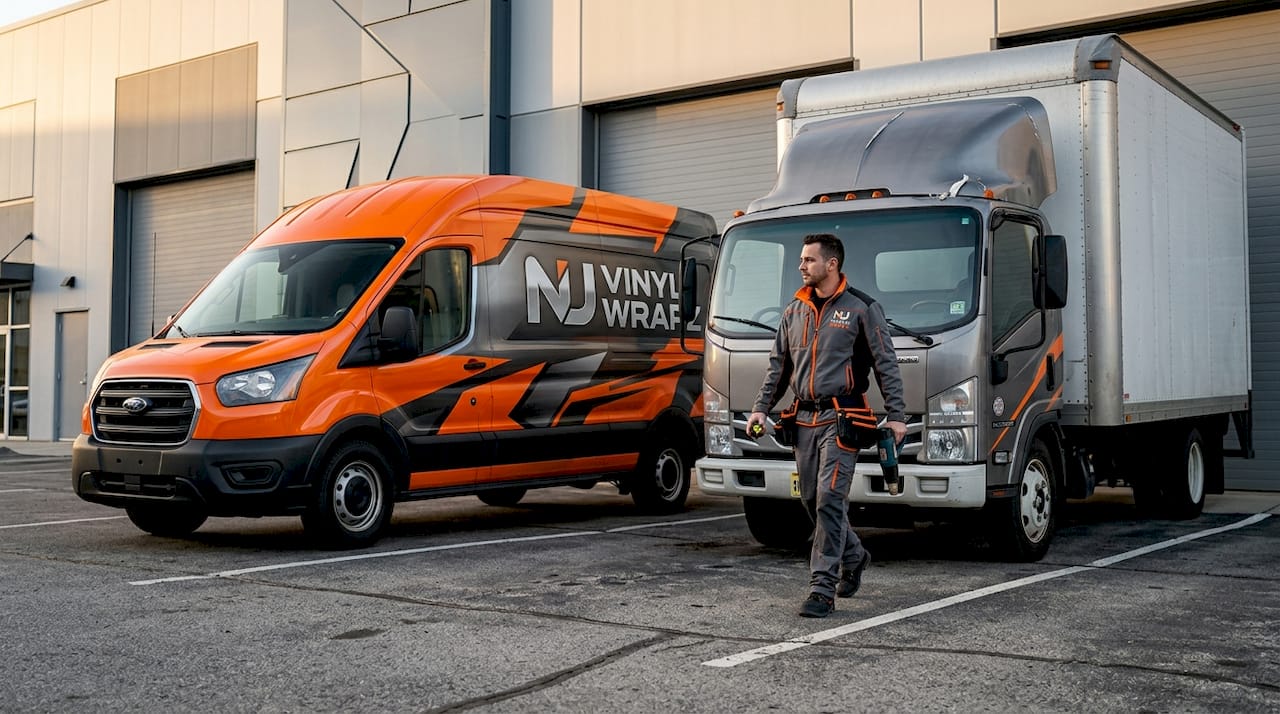
Premium cast vinyl, on the other hand, is engineered for exactly the demands of vehicle wrapping. Because it starts as a liquid and cures into a thin, uniform film, the material remains stable through repeated heating and cooling cycles. It does not remember its original shape the way calendered vinyl does, which means it stays where you put it.
| Feature | Premium cast vinyl | Standard calendered vinyl |
|---|---|---|
| Thickness | 2-4 mil | 4-6 mil or more |
| Conformability | Excellent, wraps curves and recesses | Limited, best on flat surfaces |
| Shrinkage over time | Minimal | Moderate to high |
| Expected lifespan | 5-7 years | 1-3 years |
| Color retention | Excellent under UV | Fades faster |
| Removal | Clean, low adhesive residue | Can leave residue or damage paint |
| Best application | Full vehicle and fleet wraps | Short-term flat surface graphics |
“The material your wrap is printed on is just as important as the design itself. A brilliant graphic on poor vinyl will cost you twice as much in the long run.”
When you look at vehicle wrap options for your fleet, this table should inform your first conversation with any provider. Ask which column their standard offering falls into. The answer tells you everything about the value you are actually getting.
For full vehicle wraps covering entire box trucks or transit vans, the conformability and durability columns are not just nice to have. They are essential. A wrap that shrinks around a door seam or lifts near a wheel arch is not just an aesthetic problem. It becomes a maintenance issue that pulls vehicles off the road.
Advantages of premium vinyl for fleet branding
Moving past the specs, the real question for any fleet manager or business owner is simple: what does premium vinyl actually do for my business? The answer goes well beyond the vehicle surface.
Here are the primary advantages that matter most for commercial applications:
-
Reduced replacement frequency. Premium cast vinyl averages 5-7 years of service life under normal fleet conditions. Standard calendered vinyl rarely survives beyond two years before visible degradation begins. Over a five-vehicle fleet, that difference in replacement frequency translates directly to labor and material savings.
-
Consistent brand presentation. Your fleet is a moving billboard. When each vehicle in your fleet looks sharp, vivid, and identical in color tone, it sends a message about your company’s professionalism. Dimensional stability in cast vinyl ensures that your logo does not drift, your colors do not fade unevenly, and your overall look stays consistent across every vehicle in the fleet.
-
Paint protection. Premium vinyl acts as a physical barrier between your vehicle’s paint and road debris, UV rays, and minor abrasions. When the wrap eventually comes off, the paint underneath is often in better condition than unwrapped areas. This protects the resale value of your fleet vehicles.
-
Superior image quality on complex surfaces. Most commercial vehicles are not flat canvases. Sprinter vans, box trucks, and service vehicles have rivets, handles, bumpers, and body lines that a stiff calendered film simply cannot follow. Premium cast vinyl stretches and conforms, keeping graphics clean and sharp across every surface.
-
Better ROI over a fleet lifecycle. When you divide the cost of a premium wrap by its service life and compare it to two or three calendered wrap replacements, the math almost always favors premium material. This is especially true when you factor in the labor cost of re-wrapping and the time vehicles spend off the road during installation.
Pro Tip: If you are managing a fleet of five or more vehicles, calculate your total cost of ownership rather than your per-vehicle upfront cost. Premium vinyl’s longer service life often makes it the cheaper option over a three-to-five year period.
The fleet wrap services built around premium materials are also a better foundation for specialty finishes. Matte, gloss, satin, chrome effect, and color change vinyl all perform significantly better and look more refined when the base film is a quality cast product.
Application scenarios: When premium vinyl is the right choice
Not every application has the same demands, and being clear about when premium vinyl is essential helps you allocate your budget where it matters most.
| Application type | Recommended vinyl | Key reason |
|---|---|---|
| Full fleet vehicle wraps | Premium cast | Conformability, long service life |
| Partial wraps on curved surfaces | Premium cast | Edge adhesion, clean appearance |
| Flat panel decals, short-term | Calendered | Cost-effective for temporary use |
| Vehicle lettering, long-term | Premium cast | Durability, color stability |
| Color change wraps | Premium cast only | Must conform to entire surface |
| Promotional event graphics | Calendered | Short-term application |
Looking at this table, the pattern is clear. Anytime you are asking vinyl to survive more than two years, conform to non-flat surfaces, or carry your brand image in a high-visibility setting, premium cast material is the right call. The only scenario where standard calendered vinyl makes sense is temporary or flat-surface applications where longevity is not the priority.
There are some specific scenarios where fleet managers often underestimate the need for premium material:
- High-mileage vehicles. A vehicle driving 50,000 miles a year is exposed to more UV, heat, road chemicals, and physical stress than an average car. The conformability and UV resistance of cast vinyl materials pay dividends on these vehicles specifically.
- Vehicles with complex body shapes. Sprinter vans, ambulances, refrigerated trucks, and specialty vehicles have rivets, seams, and compound curves. Only a highly conformable cast film survives these surfaces without lifting.
- Year-round outdoor parking. New Jersey’s climate swings from freezing winters to humid summers. Thermal cycling is hard on adhesives and films. Premium vinyl is formulated to handle this range without cracking or losing bond.
- Fleet vehicles that represent your brand at client sites. If your vehicles park in front of customers regularly, appearance is tied directly to brand perception. A faded, lifting wrap sends exactly the wrong message.
Partial wrap solutions are another area where premium vinyl earns its cost. A partial wrap on a curved panel looks seamless and professional with cast vinyl, and often looks misaligned or raised at the edges with calendered material. The same applies to vehicle lettering services: premium vinyl allows for tighter cuts, cleaner edges, and lettering that stays put through years of car washes and weather.
Why premium vinyl is underestimated in fleet branding
Here is something we see repeatedly: fleet managers with smart business instincts make one blind spot decision when it comes to wraps. They negotiate hard on price, which is completely reasonable, but they negotiate without knowing what they are actually buying. The result is a lower upfront number and a higher total cost.
The uncomfortable reality is that the wrap industry has a spec problem. Most providers will say they use “quality materials.” Few will voluntarily specify whether that means 3M 1080 cast film or a budget import calendered product. The price difference between these two materials can be significant, which creates an incentive for some shops to use lower-grade vinyl while marketing it with high-grade language.
From over a decade of working with commercial fleets across New Jersey, we have seen this pattern consistently. A business owner gets three quotes. They pick the middle quote assuming it represents balanced value. Eighteen months later, the wrap on two vehicles is already showing edge lifting and color shift, while a competitor’s fleet wrapped in premium cast vinyl still looks like it came off the truck yesterday.
The conventional wisdom says “you get what you pay for.” That is too simple. The real lesson is that you get what you specify. If you walk into a quote conversation knowing you want 3M or Avery cast vinyl, dimensionally stable, 2-4 mil thickness, your conversation changes completely. You move from being a buyer who can be upsold or undersold to one who knows exactly what outcome they need.
Our position is that premium vinyl does not just pay for itself in reduced replacements. It pays in brand perception, in vehicle resale value, and in the confidence that every vehicle in your fleet is working for your business every mile it drives. That is the commercial fleet wrap expertise that actually moves businesses forward.
Explore premium vinyl solutions for your fleet
Your fleet vehicles are one of the most visible and constant brand touchpoints your business has. Equipping them with premium materials is not a luxury. It is a practical decision backed by real numbers and real service life.
At NJ Vinyl Wrapz, we use premium cast vinyl from trusted brands like 3M and Avery on every commercial fleet project. Our NJ fleet wrap services include custom design, precision printing, and expert installation in a climate-controlled facility built for consistent results. Whether you need full vehicle wraps for a multi-vehicle fleet or a single branded unit, we spec the right material for the job and stand behind the result. Contact NJ Vinyl Wrapz today to get a quote tailored to your fleet size and branding goals.
Frequently asked questions
What makes vinyl material “premium”?
Premium vinyl is thinner, more conformable, and less prone to shrinking than standard options because it is produced using a casting process rather than a calendering (rolling) process.
How long does premium vinyl last on fleet vehicles?
Premium cast vinyl typically lasts 5-7 years on fleet vehicles, significantly outperforming most calendered products, which begin to degrade within one to three years under similar conditions.
Is premium vinyl worth the extra cost for branding?
For fleets that rely on consistent, long-term visibility, premium vinyl delivers better value by reducing replacement frequency and maintaining vivid branding over multiple years rather than requiring costly re-wraps.
Can premium vinyl be used for partial wraps and lettering?
Yes. Its high conformability and strong adhesive system make it the preferred choice for partial wraps and lettering, where edge adhesion and long-term color stability are especially important.