
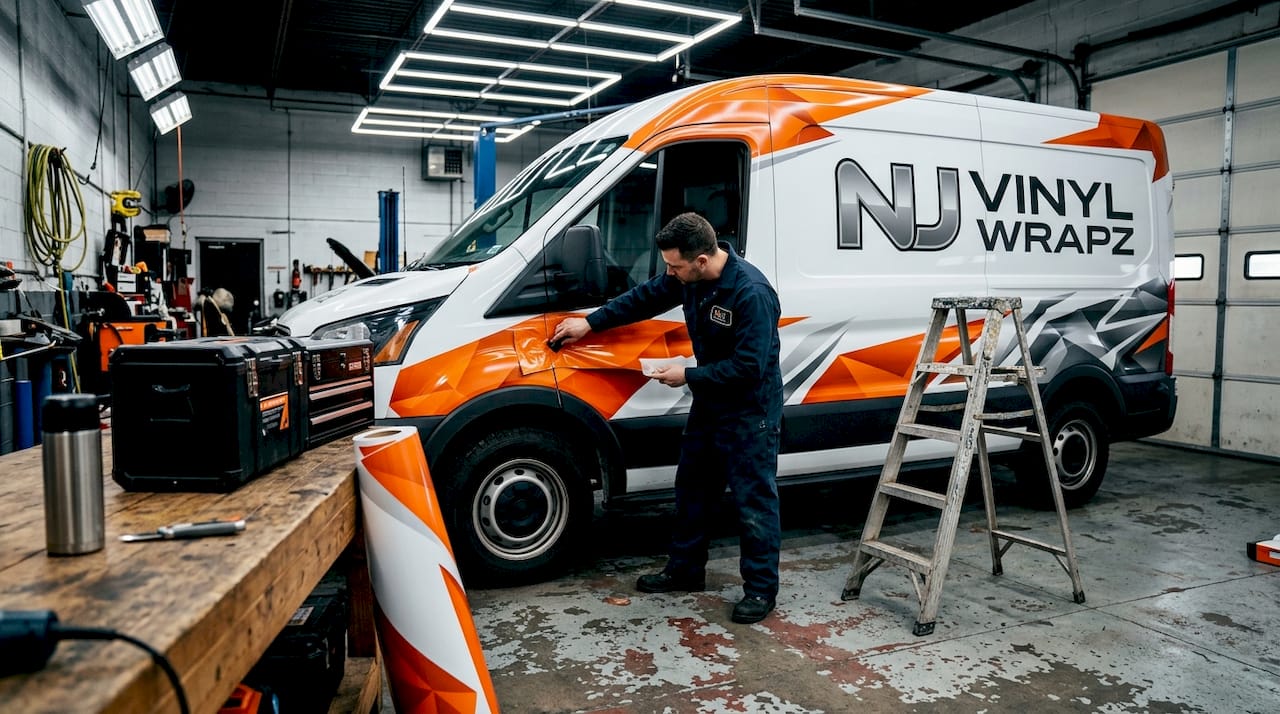
Most business owners assume that a paint job or simple magnetic sign is enough to brand a company vehicle. That assumption costs them thousands of dollars in missed advertising opportunities every single year. Commercial vehicle wraps turn every mile your drivers log into paid media impressions, reaching local customers in ways that billboards and digital ads simply cannot replicate. If you manage a fleet in New Jersey and you haven’t seriously evaluated wraps as a branding strategy, this guide will change how you think about mobile advertising.
Table of Contents
- What are commercial wraps and how do they work?
- Key benefits of commercial wraps for business fleets
- Comparing commercial wraps to other fleet branding options
- Planning and executing a fleet wrap project
- The hidden value of fleet wraps: What most businesses overlook
- Take the next step with NJ Vinyl Wrapz
- Frequently asked questions
Key Takeaways
| Point | Details |
|---|---|
| Cost-effective branding | Commercial wraps turn your fleet into mobile billboards for less than most traditional advertising. |
| Durability and protection | Wraps not only promote your business but also protect your vehicles’ paint and boost resale value. |
| Easy customization | You can update or change wraps for promotions or rebranding without downtime. |
| Professional fleet image | Consistent, high-quality wraps signal reliability and set your business apart from competitors. |
What are commercial wraps and how do they work?
To make an informed decision, you first need to understand what commercial wraps are and what sets them apart from traditional vehicle graphics.
A commercial vehicle wrap is a large-format printed vinyl film applied directly over the exterior of a vehicle. Unlike paint, it’s not permanent. Unlike magnetic signs, it covers the full surface and doesn’t fall off at highway speeds. The vinyl is printed with your brand’s logo, colors, imagery, and contact information, then laminated with a protective clear coat that resists UV fading, scratches, and weathering.
The materials matter enormously. Premium wraps use cast vinyl rather than calendered vinyl. Cast vinyl is thinner, more flexible, and designed to conform to curves, door handles, and body lines without lifting or bubbling. Brands like 3M and Avery manufacture the professional-grade films that certified installers use for commercial applications. These aren’t the cheap films you find at a craft store. They’re engineered specifically for outdoor vehicle use.
Here’s what the application process actually looks like for a commercial wrap:
- Design phase: Your graphics are laid out to match the exact dimensions of each vehicle make and model using specialized software templates.
- Printing: High-resolution digital printers output your design onto the vinyl film, with color profiles optimized for vibrancy and outdoor durability.
- Lamination: A protective overlaminate is applied to seal the print and add UV and abrasion resistance.
- Surface preparation: The vehicle is thoroughly cleaned and decontaminated. Any wax, oil, or debris left on the paint will cause the wrap to lift prematurely.
- Installation: Trained technicians apply the vinyl in a climate-controlled environment. Temperature and humidity directly affect adhesion, which is why professional shops install indoors.
- Trimming and finishing: Edges are carefully trimmed around doors, mirrors, and panels, and heat guns are used to conform the vinyl to compound curves.
As explained on the commercial vinyl services page from NJ Vinyl Wrapz, wraps work across cars, trucks, vans, and specialty vehicles, making them adaptable to virtually any fleet configuration you run.
Pro Tip: Always ask your wrap provider for the specific vinyl brand and product line they use. A shop that can’t tell you whether they’re using 3M 1080 series or Avery Dennison MPI 1105 is likely cutting corners on materials.
Key benefits of commercial wraps for business fleets
With an understanding of what wraps are, let’s explore why they’re a smart investment for branding and business growth.
The most powerful argument for commercial wraps is raw reach. A single wrapped vehicle traveling through the New Jersey metro area can generate between 30,000 and 70,000 visual impressions per day, depending on the route and traffic density. Multiply that by a fleet of 10 vehicles and you’re hitting a potential audience of 300,000 to 700,000 people daily. No email campaign or local radio spot delivers that kind of local saturation.
| Advertising method | Average cost per 1,000 impressions | Targeting capability | Flexibility |
|---|---|---|---|
| Commercial vehicle wrap | $0.35 to $0.70 | Local, route-based | High (removable) |
| Billboard | $2.00 to $8.00 | Fixed location only | Low |
| Local radio ad | $4.00 to $10.00 | Broad demographic | Medium |
| Digital display ad | $2.00 to $5.00 | Behavioral targeting | High |
| Print newspaper ad | $10.00 to $25.00 | Geographic + demographic | Low |
The numbers speak for themselves. Vehicle wraps consistently deliver among the lowest cost-per-impression of any advertising medium. A full wrap on a cargo van might cost $2,500 to $4,000 installed, but that one investment works 24 hours a day for five to seven years. Traditional ads require recurring monthly payments to stay visible.
Beyond advertising, commercial wraps serve your fleet in two additional ways: paint protection and brand consistency. As highlighted by fleet vehicle wraps through NJ Vinyl Wrapz, brand visibility and professionalism are directly tied to how your vehicles appear on the road. A faded, scratched company van undercuts the trust you’ve built with customers. A sharp, consistent wrap across your entire fleet signals that you take your business seriously.
Wraps also physically protect the underlying paint from stone chips, UV damage, and minor abrasions. This matters when your vehicles eventually cycle out of the fleet. Wrapped vehicles tend to retain better vehicle resale value because the original paint is preserved under the vinyl. When you pull the wrap off before resale, buyers see factory-condition paint instead of years of road wear.
Here are the core benefits summarized for fleet managers evaluating the ROI:
- Massive local reach with zero recurring media costs after installation
- Consistent brand image across every vehicle in your fleet
- Paint protection that preserves resale value
- Non-destructive branding that doesn’t void manufacturer warranties
- Reversibility if your branding changes or a vehicle leaves the fleet
Stat to know: A wrapped fleet vehicle generates an estimated 8.4 million impressions over its lifetime, according to industry data from the American Trucking Association.
Comparing commercial wraps to other fleet branding options
Now that you know the key benefits, let’s see how commercial wraps stack up against other fleet branding solutions.
Fleet managers typically consider three options: custom paint jobs, vinyl decal lettering, and full or partial wraps. Each has its place, but the differences in cost, durability, and flexibility are significant.
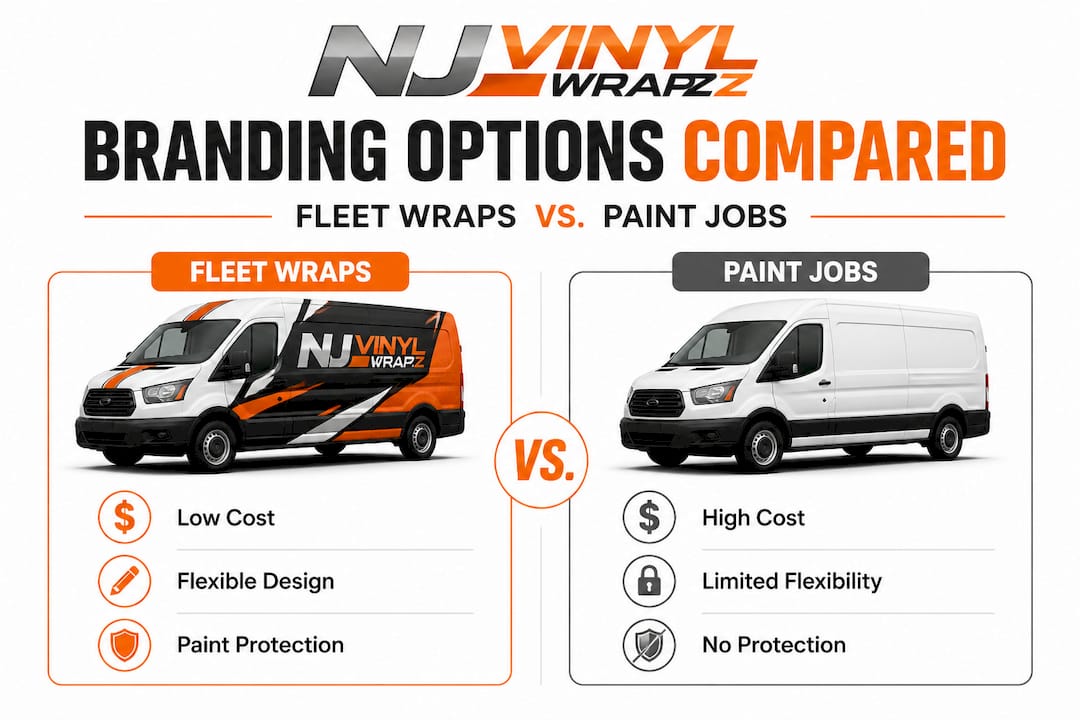
| Branding option | Upfront cost per vehicle | Lifespan | Design flexibility | Reversible | Paint protection |
|---|---|---|---|---|---|
| Custom paint job | $3,000 to $10,000+ | 10+ years | Low once applied | No | No |
| Vinyl lettering/decals | $200 to $800 | 3 to 5 years | Limited | Yes | Minimal |
| Partial wrap | $800 to $2,000 | 5 to 7 years | High | Yes | Partial |
| Full vehicle wrap | $2,500 to $5,000 | 5 to 7 years | Maximum | Yes | Full coverage |
Custom paint looks great on paper until you realize that rebranding means another $5,000 to $10,000 per vehicle. If your logo evolves or you need to update contact information, a painted vehicle becomes a liability. Decal lettering is affordable but limited. You can’t achieve complex background graphics or photographic imagery with cut vinyl letters.
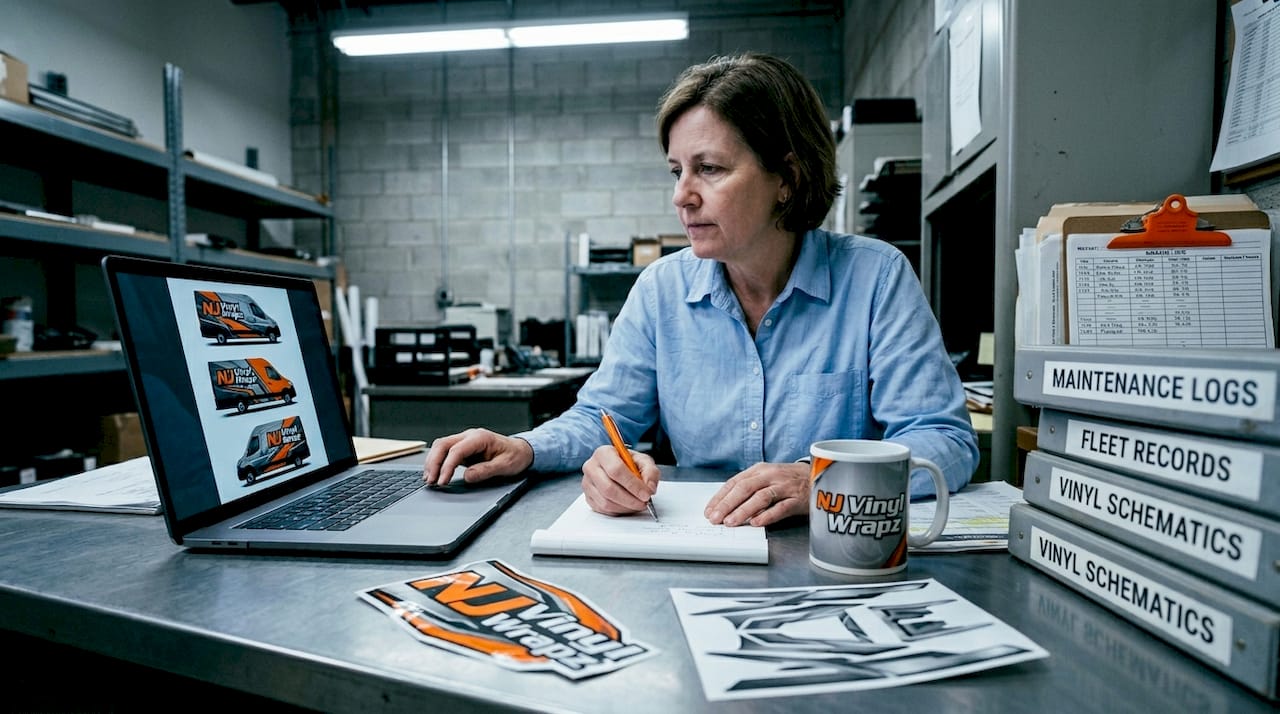
The wrap options available through professional shops now cover everything from basic lettering to photorealistic full coverage. Full vehicle wraps give you a rolling billboard with unlimited design possibilities. Partial wraps cover specific panels like the rear doors or hood, striking a balance between impact and budget.
Use this numbered process to evaluate which branding option fits your situation:
- Calculate your fleet size and vehicle types. Larger, boxier vehicles like cargo vans and box trucks deliver the most visual surface area for wrap designs.
- Define your design complexity. If your brand identity uses gradient colors, photography, or bold patterns, only a wrap can execute that properly.
- Estimate your rebranding timeline. If you expect to update your brand identity within three years, a reversible wrap is far smarter than paint.
- Compare total cost of ownership. Factor in the replacement cost if decals need refreshing every three years versus a wrap lasting seven years.
- Consider your drivers’ routes. High-traffic metro routes like those through Newark, Jersey City, and the Route 1 corridor maximize wrap impressions exponentially.
Pro Tip: If budget is tight, prioritize wrapping your highest-mileage vehicles first. The vehicles that drive the most generate the most impressions, so they deliver the fastest return on your wrap investment.
Planning and executing a fleet wrap project
Once you’ve decided wraps are the right choice, here’s how to ensure your fleet wrap project goes smoothly from start to finish.
A fleet wrap project differs from wrapping a single personal vehicle. You’re coordinating multiple vehicles, maintaining brand consistency across different makes and models, and managing scheduling so your operations don’t grind to a halt while vehicles are in the shop. Proper planning eliminates most problems before they start.
Detailed guidance on fleet wraps from NJ Vinyl Wrapz outlines the core considerations for businesses wrapping multiple vehicles at once. The steps below reflect best practices for fleet managers:
- Audit your current fleet. List every vehicle by make, model, year, and condition. Note any existing damage or previous wraps. Your wrap provider needs this information to quote accurately.
- Define your brand standards. Supply your designer with your official brand style guide, including exact Pantone or CMYK color codes, approved logo files, and font specifications. Inconsistent colors across vehicles undermine the professional effect you’re trying to create.
- Choose wrap type by vehicle role. A customer-facing delivery van warrants a full wrap. A utility vehicle that rarely leaves the job site might justify a partial wrap or lettering only.
- Batch your vehicles strategically. Coordinate with your wrap provider to bring vehicles in batches of two or three so your fleet stays operational throughout the project.
- Review proofs carefully. Request a digital mockup of each unique vehicle type before any vinyl is printed. Catching a layout error at the proof stage costs nothing. Catching it after installation costs you a reprint.
- Establish a maintenance protocol. Train your drivers on proper wash procedures. Automatic car washes with rotating brushes can lift wrap edges over time. Hand washing with mild soap is the recommended standard.
When it comes to managing your fleet effectively, vehicle condition records should include wrap installation dates so you can plan refreshes proactively rather than waiting for visible deterioration.
Pro Tip: Schedule fleet wraps during your slow season or at vehicle rotation time. This eliminates operational disruption and gives you natural checkpoints to refresh branding when vehicles cycle in and out of service.
The hidden value of fleet wraps: What most businesses overlook
Beyond the practical steps, let’s dig into why experienced fleet owners consistently choose wraps for the long haul.
Most cost-benefit analyses focus on impressions and cost-per-click equivalents. Those numbers are compelling, but they miss something deeper. A wrapped fleet does something that no billboard or digital ad can accomplish: it builds trust through physical presence.
When a customer in Hoboken sees your branded van parked at a job site three times in a week, they don’t consciously process it as advertising. They process it as evidence that you’re active in their community. That psychological effect is called the mere-exposure effect. Familiarity breeds trust. And trust is what converts a cold lead into a paying customer without a single sales call.
We’ve also seen something interesting happen with employee culture when companies commit to a wrapped fleet. Drivers take more pride in their vehicles. They park more carefully. They clean up more often. A wrapped vehicle signals that the company invested in its image, and that pride cascades down to the people operating those vehicles. Some businesses even report improved driver behavior and fewer minor incidents after fleet wrapping. That’s an operational benefit worth noting.
There’s also a recruitment angle that almost no one talks about. A professionally branded fleet is a visible signal to job candidates that the company is established, organized, and takes its brand seriously. In competitive trades like HVAC, plumbing, or electrical contracting, attracting skilled technicians is a constant challenge. A sharp, consistent fleet appearance tells candidates this is a company worth joining.
Finally, consider the compounding nature of wrap returns. In year one, your wrapped fleet generates millions of impressions. In year two, those same impressions continue at zero additional cost. By year five, you’ve generated an audience reach that would have cost hundreds of thousands of dollars through traditional paid media. Meanwhile, the full vehicle wraps are still looking sharp, still protecting your paint, and still working for you every time a driver pulls out of the shop. That compounding return is what makes wraps fundamentally different from every other advertising medium.
Take the next step with NJ Vinyl Wrapz
If you’re ready to turn your fleet into a high-performing mobile advertising asset, the process starts with an expert consultation rather than a guesswork quote.
NJ Vinyl Wrapz has been wrapping commercial fleets across New Jersey for over 10 years. From single vans to multi-vehicle projects, every job is handled in a climate-controlled facility using premium 3M and Avery materials. You’ll work with an experienced design team to create brand-consistent graphics across every vehicle type in your fleet. Whether you need full vehicle wraps, targeted fleet wraps, or want to explore wrap options across different coverage levels and budgets, NJ Vinyl Wrapz offers end-to-end service from design through installation. Reach out today to request a fleet quote and get a realistic timeline for transforming your vehicles into branded assets that work every day.
Frequently asked questions
How long do commercial wraps last on business vehicles?
High-quality commercial vehicle wraps typically last 5 to 7 years with proper care before showing major signs of wear.
Do fleet wraps damage the original paint?
No, professionally installed wraps protect the original paint and can often be removed without damage, which helps preserve the vehicle’s resale value when the vehicles sell.
How much does it cost to wrap an entire fleet?
Fleet wrap pricing varies by vehicle size, wrap type, and quantity, and many providers including NJ Vinyl Wrapz fleet services offer discounts for multi-vehicle projects.
Can I wrap only certain parts of my company vehicles?
Yes, partial wraps and lettering are popular cost-effective alternatives to full wraps, giving you flexible branding at a lower per-vehicle investment.
What maintenance is required for wrapped fleet vehicles?
Regular handwashing with mild soap and avoiding abrasive cleaners will help your commercial wraps retain their color and finish throughout their full lifespan.