

Upgrading business vehicles is defined as the deliberate process of improving fleet performance, branding, safety, and cost efficiency through technology, exterior enhancements, interior upfitting, and financial planning. The most effective ways to upgrade business vehicles in 2026 combine telematics, professional vehicle wraps, standardized upfitting, and tax-advantaged purchasing decisions. Fleet managers who treat upgrades as a system rather than a checklist consistently outperform those who address one problem at a time. This article breaks down ten proven strategies that deliver measurable returns across fleets of every size.
1. Install telematics for real-time fleet visibility
Telematics is the single highest-ROI technology upgrade available to fleet operators today. Connected fleet technology and AI improve safety and efficiency by enabling real-time alerts, driver behavior monitoring, and predictive maintenance. For a fleet of 20 vehicles, that translates directly into fewer accidents, lower fuel bills, and less unplanned downtime.
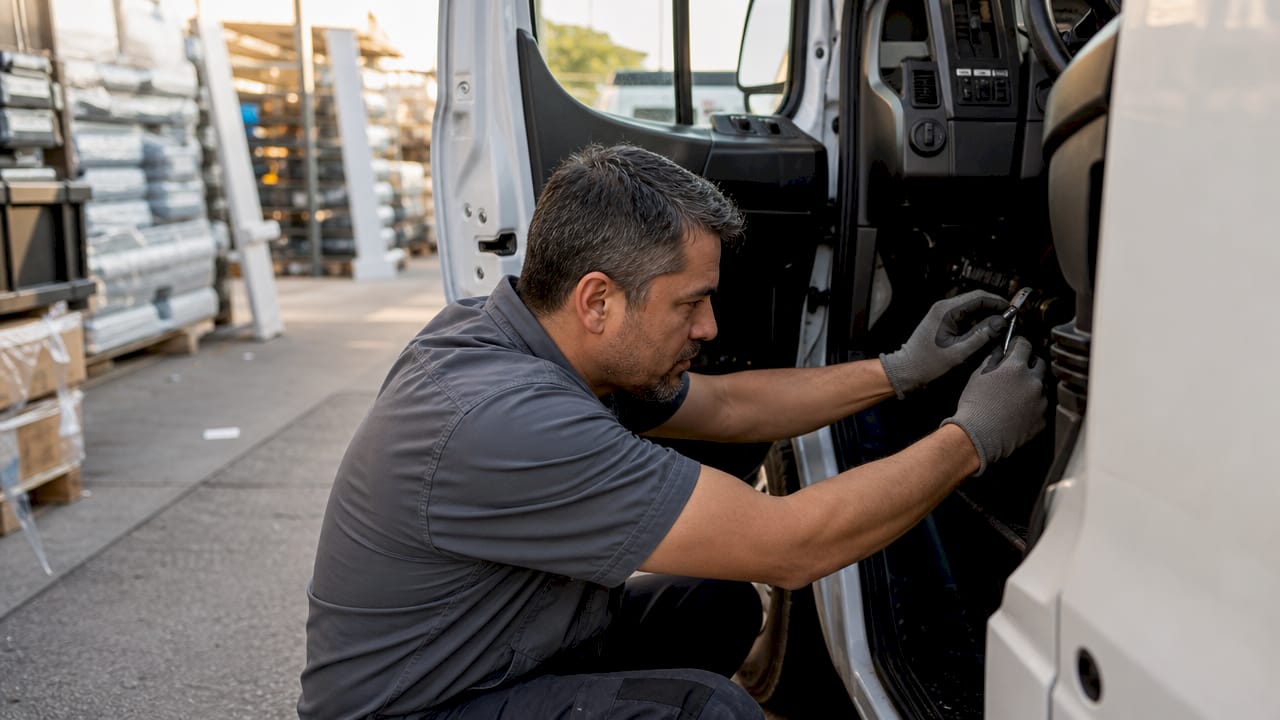
The financial case is equally strong. Telematics programs can cut insurance premiums by 8 to 15% within the first year by improving driving behavior and supplying video evidence during claims. That reduction alone often covers the cost of the hardware within 12 months.
Key telematics capabilities worth prioritizing:
- Real-time GPS tracking for route optimization and theft recovery
- Driver behavior scoring to reduce harsh braking, speeding, and idling
- Predictive maintenance alerts based on engine diagnostics and mileage thresholds
- Video telematics for incident documentation and driver coaching
Pro Tip: Video telematics reduces claim settlement time by up to 50%, cutting legal fees and protecting drivers from fraudulent claims. Prioritize cameras at the front and rear of every vehicle.
2. Wrap your fleet for mobile brand advertising
Vehicle wraps are defined as large-format vinyl graphics applied to the exterior of a vehicle to display branding, contact information, and promotional messaging. A professionally wrapped fleet vehicle generates an estimated 30,000 to 70,000 daily brand impressions in urban areas. No billboard, social media ad, or print campaign delivers that reach at a comparable cost per impression.
Full wraps using 3M or Avery vinyl materials last five to seven years with proper care, while also protecting the factory paint underneath. Partial wraps and lettering offer a lower entry cost for smaller fleets without sacrificing professional appearance. The key differentiator between a wrap that looks sharp after three years and one that peels after eighteen months is installation quality and the facility where it is applied.
| Wrap type | Best for | Approximate lifespan |
|---|---|---|
| Full wrap | Maximum brand coverage, paint protection | 5 to 7 years |
| Partial wrap | Budget-conscious fleets, accent branding | 3 to 5 years |
| Lettering and decals | Minimal branding, regulatory compliance | 3 to 5 years |
Pro Tip: Climate-controlled installation facilities prevent vinyl from contracting or expanding during application, which is the leading cause of premature edge lifting. Always confirm your installer works in a temperature-regulated shop.
For fleet vehicle customization ideas that go beyond basic lettering, combining full wraps with window graphics and roof panels creates a 360-degree brand presence that competitors rarely match.
3. Standardize upfit specifications across the fleet
Upfitting refers to the process of configuring a vehicle’s interior with shelving, partitions, power management systems, and job-specific equipment after purchase. Standardizing upfit specifications reduces install time and eliminates the productivity loss caused by technicians relearning different configurations across vehicle models. One fleet manager overseeing 5,000 vehicles found that a patchwork of non-standard upfits created constant retraining costs and slowed deployment by weeks.
The practical rule is an 80/20 split: 80% of the upfit should be standardized across all vehicles, with 20% reserved for role-specific customization. This approach protects resale value because buyers can predict what they are purchasing, while still allowing field teams to get the tools they need.
Upfit components that deliver the strongest operational return:
- Ergonomic shelving and drawer systems to reduce time spent searching for tools
- Bulkhead partitions to protect drivers and cargo during sudden stops
- LED interior and exterior lighting for safety during early morning or late-night operations
- Auxiliary power inverters and secondary batteries to prevent dead-battery downtime
Pro Tip: Pre-installing auxiliary power management equipment like inverters and extra batteries during the upfit stage prevents one of the most common causes of driver disruption in the field.
4. Pre-install telematics during the upfit process
The timing of telematics installation matters as much as the technology itself. Installing telematics during the upfit process saves 4 to 6 hours of labor per vehicle and allows data collection to begin the moment the vehicle enters service. For a fleet of 50 vehicles, that is 200 to 300 hours of avoided labor costs before a single mile is driven.
Retrofitting telematics after deployment requires taking vehicles out of rotation, scheduling technician time, and often re-routing wiring that was not designed with the hardware in mind. Pre-installation eliminates all three problems. It also means drivers never experience a period without monitoring, which matters for insurance documentation from day one.
5. Deploy AI-driven predictive maintenance programs
Predictive maintenance stands out as the most compelling use case for connected vehicle intelligence, and it is the upgrade most fleet managers underutilize. Traditional maintenance schedules are time-based. Predictive maintenance is condition-based, meaning the system flags a component for service when sensor data indicates it is approaching failure rather than waiting for a calendar date.
AI analyzes vehicle and driver data in real time to provide driver alerts and optimize routes, reducing fuel consumption alongside mechanical failures. The practical outcome is fewer roadside breakdowns, lower repair costs, and longer vehicle lifespans. Platforms like Samsara, Verizon Connect, and Motive all offer predictive maintenance modules that integrate directly with OEM diagnostic systems.
6. Add paint protection film and ceramic coatings
Paint protection film (PPF) and ceramic coatings are vehicle enhancement ideas that protect the exterior finish while maintaining a professional appearance throughout the vehicle’s service life. PPF is a clear urethane film applied to high-impact areas like the hood, bumper, and side mirrors. Ceramic coatings bond to the paint at a molecular level, creating a hydrophobic surface that repels dirt, road salt, and UV damage.
For fleets operating in the Northeast, where road salt is applied from November through March, these protective coating services extend the time between detail services and reduce long-term paint degradation costs. A vehicle that looks clean and professional after three years of service reflects directly on the business operating it.
7. Upgrade driver safety technology
Advanced driver assistance systems (ADAS) represent one of the fastest-growing categories of business transportation upgrades. Features like automatic emergency braking, lane departure warnings, and blind-spot monitoring are now available as aftermarket additions for vehicles that did not include them from the factory. Mobileye, for example, offers retrofit collision avoidance systems that work across most commercial vehicle platforms.
Combining ADAS with a company vehicle maintenance checklist creates a complete safety framework. Technology prevents accidents in real time, while scheduled maintenance prevents mechanical failures that create dangerous situations. Together, they reduce total cost of risk more effectively than either approach alone.
8. Leverage Section 179 and bonus depreciation
The financial structure of vehicle upgrades matters as much as the upgrades themselves. Section 179 expensing for 2026 allows businesses to deduct up to $2,560,000 in qualifying equipment and vehicle purchases, with a phaseout beginning above $4,090,000. SUVs are subject to a separate cap of $32,000 under Section 179. This means a business purchasing a work van, upfitting it with shelving and telematics, and wrapping it can potentially deduct the full cost in the year of purchase.
Combining Section 179 with 100% bonus depreciation on qualified property further accelerates the tax benefit. The federal EV charging equipment credit expires June 30, 2026, making infrastructure investment a time-sensitive decision for fleets moving toward electrification. Work with a tax advisor who specializes in fleet assets to confirm eligibility before the deadline.
| Incentive | 2026 limit | Key condition |
|---|---|---|
| Section 179 deduction | Up to $2,560,000 | Business use requirement applies |
| SUV Section 179 cap | $32,000 | Applies to SUVs over 6,000 lbs |
| Bonus depreciation | 100% on qualified property | Must be new or first-use property |
| EV charging credit | Expires June 30, 2026 | Requires timely infrastructure planning |
9. Use window tinting for comfort and energy efficiency
Commercial window tinting reduces cabin heat by blocking solar energy, which cuts air conditioning load and fuel consumption on routes with significant idle time. For service vehicles that spend hours parked at job sites with the engine running to power equipment, this is a direct operating cost reduction. 3M and Llumar both manufacture commercial-grade films rated for high-heat rejection without compromising visibility.
Window tinting also adds a layer of privacy for vehicles carrying tools or equipment, reducing smash-and-grab theft. In states like New Jersey, commercial vehicles are subject to specific tint regulations, so confirming legal limits before installation protects the business from compliance fines.
10. Electrify strategically with clear procurement goals
Fleet electrification is not a single upgrade. It is a procurement and infrastructure strategy that requires planning before the first EV is purchased. Successful EV adoption requires setting clear procurement and infrastructure goals ahead of vehicle acquisitions, including charging station placement, grid capacity, and driver training. Fleets that skip this step often find their EVs sitting idle because charging infrastructure was not ready.
The strongest starting point is identifying routes under 150 miles per day and replacing those vehicles first. Ford Pro, Ram, and Chevy all offer commercial EVs with upfit-ready configurations. Pairing early EV adoption with the expiring federal charging credit maximizes the financial return on the transition.
Key takeaways
The most effective ways to upgrade business vehicles combine technology, branding, upfitting, and financial planning into a single coordinated strategy rather than isolated purchases.
| Point | Details |
|---|---|
| Telematics delivers dual ROI | Real-time tracking cuts fuel costs while reducing insurance premiums by 8 to 15%. |
| Wraps generate mass brand exposure | A wrapped vehicle produces up to 70,000 daily impressions in urban markets. |
| Upfit standardization saves labor | An 80/20 standard-to-custom ratio reduces install time and protects resale value. |
| Pre-install during upfit | Installing telematics at upfit saves 4 to 6 hours of labor per vehicle. |
| Tax incentives expire | The federal EV charging credit ends June 30, 2026, requiring immediate planning. |
What I’ve learned from watching fleets get upgrades wrong
Most fleet managers I work with approach upgrades reactively. A vehicle breaks down, so they add a maintenance app. A driver gets in an accident, so they install a dashcam. That approach costs more and delivers less than planning upgrades as a system from the moment a vehicle is acquired.
The fleets that get the best results treat the upfit stage as the single best window to install everything at once: telematics, power management, shelving, and branding. Once a vehicle is in rotation, every upgrade requires pulling it out of service. That downtime has a real cost that most operators never calculate.
I also see businesses underestimate the branding value of a wrapped fleet. A wrapped van driving 100 miles a day through New Jersey is not just a work vehicle. It is a moving advertisement that reaches neighborhoods, job sites, and highways simultaneously. The commercial wrapping advantages go well beyond aesthetics. They include paint protection, consistent brand presentation, and the kind of professional credibility that wins contracts before a salesperson ever makes a call.
The one thing I would tell every fleet manager reading this: do not treat the Section 179 deduction as a bonus. Build it into your acquisition budget from the start. The tax savings on a fully upfitted and wrapped vehicle can fund the next vehicle in the rotation.
— Krunal
Transform your fleet with Njvinylwrapz
Njvinylwrapz has spent over 10 years wrapping commercial fleets across New Jersey, using 3M and Avery materials installed in climate-controlled facilities by licensed professionals. Whether you need a single van lettered or a 50-vehicle fleet fully wrapped, the process starts with a custom design that reflects your brand and ends with a result built to last five to seven years on the road.
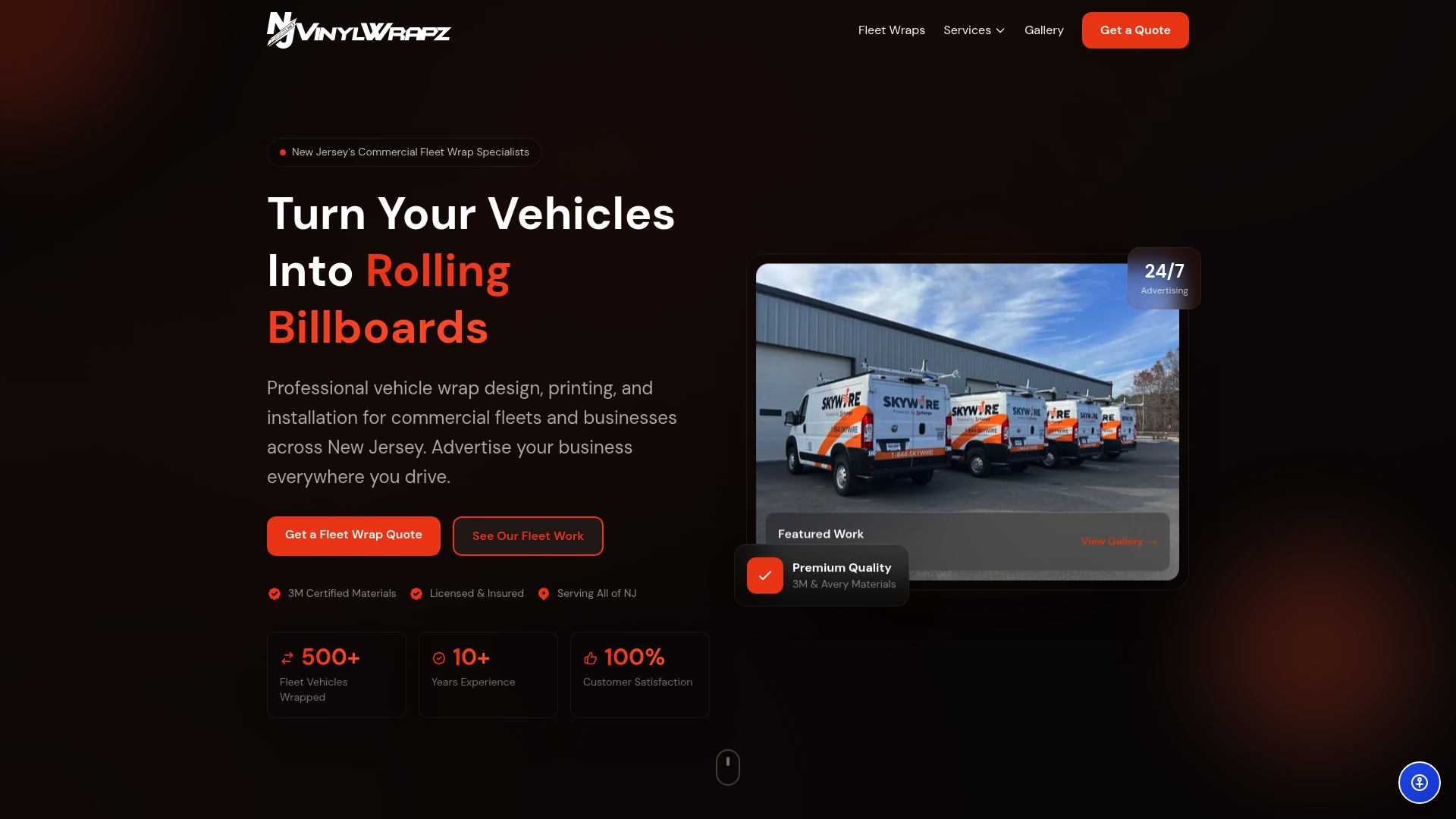
From full vehicle wraps to partial graphics and lettering, Njvinylwrapz offers every wrap option your fleet requires. Contact the team today for a consultation and a fast-turnaround quote that fits your schedule and your budget.
FAQ
How much do vehicle wraps cost for a business fleet?
Full vehicle wraps for commercial fleets typically range from $2,500 to $5,000 per vehicle depending on size, complexity, and material quality. Partial wraps and lettering packages start lower and still deliver strong brand visibility.
What is the fastest ROI upgrade for a commercial fleet?
Telematics delivers the fastest measurable return, with insurance premium reductions of 8 to 15% achievable within the first year alongside fuel savings from route optimization.
Can I deduct vehicle upgrades on my business taxes?
Section 179 allows businesses to deduct up to $2,560,000 in qualifying vehicle and equipment purchases in 2026, with SUVs subject to a $32,000 cap. Consult a tax professional to confirm eligibility based on business-use percentage.
How long does a professional vehicle wrap last?
A professionally installed full wrap using 3M or Avery vinyl lasts five to seven years with regular washing and UV protection. Improper installation or outdoor storage in extreme conditions shortens that lifespan significantly.
When should telematics be installed on fleet vehicles?
The optimal time is during the professional upfit process before the vehicle enters service. Pre-installation saves 4 to 6 hours of labor per vehicle and allows data collection to begin immediately on day one.
Recommended
- Top Fleet Vehicle Customization Ideas for Standout Branding | NJ Vinyl Wrapz
- Signage Options for Fleets: A 2026 Manager’s Guide | NJ Vinyl Wrapz
- Automotive Services NJ | Window Tint, PPF, Ceramic Coating | NJ Vinyl Wrapz | NJ Vinyl Wrapz
- NJ Vinyl Wrapz | Commercial & Fleet Vehicle Wraps in New Jersey