
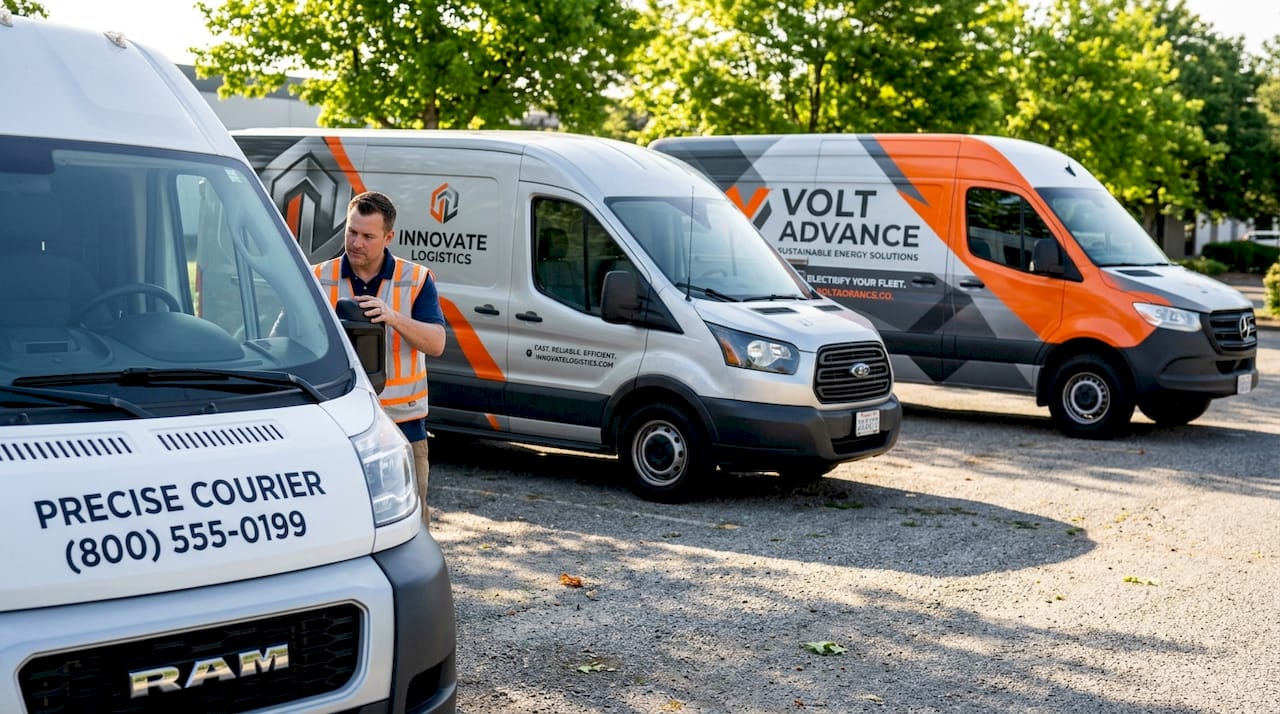
Your fleet is moving through neighborhoods, highways, and job sites every single day. Whether you manage 5 vans or 50 trucks, the question of which signage options for fleets will deliver the best return on your branding investment is one of the most practical decisions you face. Get it wrong and you’re dealing with peeling decals, compliance fines, or a mismatched look across vehicles that undermines your credibility before anyone even answers the door. This guide breaks down every major option, from basic vinyl lettering to full wraps, so you can make a decision grounded in real costs, real durability, and real marketing impact.
Table of Contents
- Key takeaways
- 1. Vinyl lettering and decals
- 2. Partial vehicle wraps and spot graphics
- 3. Full vehicle wraps for maximum brand impact
- 4. Magnetic signs and removable signage solutions
- 5. Custom fleet graphics and specialty vinyl options
- 6. Comparing your signage options side by side
- My honest take on choosing fleet signage
- Ready to brand your fleet the right way?
- FAQ
Key takeaways
| Point | Details |
|---|---|
| Full wraps offer the best ROI | Fleet wraps turn vehicles into mobile billboards with thousands of daily impressions at a low cost per exposure. |
| Compliance is non-negotiable | DOT requires permanent, legible company markings at least 2 inches tall, readable from 50 feet, on both sides of commercial vehicles. |
| Material quality drives lifespan | Cast vinyl lasts 5 to 7 years on active fleet vehicles; cheaper calendared vinyl degrades faster under daily use. |
| Magnetic signs fill a specific gap | Removable magnetic signs work well for leased vehicles or short-term campaigns but are not suited for high-speed or all-weather use. |
| UV laminate protects your investment | Applying a UV-protective laminate blocks 93% of harmful rays and significantly extends wrap life and color consistency. |
1. Vinyl lettering and decals
Vinyl lettering is where most fleets start. It covers your business name, phone number, logo, and essential contact details applied directly to the vehicle surface. No full coverage, no elaborate graphics. Just clean, professional text and basic shapes cut from adhesive vinyl film.
The cost is the obvious draw. Vinyl lettering runs $200 to $500 per vehicle, making it by far the most affordable entry point for fleet branding. For a small operation trying to get professional-looking vehicles without a major upfront spend, that price range is hard to argue with.
What you give up is impact. Vinyl lettering is economical but limited in visibility compared to wraps. When your van is parked two blocks away or moving at 40 miles per hour, simple white letters on a white vehicle are not going to stop anyone. It works best when:
- Your vehicles are a solid, contrasting color already
- Your branding is simple and text-forward
- You need to brand a large fleet on a tight budget
- Regulatory compliance lettering is the primary goal
Pro Tip: High-contrast, large sans-serif fonts dramatically improve readability on moving vehicles. Avoid script fonts or thin typefaces that blur at speed.
Vinyl decals add one more layer. Instead of just cut letters, you can apply printed die-cut shapes, logos in full color, and custom graphics in isolated spots. This gives you more design flexibility without committing to a partial or full wrap. Durability is solid for both options when quality film is used, typically holding up 3 to 5 years with proper care.
2. Partial vehicle wraps and spot graphics
A partial wrap covers a defined section of the vehicle, typically the rear, the lower half of the body panels, or the cab doors. It is the middle-ground option in fleet vehicle advertising, and it hits a sweet spot for fleets that want significantly more visual presence than lettering but are not ready to invest in full coverage.
Partial wraps generally fall in the $800 to $2,000 per vehicle range depending on how much of the surface is covered, the complexity of the design, and whether the installer needs to work around rivets or body curves. Quantity pricing for fleets of 5 or more vehicles typically brings that per-unit cost down.
The key advantages of partial wraps include:
- Larger graphic area for logos, imagery, and brand messaging
- Better visibility from a distance compared to lettering alone
- More design options with color blocking, photography, and custom graphics
- Protection for the wrapped portions of the vehicle’s original paint
- Lower cost than full wraps while still delivering a professional look
For fleets with naturally dark or white vehicles, a partial wrap can create a bold contrast that is far more attention-grabbing than a fully wrapped van might be. Delivery companies, real estate firms, and service contractors often find this format works well because it signals professionalism without the cost of full coverage. The unwrapped portions of the vehicle should still be a color that complements the wrap design, so coordinate that when ordering new fleet vehicles if possible.
3. Full vehicle wraps for maximum brand impact
A full wrap covers the entire exterior surface of the vehicle. Hood, roof, doors, bumpers, all of it becomes part of a continuous graphic design. This is where fleet branding solutions go from professional to genuinely impressive.
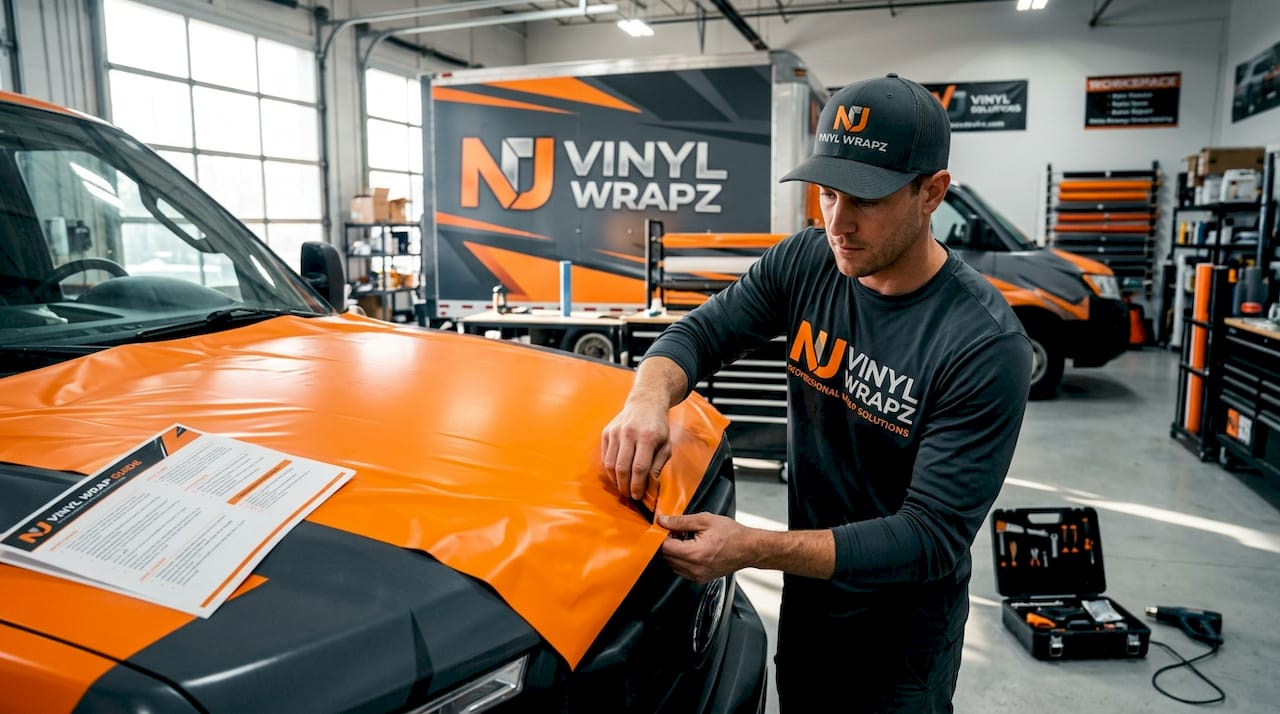
The price reflects that scope. Full wraps typically range from $2,500 to $4,500 per vehicle, with meaningful quantity discounts available when you are wrapping five or more units. For fleets where vehicles are the primary public-facing touchpoint, this investment pays off through raw exposure. Fleet wraps generate thousands of daily impressions at a fraction of the cost-per-impression of traditional advertising.
Material choice is what separates a wrap that holds up for years from one that starts peeling within 18 months. Cast vinyl lasts 5 to 7 years and conforms to complex curves, rivets, and compound surfaces without pulling away from edges. Calendared vinyl is cheaper but prone to shrinkage and lifting on anything other than flat panels. On an active commercial fleet, cast vinyl is the only material worth specifying.
| Specification | Cast vinyl | Calendared vinyl |
|---|---|---|
| Lifespan | 5 to 7 years | 2 to 3 years |
| Conformability | Excellent on curves and rivets | Flat surfaces only |
| Shrinkage | Minimal | Moderate to high |
| Best use | Daily fleet vehicles | Short-term or flat applications |
| Cost | Higher | Lower |
Pro Tip: UV-protective laminate blocks 93% of harmful rays and is one of the highest-leverage upgrades you can add to a full fleet wrap. It extends lifespan, preserves color vibrancy, and protects the underlying vehicle paint.
Full wraps also make compliance lettering integration straightforward. Your designer can incorporate DOT-required markings directly into the graphic layout so they meet the 2-inch minimum letter height and 50-foot readability requirement without looking like an afterthought.
4. Magnetic signs and removable signage solutions
Magnetic signs attach to vehicle doors or panels using a magnetized backing, and they come off as easily as they go on. That flexibility is their entire value proposition, and it serves a specific subset of fleet situations very well.
The most common use case is leased vehicles. When you don’t own the vehicle long-term, permanent adhesive graphics are not an option. Magnetic vehicle signs give leased fleet operators branded visibility without violating lease terms. The same logic applies to multi-brand fleets where a single vehicle needs to represent different business units on different days.
What you need to understand before going the magnetic route:
- Signs must be removed at highway speeds to avoid detachment and road hazard risks
- Rain, mud, and humidity can trap moisture beneath the magnet and damage vehicle paint over time
- Storage requires flat surfaces to prevent warping that degrades magnet adhesion
- They are not suited for vehicles that operate primarily at night or in severe weather
- Replacement cycles are more frequent than adhesive-based options
For short-term campaigns, seasonal branding, or situations where vehicles serve mixed-use purposes, magnetic signs are genuinely practical. But if your fleet operates full-time under your brand, they are a temporary solution masquerading as a long-term strategy. The per-impression cost and brand consistency simply cannot match even partial adhesive graphics.
5. Custom fleet graphics and specialty vinyl options
Beyond the core signage categories, custom fleet graphics open up design possibilities that go well beyond slapping a logo on a door panel. This is where best-in-class fleet operators differentiate themselves.
Reflective vinyl is one specialty option that every fleet manager running vehicles in low-light conditions should know about. Reflective vinyl increases visibility at night, which matters enormously for delivery fleets, municipal operations, and emergency vehicles. Reflective grade films come in multiple grades, and the higher-end options meet NFPA and FMVSS standards for emergency fleet marking. If your operation runs through early mornings, evenings, or in low-visibility weather, building reflective elements into your custom fleet graphics is not optional. It is a safety decision.
Modular design systems are another tool the larger fleet operators use. Rather than designing unique graphics for each vehicle model in the fleet, a modular fleet design creates a consistent visual framework that scales across vans, box trucks, and sedans without losing brand coherence. This simplifies production, reduces design costs per unit, and ensures that every vehicle looks like it belongs to the same family regardless of size.
Window graphics and perforated vinyl are worth considering for vehicles with significant glass surface area. From outside the vehicle, you see a solid image. From inside, the driver retains full outward visibility. Box trucks and cargo vans can take particular advantage of rear window graphics to turn otherwise wasted surface area into advertising space.
6. Comparing your signage options side by side
When you need to make a decision across a fleet of mixed vehicle types and business needs, a direct comparison cuts through the noise fast.
| Signage type | Cost per vehicle | Lifespan | Brand visibility | Compliance-ready |
|---|---|---|---|---|
| Vinyl lettering | $200 to $500 | 3 to 5 years | Basic | Yes, with proper sizing |
| Partial wrap | $800 to $2,000 | 4 to 6 years | Moderate to strong | Yes |
| Full wrap | $2,500 to $4,500 | 5 to 7 years | Maximum | Yes, integrated design |
| Magnetic signs | $75 to $250 | 1 to 3 years | Limited | Not DOT-compliant |
Fleet size is also a real factor in your decision. Fleets of 5 or more vehicles typically qualify for quantity pricing, which shifts the per-unit economics of wraps significantly. A full wrap at $4,500 for one vehicle might drop to $3,200 per unit when you are wrapping 10 vehicles at once.
Pro Tip: DOT compliance lettering must appear on both sides of every commercial vehicle, at minimum 2-inch letter height, readable from 50 feet. Build this into every signage design from the start, not as a last-minute addition.
Maintenance habits also determine real-world lifespan. Periodic cleaning and inspection of wraps and decals prolong their life and keep brand presentation consistent. A wrap that looks sharp at month 12 but is lifting at the edges by month 24 reflects poorly on the brand it is supposed to promote. Train your drivers and maintenance crew on proper washing techniques, particularly avoiding pressure washing at close range on wrapped surfaces.
My honest take on choosing fleet signage
I’ve worked with enough fleet managers over the years to notice a consistent pattern. The ones who choose signage based only on upfront cost almost always come back frustrated within two years. The math looks different when you factor in a partial wrap peeling off a vehicle that sits in a hot parking lot all summer because the installer used calendared vinyl.
What I’ve seen work best is treating the signage decision like an infrastructure investment rather than a marketing line item. If your vehicles are on the road 5 days a week and represent your brand in front of thousands of people daily, the difference between $200 vinyl lettering and a $2,500 full wrap isn’t $2,300. It’s the difference between a vehicle that whispers your name and one that makes people pull out their phone to look you up.
The other thing I’ve seen overlooked constantly is installer expertise. A premium cast vinyl wrap installed poorly will fail faster than a mid-grade product put on correctly. Climate-controlled installation environments, professional surface preparation, and experienced installers who know how to handle rivets, seams, and curves all matter more than most fleet managers realize until they’ve already had one expensive disappointment.
Protecting your wrap investment after installation is the other half of the equation. I’ve seen fleets extend wrap life well beyond the typical range simply through disciplined washing, storage habits, and annual inspections that catch lifting edges before they become full panel failures.
— Krunal
Ready to brand your fleet the right way?
If you’ve worked through this comparison and realize your fleet deserves more than basic lettering, Njvinylwrapz is built exactly for this. With over 10 years of experience, climate-controlled installation facilities, and partnerships with 3M and Avery materials, Njvinylwrapz handles everything from design to installation for fleets of any size.
Whether you’re looking at vehicle lettering or partial wraps, or you’re ready to go all-in with a full fleet transformation, the team at Njvinylwrapz delivers consistent, DOT-compliant, visually sharp results across every vehicle in your fleet. Commercial fleets across New Jersey trust Njvinylwrapz for fast turnaround, scalable pricing, and graphics that hold up through real-world conditions. Reach out today through the fleet wrap service page to get a custom quote for your fleet.
FAQ
What are the most cost-effective signage options for fleets?
Vinyl lettering is the most affordable option at $200 to $500 per vehicle, but partial wraps at $800 to $2,000 offer a much stronger return in brand visibility for fleets that can stretch the budget slightly further.
How long do fleet vehicle wraps last?
Full wraps using cast vinyl typically last 5 to 7 years under daily fleet use, especially when finished with a UV-protective laminate that blocks up to 93% of harmful UV rays.
Are magnetic signs DOT-compliant for commercial vehicles?
No. DOT requires permanent, legible markings on both sides of commercial vehicles. Magnetic signs do not meet this standard and should never be used as the sole form of fleet identification on regulated commercial vehicles.
What type of vinyl is best for fleet wraps?
Cast vinyl is the industry standard for active fleets. It conforms to curves and rivets, resists shrinkage, and outlasts calendared vinyl by several years under the conditions typical commercial fleet vehicles experience daily.
How do I brand a fleet consistently across different vehicle sizes?
Use a modular design system that establishes fixed visual elements such as color fields, logo placement zones, and font standards, then scale those elements proportionally across van, truck, and sedan templates.