
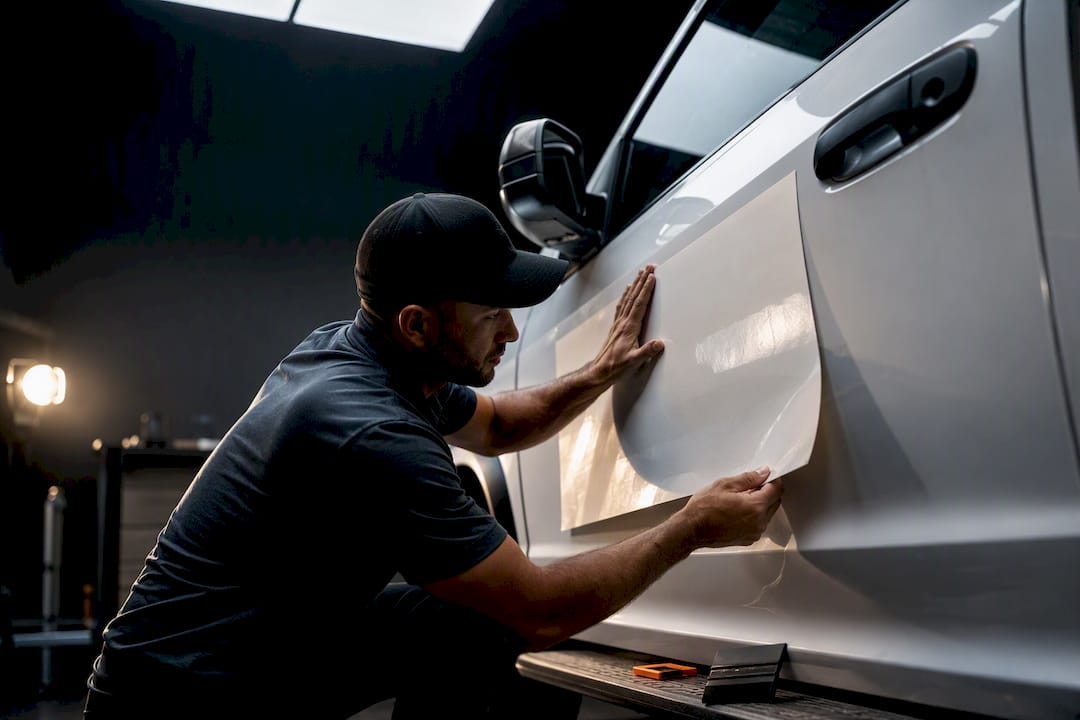
Basic cut vinyl lettering or a pair of door decals typically runs $150 to $500 per side, while printed door panels with logos and multiple colors push costs higher once you add lamination or specialty film. The exact number depends on material grade, vehicle type, and how many vehicles you’re outfitting. Before signing anything, get itemized quotes that specify vinyl type and installation, and lean toward cast vinyl if you need graphics to survive more than a couple of years.
TL;DR:
- Cast vinyl is preferable for fleets because it lasts 5 to 8 years outdoors, unlike calendared vinyl, which may fail in 1 to 2 years under heavy exposure.
- Volume discounts of 10 to 20 percent typically apply when ordering door lettering for ten or more vehicles, reducing overall costs significantly.
- Basic vinyl lettering ranges from $150 to $500 per side, with prices increasing if logos, multiple colors, or lamination are added, especially for printed graphics.
- Accurate estimates require detailed vehicle information, vector artwork files, and clarification on old decal removal and project timeline to prevent under- or overestimating costs.
- Professional installation offers better durability and fewer errors than DIY kits, which risk premature peeling, misalignment, and higher long-term costs.
Table of Contents
- How Much Does Door Lettering Cost, Typically?
- What Drives the Price: Vinyl, Lamination, and Labor
- Cost Examples by Vehicle Type and Coverage
- Getting an Accurate Quote: What to Send and What to Demand Back
- Professional Install vs. DIY: What It Really Costs You
- Lifespan, Maintenance, and Budgeting Replacement
- How NJ Vinyl Wrapz Prices and Manages Fleet Lettering
- Ready to Get an Itemized Fleet Lettering Quote?
- Where to Verify Vinyl Specs and Pricing Yourself
- Sources
- FAQ
How Much Does Door Lettering Cost, Typically?
Most fleet buyers land in one of three buckets, and knowing which one fits your project before you call a shop save a lot of back and forth.
Starter cut lettering, the kind that’s just your company name and phone number in a single color, usually runs on the lower end of that $150 to $500 per side range. This is the entry point most small businesses start with, and it’s cheap enough to test on one or two vehicles before committing to a full rollout.
Door decal pairs and printed panels cost more once you introduce a logo, multiple colors, or a laminate layer. Small individual decals (a USDOT number, hours of operation) often price out at $25 to $150, while a medium door decal or full door panel with printed graphics climbs toward $150 to $450 or more per door. Reflective film and multi-color prints are the two additions that move a quote from the low end to the high end fastest.
Fleet pricing behaves differently than single-vehicle pricing. Shops typically bill per vehicle or per door rather than per letter once you’re ordering for more than a handful of trucks, and volume discounts of roughly 10 to 20 percent are common once you cross ten vehicles. What that means practically:
- 1 to 3 vehicles: expect full retail pricing with no discount leverage.
- 4 to 9 vehicles: many shops will shave a modest percentage off if you’re bundling design and install into one visit.
- 10+ vehicles: volume pricing kicks in, often 10 to 20 percent below single-vehicle rates.
- Repeat/annual contracts: some installers offer locked-in pricing for fleets that return for replacements or expansions year after year.
Door decals stay dramatically cheaper than partial or full wraps. A full wrap starts in the low thousands per vehicle, so lettering remains the budget-friendly entry point for brand visibility.
What Drives the Price: Vinyl, Lamination, and Labor
Two vehicles can wear identical-looking lettering and cost very different amounts, and the gap almost always traces back to material grade or install complexity.
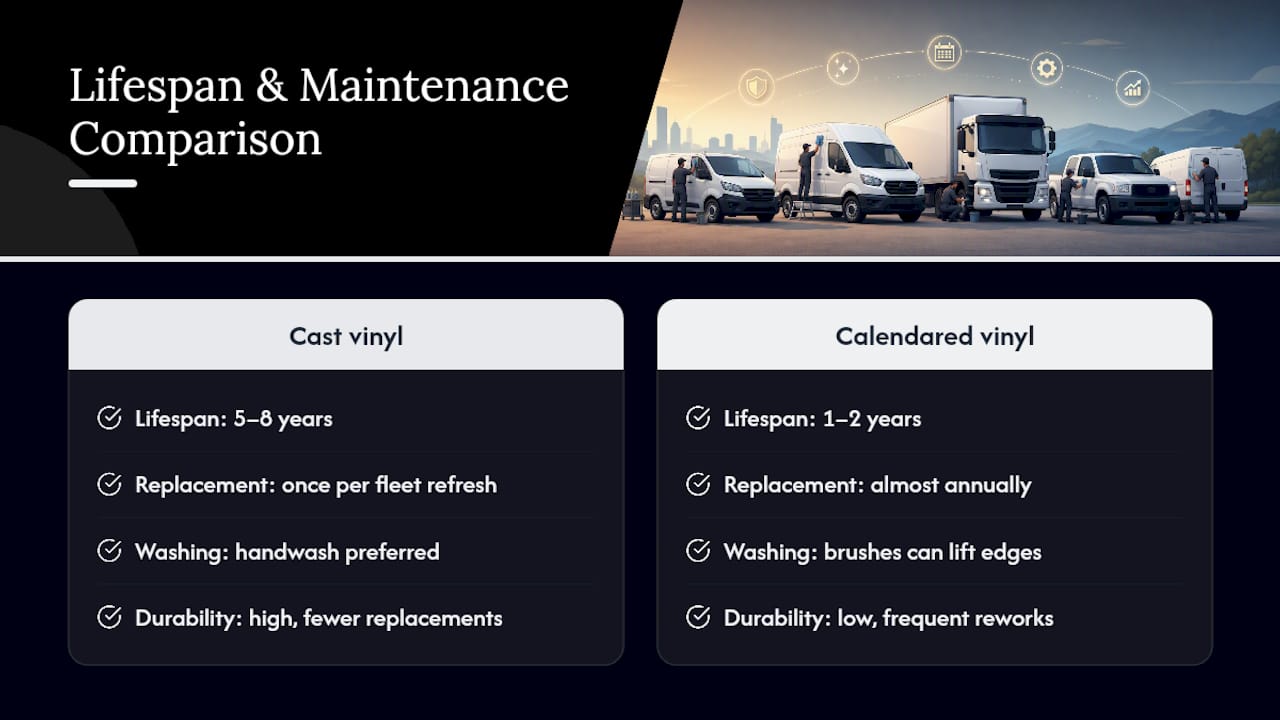
Cast vinyl vs. calendared vinyl is the biggest lever. Cast vinyl is thinner, more flexible, and holds its color and shape for 5 to 8 years outdoors, even on curved door panels. Calendared vinyl costs less upfront but can crack, shrink, or fail in as little as 1 to 2 years under heavy sun and weather exposure. For a fleet you plan to keep on the road for years, that difference in lifespan usually outweighs the upfront savings.
Printed graphics and lamination add another layer of cost. Printing lets you use full-color logos and gradients instead of flat-cut single colors, and a laminate topcoat protects that print from UV fading and abrasion. Both add material and production time, which shows up on the invoice.
Installation labor depends on prep work as much as the graphics themselves:
- Removing old decals or lettering before a new install adds time and sometimes a separate line-item fee.
- Complex logos with tight registration take longer to align than simple block lettering.
- Rush turnaround (need it done in a day or two) often carries a premium.
- Warranty coverage on materials and install workmanship varies by shop and should be spelled out in writing.
Pro Tip: Ask whether your quote uses 3M or Avery cast film specifically. Some installers quote “premium vinyl” without naming the brand or grade, and that vagueness is usually where corners get cut.
Cost Examples by Vehicle Type and Coverage
Vehicle size and door count change the math more than most managers expect walking into a quote conversation.
- Compact sedan or small SUV: a simple two-door logo-plus-phone-number package often lands near the low end of the standard range, since there’s less surface and fewer lines of copy.
- Pickup truck: door lettering plus a tailgate decal is common, since the tailgate offers prime visibility and usually adds a modest flat fee on top of the door package.
- Cargo van: larger door panels and the added option of rear-door graphics push these jobs toward the middle of the range, especially with multi-line service lists (address, website, license numbers).
- Box truck: the biggest surface area means door lettering is frequently just one piece of a broader package that includes side panels, making it worth quoting as a bundle rather than in isolation.
Complexity matters as much as size. A logo with a phone number costs noticeably less than a design listing services, certifications, a website, and social handles across multiple lines.
Getting an Accurate Quote: What to Send and What to Demand Back
Vague quote requests get vague quotes. Sending complete specs upfront is what turns a rough estimate into a number you can actually budget against.
- Vehicle details: make, model, year, and door measurements or photos for each vehicle in the project.
- Artwork files: a vector logo (AI, EPS, or PDF) with exact Pantone or hex color codes, not a screenshot or low-res JPEG.
- Scope notes: whether old decals need removal first and whether you want matching graphics across multiple vehicle types.
- Timeline: your target install date and whether any vehicles need rush scheduling.
On the return side, insist the quote itemizes material brand and grade (cast vs. calendared), laminate if applicable, installation hours, removal or cleanup fees, warranty terms, and lead time. A full lettering install typically takes 1 to 3 hours per vehicle, so a quote with no labor breakdown is a quote you can’t actually compare against another shop.
Pro Tip: If a bid comes in far below the others with no material grade listed, assume it’s calendared vinyl priced like cast. Ask directly. That single question filters out most low-quality bids fast.
Professional Install vs. DIY: What It Really Costs You
DIY lettering kits look cheap on paper. Materials and basic tools might run under $100 per vehicle, but that number ignores the real risk: air bubbles, crooked alignment, and premature peeling that force a redo within months.
Professional installation costs more upfront because you’re paying for a controlled environment (no dust or wind fighting the adhesive), trained hands, and usually a workmanship warranty that DIY simply doesn’t offer.
DIY can make sense for a single vehicle with basic, single-color cut lettering and no logo registration to align. It stops making sense fast once you’re dealing with:
- Multiple vehicles that all need to match exactly.
- Multi-color printed graphics with tight alignment requirements.
- Specialty films like reflective or perforated window vinyl.
- Any project where a mismatched fleet look would hurt your brand more than the install savings help your budget.
A botched install often costs more in the long run once you factor in the redo.
Lifespan, Maintenance, and Budgeting Replacement
Cast vinyl commonly lasts 5 to 8 years outdoors compared to calendared vinyl’s 1 to 2 years under heavy exposure, and that gap should drive your replacement schedule more than any single upfront price.
Statistic worth remembering: the durability gap between cast and calendared vinyl isn’t marginal. It’s the difference between replacing graphics once every fleet refresh cycle versus redoing them almost annually.
Keep lettering looking sharp with handwashing instead of automatic brushes, which can lift edges over time, and address small nicks or peeling corners immediately rather than waiting for a full panel to fail. For multi-year fleet rollouts, stagger replacement schedules across vehicle groups and book work outside peak spring and summer months to avoid rush-season pricing.
How NJ Vinyl Wrapz Prices and Manages Fleet Lettering
With over 10 years installing fleet graphics, NJ Vinyl Wrapz works exclusively with 3M and Avery film inside a licensed, insured, climate-controlled shop. We build modular starter packages so you can test one or two vehicles before scaling to the full fleet, and every quote breaks out material, labor, and timeline as separate line items.
— NJ Vinyl Wrapz
Ready to Get an Itemized Fleet Lettering Quote?
Skip the guesswork and generic estimates. An itemized quote is provided broken into materials, installation hours, timeline, and volume pricing for fleets ordering multiple vehicles, backed by a portfolio of completed commercial installs.
To speed things up, have your vehicle list, a few photos of each door, and your vector logo file ready before you reach out. That’s usually all it takes to get a real number back instead of a rough range. If your project might grow beyond lettering into a partial or full wrap, mention that up front so the quote accounts for scaling later without redoing design work twice. All installs use 3M and Avery materials, backed by licensed and insured work in a climate-controlled facility. Request a quote through our vehicle lettering page and get a real, itemized number for your fleet this week.
Where to Verify Vinyl Specs and Pricing Yourself
For a deeper look at material specs, USCutter’s breakdown of cast versus calendared vinyl covers the durability differences installers rely on. Blackout’s truck lettering cost guide and Blink Signs’ vehicle wrap cost guide offer additional market pricing context worth cross-checking against any quote you receive. Transfer Kingz also breaks down UV DTF decal costs, useful if a vendor proposes that alternative print technology for your project.
Sources
- Truck Lettering Cost: Pricing, Options &… | Blackout
- Fleet Vehicle Wraps: Complete Business Guide
- What’s the difference between calendared and cast vinyl? | USCutter
- How Much Does a Vehicle Wrap Cost in 2026?
FAQ
How much does basic door lettering cost per vehicle?
Basic cut vinyl lettering typically costs $150 to $500 per side, with the low end covering simple single-color text and the high end reflecting added lines or a logo.
Is cast vinyl worth the extra cost over calendared vinyl?
Yes for most fleets. Cast vinyl lasts 5 to 8 years outdoors versus 1 to 2 years for calendared film in heavy exposure, so the higher upfront cost usually pays off in fewer replacements.
Do fleets get volume discounts on door lettering?
Many shops offer 10 to 20 percent discounts once a project covers ten or more vehicles, though smaller fleets may still see modest bundled pricing.
What should an itemized door lettering quote include?
A complete quote lists material brand and grade, laminate if used, installation hours, removal of old graphics, warranty terms, and lead time, so you can compare bids on equal footing.
Is DIY door lettering cheaper than hiring a professional installer?
DIY materials cost less upfront, but poor alignment or peeling often forces a costly redo, making professional installation in a climate-controlled service environment the more reliable option for multi-vehicle fleets.