
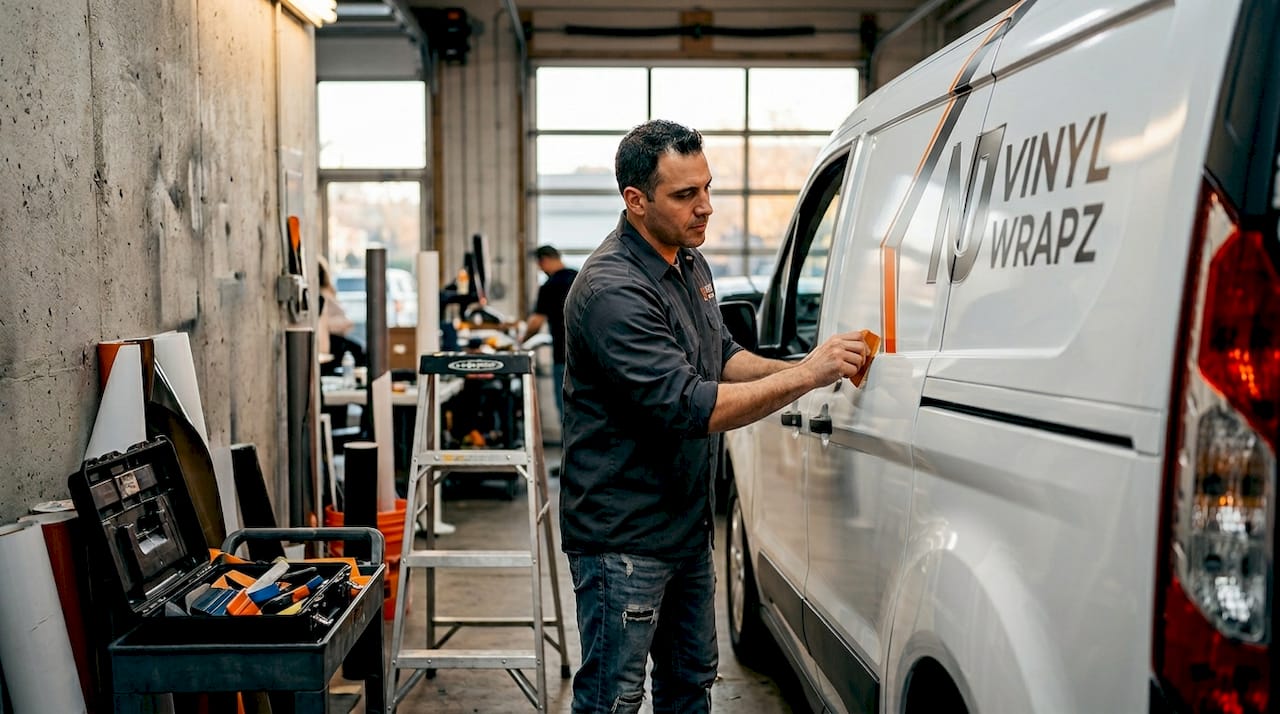
Choosing the wrong vehicle wrap installer for your commercial fleet can cost you far more than just a botched graphic. It can mean peeling vinyls on Route 1, inconsistent branding across 20 vehicles, and downtime that stalls your operations. The good news is that asking the right questions before signing any contract puts all the power back in your hands. This guide walks you through every critical question fleet managers and business owners in New Jersey should be asking, so you get lasting results, maximum visibility, and a wrap investment that actually pays off.
Table of Contents
- Determine installer experience and credentials
- Ask about vinyl material quality and options
- Clarify design process and customization capabilities
- Inquire about installation process, turnaround, and care
- Understand warranty, maintenance, and support
- What experts wish fleet managers knew about wrap installer selection
- Discover expert fleet wrap solutions in New Jersey
- Frequently asked questions
Key Takeaways
| Point | Details |
|---|---|
| Ask about experience | Confirm the installer’s expertise with fleet wraps to avoid costly errors. |
| Check material quality | Insist on premium vinyl brands for maximum durability and color retention. |
| Clarify design and process | Make sure customization and multi-vehicle design options fit your brand needs. |
| Review installation logistics | Understand installation timing and aftercare to minimize business disruption. |
| Understand warranty terms | Get clear coverage details and follow maintenance steps to protect your investment. |
Determine installer experience and credentials
Now that you understand why asking questions matters, start by evaluating the installer’s background and expertise. Not every shop that wraps a personal car is equipped to handle a commercial fleet job. There is a significant difference between wrapping one sedan for a private customer and maintaining brand consistency across a delivery fleet of 15 vans.
When you sit down with a potential installer, ask these specific questions:
- How many years have you been installing commercial fleet wraps specifically?
- Are your installers certified by vinyl manufacturers such as 3M or Avery?
- How many fleet wrap projects have you completed in the last 12 months?
- Can you provide references from other New Jersey businesses with fleet vehicles?
- Do you carry proper licensing and insurance to work on commercial vehicles?
These are not intimidating questions. A confident, experienced installer will answer them without hesitation. If you get vague answers or a quick brush-off, treat that as a red flag.
Expert wrap installation by properly trained technicians is more likely to deliver consistent branding and minimize installation errors, which is exactly what your fleet needs for a polished, professional appearance on New Jersey roads.
Ask to see physical examples from their portfolio, not just stock images from a vendor website. Request photos of previous NJ fleet wrap jobs in particular, because local weather conditions like humidity, temperature swings, and road salt exposure create specific challenges that only experienced local installers know how to address. If your fleet includes a mix of vehicle types, from cargo vans to box trucks, also ask whether they handle that variety or specialize in just one type. You may even want to check out their partial wraps service to understand the range of solutions they offer for different budgets and coverage levels.
Pro Tip: Ask the installer to show you a fleet wrap project where they had to match branding across multiple vehicle shapes. This reveals both their design skill and their ability to manage complex, multi-unit projects.
Ask about vinyl material quality and options
Once you’ve verified expertise, material quality is your next crucial consideration for longevity and visibility. The vinyl used on your fleet vehicles is the difference between a wrap that looks sharp for seven years and one that fades or bubbles within two. Not all vinyl is created equal, and budget materials are one of the most common ways fleet managers get burned.
Here are the key material questions to ask:
- What vinyl brands do you use for commercial fleet wraps?
- What is the mil thickness of the vinyl you recommend for fleet vehicles?
- Do your materials include UV protection and lamination?
- What warranties do the vinyl manufacturers offer on their products?
- Have your materials been tested for performance in New Jersey conditions?
Protecting vinyl wraps with high-quality materials maintains fleet branding and protects vehicles from wear longer, which directly reduces your total cost of ownership over time.
Here is a quick comparison to help you understand your material options:
| Feature | Premium vinyl (3M, Avery) | Budget vinyl |
|---|---|---|
| Lifespan | 5 to 7 years | 1 to 3 years |
| UV resistance | High | Low to moderate |
| Color vibrancy | Sustained over time | Fades within 1 to 2 years |
| Manufacturer warranty | Yes, up to 7 years | Rarely offered |
| NJ weather performance | Proven | Inconsistent |
| Removal ease | Clean removal | Risk of paint damage |
As you can see, the upfront cost difference between premium and budget vinyl is quickly offset by how much longer the premium option lasts. For a fleet that represents your brand every day on the road, cutting corners on material quality is simply not worth it.
Make sure the installer you choose sources vinyl from trusted names and can provide material spec sheets on request. Also ask about their commercial vinyl services to get a full picture of what they stock and what they recommend for your specific vehicle types and usage patterns.
Pro Tip: Choose vinyl brands with proven NJ weather resistance, specifically those rated for high humidity and temperature extremes. Ask for documentation of material test results if you are wrapping a large fleet.
Clarify design process and customization capabilities
With materials decided, ask about how the installer approaches design and branding consistency. This matters enormously for commercial fleets because every vehicle in your fleet is a moving billboard, and inconsistency across vehicles looks sloppy to your customers.
The commercial wrap design process should follow a clear, step-by-step approach for optimal fleet success. Here is what that process typically looks like when it is done right:
- Initial brand review: The installer reviews your existing logos, color specs, and brand guidelines before any design work begins.
- Vehicle templating: They pull accurate templates for each vehicle type in your fleet to ensure the design fits properly around doors, windows, and panels.
- Concept design: A designer creates initial layouts that place your branding elements for maximum visual impact at both close range and highway speeds.
- Digital proof review: You review and approve a detailed mockup for each vehicle type before printing begins.
- Revisions: The installer makes adjustments based on your feedback, often with one or two included revision rounds.
- Print and production: Once approved, files go to print using calibrated, high-resolution printers.
- Installation sign-off: After installation, you inspect each vehicle for alignment, bubbles, and color matching.
Every one of these steps matters. If an installer skips the digital proof stage, for example, you could end up with your logo sitting awkwardly over a door handle on every single vehicle in your fleet.
Ask specifically how they handle multi-vehicle branding consistency. On a fleet of ten cargo vans with different body shapes, keeping the logo placement and color tone consistent across all ten vehicles requires careful coordination. Explore their wrap options overview to understand the full range of approaches available for your fleet.

Pro Tip: Insist on digital proofs for every vehicle type in your fleet, not just one sample proof. Variations in vehicle shapes mean what works on a transit van may not translate perfectly to a pickup truck without adjustments.
Inquire about installation process, turnaround, and care
Once you’ve settled on design and materials, installation logistics and care should be discussed to ensure smooth fleet operations. For fleet managers, vehicle downtime is a real operational cost. Knowing how long each wrap takes and how vehicles need to be treated afterward helps you schedule around your business needs.
Key questions for this stage include:
- How long does installation take per vehicle?
- Do you have a climate-controlled facility for installation?
- Can you stagger installation so not all vehicles are out of service at once?
- Do you offer mobile installation or is off-site work required?
- What aftercare instructions do you provide once vehicles are returned?
Here is a useful comparison to guide your planning:
| Wrap type | Avg. installation time | Aftercare waiting period | Recommended cleaning method |
|---|---|---|---|
| Full vehicle wrap | 1 to 2 days | 48 to 72 hours before washing | Hand wash, no pressure washer |
| Partial wrap | 4 to 8 hours | 24 hours before washing | Hand wash, mild soap |
| Spot graphics/decals | 1 to 3 hours | 12 hours before washing | Soft cloth, no abrasives |
Expert installation in a climate-controlled environment minimizes errors and ensures fleet readiness far better than installations done in open lots or extreme temperatures. Heat and humidity affect how vinyl adheres during installation, so the facility environment matters as much as the installer’s skill.
For your full vehicle wrap services, confirm the shop has a dedicated bay with controlled temperature and lighting, because these conditions are not optional for quality results. They are essential.
Pro Tip: Ask about aftercare instructions in writing before you take the vehicle back. Specifically, ask what cleaning products are safe to use and whether automated car washes are allowed, because high-pressure systems can lift edges on a fresh wrap.
Understand warranty, maintenance, and support
After installation, warranty and maintenance details are critical for protecting your fleet branding investment. This is one area where many fleet managers ask too little, often until something goes wrong.
The right questions to ask here are:
- What warranty do you offer on your installation work?
- What does the vinyl manufacturer warranty cover and for how long?
- Does the warranty cover fading, peeling, or bubbling?
- What is excluded from warranty coverage?
- How do you handle a warranty repair request?
“A reputable wrap installer offering work in New Jersey should provide a minimum one to two year installation warranty alongside the manufacturer’s material warranty, which can extend up to seven years for premium vinyl brands. When both warranties are in place, your fleet branding is protected from both installation errors and material failures.”
Wrap warranties and proper maintenance can significantly extend the life of your fleet wraps, which means your branding continues delivering returns long after the initial investment. A warranty is only useful, however, if you hold up your end by following the recommended maintenance routine.
Maintenance requirements for wrapped fleet vehicles typically include:
- Hand washing every two weeks with pH-neutral soap
- Avoiding pressure washers or automated brushes
- Parking in shaded or covered areas when possible to reduce UV exposure
- Addressing minor damage quickly before it spreads
- Documenting all cleaning and care activities
That last point is especially important. If you ever need to make a full wrap warranty claim, having a maintenance log demonstrates you followed the care requirements, which protects your ability to collect on any covered repairs.
Pro Tip: Document all wrap maintenance with dates and photos. If a warranty issue arises six months after installation, a clear maintenance record strengthens your case and speeds up the resolution process.
What experts wish fleet managers knew about wrap installer selection
Here is something that most checklists and comparison guides will not tell you: the technical quality of the wrap installation is often less of a risk than the quality of the relationship you build with the installer beforehand.
We have worked with fleet managers who obsessed over material specs and pricing tables, only to run into problems because they never checked how responsive their installer was when questions came up mid-project. The best question you can ask any installer is not about vinyl thickness. It is: “How do I reach you if something comes up during the project?” If the answer is vague or involves a general inbox with a two-day response time, that tells you a great deal about how warranty calls and repair requests will be handled later.
Another mistake we see regularly is fleet managers skipping the aftercare conversation entirely because they want to get vehicles back on the road fast. Rushing that conversation is one of the top reasons wraps fail prematurely. A wrap that is sent through an automated car wash three days after installation will start lifting at the edges within weeks. No amount of warranty coverage makes up for the downtime and rebrand cost that follows.
The third overlooked factor is multi-vehicle coordination experience. Wrapping one van and wrapping a fleet of 20 vans consistently are very different operations. Ask for proof of that capacity, not just a promise. Look at how to maximize brand impact for NJ fleets as a starting point, and use that knowledge when evaluating whether an installer truly understands fleet-scale operations.
The installers worth working with are transparent about their process, upfront about their timeline, and genuinely invested in how your vehicles perform out on the road. Test their responsiveness before you sign anything.
Discover expert fleet wrap solutions in New Jersey
Putting all these questions into practice starts with having a professional team that is ready to answer every single one of them clearly and confidently.
At NJ Vinyl Wrapz, we have spent over 10 years wrapping commercial fleets across New Jersey, and we are licensed, insured, and partnered with trusted material brands including 3M and Avery. Whether you need a full rebrand across a large fleet or a targeted update for a few vehicles, our team handles design, printing, and expert installation under one roof. Explore our NJ fleet wrap service to see how we approach fleet projects, or take a look at our full vehicle wraps page to get the details on what a complete transformation looks like. Contact us today for a fleet wrap quote and let us show you what professional results look like.
Frequently asked questions
How long does a typical fleet vehicle wrap last?
A high-quality fleet vehicle wrap can last 5 to 7 years with proper care and maintenance, depending on the vinyl used and how well the fleet follows aftercare guidelines.
What vinyl brands are best for New Jersey weather?
Premium brands engineered for UV and weather resistance are ideal for NJ conditions, and high-quality vinyl maintains fleet branding vibrancy and durability through humidity, temperature swings, and winter road exposure.
Can installers wrap multiple fleet vehicles at once?
Yes, professional installers with fleet experience can coordinate multiple vehicles simultaneously using step-by-step project management to keep branding consistent and minimize your fleet’s downtime.
What should I do if a vehicle wrap is damaged?
Contact your installer right away to discuss repair options, and consult your wrap warranty coverage to find out whether the damage qualifies for a covered repair or replacement.