
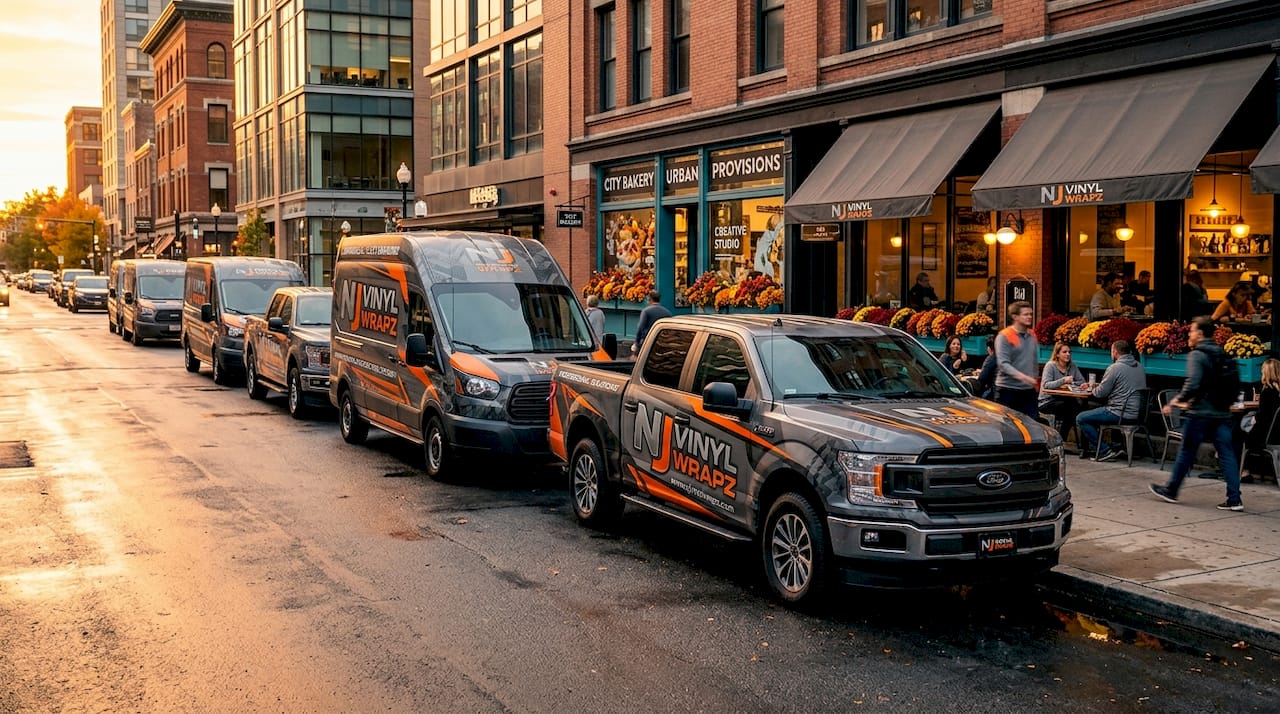
Your fleet is already out there every day, traveling roads your customers drive, parking in lots where your buyers shop, and sitting in traffic next to thousands of potential leads. If those vehicles are plain white or unbranded, you are leaving serious marketing exposure on the table. The reasons to wrap your fleet go well beyond slapping a logo on a door. Done right, fleet wrapping addresses brand consistency, vehicle protection, employee morale, and advertising cost in a single investment that pays off for years.
Table of Contents
- Key takeaways
- 1. The top reasons to wrap your fleet start with brand consistency
- 2. Vehicle protection that pays for itself
- 3. Full wraps versus partial wraps
- 4. Brand reputation and professional image
- 5. Cost-effective fleet marketing with exceptional ROI
- 6. Fleet wraps as a governed brand system
- 7. Promoting business with wraps across diverse vehicle types
- My take on fleet wrapping as an investment decision
- Ready to put your fleet to work as a marketing asset?
- FAQ
Key takeaways
| Point | Details |
|---|---|
| Repetition builds recognition | Consistent fleet wraps across all vehicles drive the brand recall that repeated exposure creates. |
| Wraps protect vehicle paint | Vinyl shields factory paint from UV damage, scratches, and road debris, preserving resale value. |
| Full vs. partial depends on goals | Full wraps suit mixed-color fleets and maximum exposure; partial wraps work for tight budgets. |
| Fleet wraps outperform many ad channels | Mobile impressions and 24/7 presence make vehicle wraps one of the best cost-effective fleet marketing options available. |
| Professional wraps signal reliability | A coordinated, well-maintained fleet communicates operational discipline and strengthens your company’s reputation. |
1. The top reasons to wrap your fleet start with brand consistency
When you operate more than one vehicle, the branding challenge multiplies. A single wrapped truck looks good. Ten trucks that each look slightly different tell potential customers you do not have your operation under control. Consistent brand repetition across every vehicle in your fleet is what creates real familiarity and recall. Research puts that recognition threshold at five to seven exposures before a brand sticks in someone’s memory.
Standardizing colors, logo placement, and contact information across your entire fleet turns every vehicle into a synchronized marketing asset. That means the same shade of blue, the same font size, and the same tagline on a cargo van as on a pickup truck. Achieving that level of visual uniformity requires more than printing the same design file. It involves specifying exact vinyl films from trusted brands like 3M or Avery, and in precision-focused operations, measuring color consistency with spectrophotometers to keep color variance within a Delta E of 2.0 or less for true visual unity.
Pro Tip: Build a one-page brand standards document before your first vehicle goes to the installer. It should specify exact vinyl product codes, logo placement in inches from each vehicle edge, and approved font sizes. This document becomes your quality checkpoint for every wrap in the fleet, now and in the future.
2. Vehicle protection that pays for itself
Most fleet managers think about wraps as advertising. Fewer think about wraps as a protective layer that directly supports the financial value of their vehicles. That is a missed opportunity.
Vinyl wraps shield factory paint from UV rays, road debris, minor scratches, and weather exposure. When you remove or replace a wrap, the original paint underneath comes off in the same condition it was when the vehicle left the factory. That matters enormously when you eventually trade or sell vehicles, because fleet vehicles with preserved original paint consistently command stronger resale prices than those showing paint fade, chips, or oxidation.
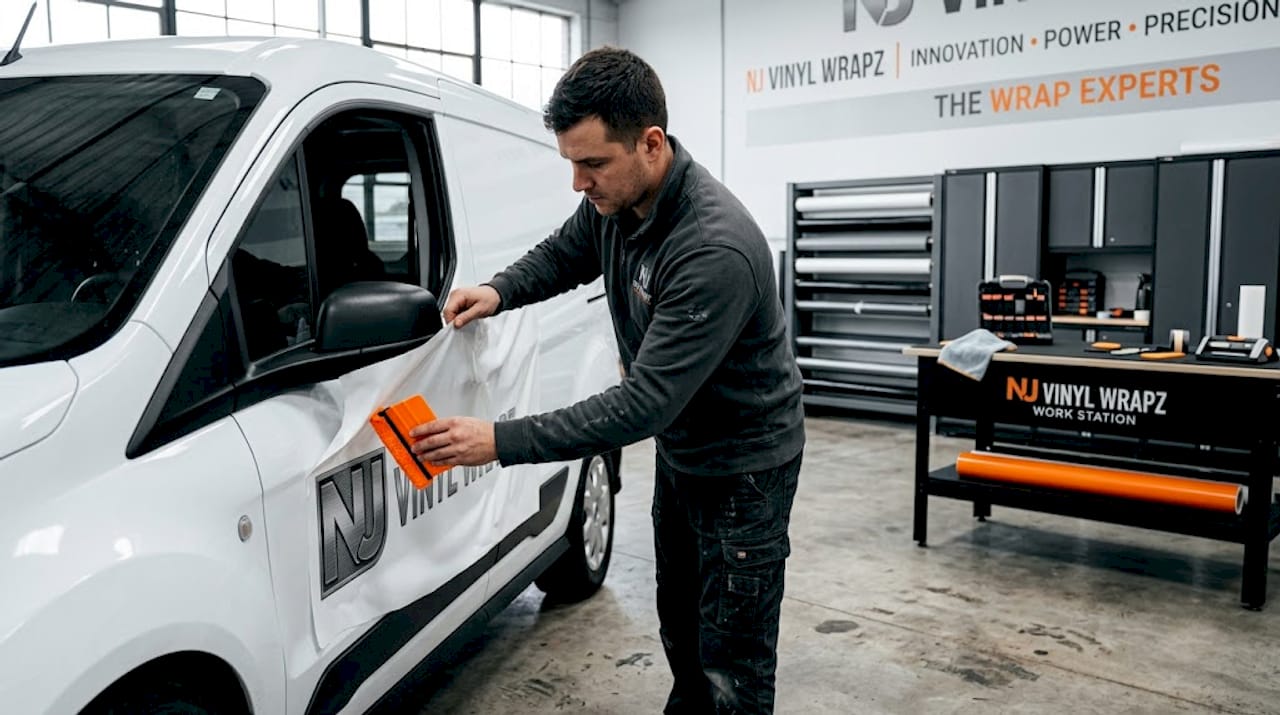
Consider the math on a fleet of ten service vans. If each vehicle retains an extra $1,500 to $2,000 in resale value because the paint was protected, the wrap program pays a meaningful portion of its own cost before you count a single advertising impression.
3. Full wraps versus partial wraps
Choosing between a full wrap and a partial wrap is one of the most consequential decisions in any fleet branding program. The wrong choice costs you money without delivering the visibility you expected.
| Feature | Full wrap | Partial wrap |
|---|---|---|
| Brand coverage | 360 degrees, all panels | Targeted areas only |
| Paint protection | Complete surface coverage | Limited to wrapped areas |
| Visual consistency on mixed-color fleets | Excellent | Variable, depends on base color |
| Cost | Higher upfront | Lower upfront |
| Best use case | Diverse vehicle colors, max exposure | Uniform fleet color, tighter budget |
Full wraps resolve color consistency challenges across mixed-color fleets far better than partial wraps. If your fleet has white vans, gray trucks, and black SUVs, a partial wrap on each one will look different because the base color bleeds through the design. A full wrap eliminates that variable entirely.
Partial wraps make strong sense when your entire fleet shares the same base color and you need a budget-friendly entry point into fleet vehicle branding. They also work well as a test run before committing to a full rollout. Choosing between full and partial requires honest alignment between visibility goals, vehicle use patterns, and available budget.
Pro Tip: If your fleet vehicles take high-traffic highway routes daily, invest in full wraps. The additional impression volume from full 360-degree coverage on highway corridors justifies the cost difference over the life of the wrap.
4. Brand reputation and professional image
People judge companies by how their vehicles look. It is not scientific. It is just human nature. A fleet that looks polished and coordinated signals that the business behind it is organized, reliable, and worth trusting.
The reputational benefits of consistent fleet wraps show up in several concrete ways:
- Customer perception: A client driving behind one of your branded vans gets a professional impression before they ever speak to your team.
- Operational discipline signal: Fleet wrap consistency reflects how well a company manages its operations, making it a visible indicator of reliability.
- Employee morale: Drivers who operate well-branded, professional-looking vehicles report higher pride in their work and stronger identification with the company.
- Recruitment: A recognizable, professional fleet acts as a passive recruiting tool. Tradespeople and service technicians notice which companies invest in their image.
The risk of ignoring this runs the other direction just as hard. Faded decals, mismatched graphics, or vehicles that clearly do not belong to the same brand family send a message that the company is either struggling or does not care. Neither impression helps you win business.
5. Cost-effective fleet marketing with exceptional ROI
When you compare the cost of a vehicle wrap against other advertising channels, the numbers become very compelling. Vehicle wraps reach audiences continuously, 24 hours a day, seven days a week, in the exact markets where your business operates. Unlike a digital ad that can be scrolled past or blocked, a wrap is simply there every time someone shares a road or parking lot with your vehicle.
The impression cost per thousand views for vehicle wraps sits dramatically lower than most traditional media. Television spots, billboards, and even paid search campaigns often cost multiples more per impression while providing zero physical presence in your local market. A single wrapped vehicle operating in a metro area can generate tens of thousands of impressions monthly with no recurring spend after the initial installation.
Wraps also have meaningful operational lifespans. Periodic re-wrapping every 5 to 7 years aligns naturally with vehicle replacement cycles, which means your marketing investment and your fleet management cycle stay in sync. You are not throwing away a perfectly good wrap when a vehicle leaves the fleet.
6. Fleet wraps as a governed brand system
One of the most underappreciated benefits of fleet wrapping is that it forces you to treat your brand as a system rather than a collection of independent decisions. When you wrap your fleet properly, you need brand guidelines, approved design files, material specifications, and a quality control process. That documentation does not just help with wraps. It raises the standard for every piece of branded material your company produces.
A fleet wrap program functions best as a governed system with scalable design frameworks and QC checkpoints, not a series of one-off projects handled by different vendors. Businesses that approach it that way end up with stronger brand integrity across all channels, not just their vehicles.
When you visit fleet branding best practices, the emphasis on using consistent materials and installation standards reflects this exact principle. The wrap is the output. The system behind it is what makes the wrap worth doing.
7. Promoting business with wraps across diverse vehicle types
Fleets are rarely uniform. You might have vans, box trucks, sedans, and pickup trucks all operating under the same brand. The challenge is making a design that translates visually across radically different vehicle shapes and sizes.
This is where professional wrap installation with quality materials and precise application delivers value that DIY or budget approaches cannot match. A design that works on a sprinter van needs to be adapted, not simply resized, for a compact sedan. Elements like logo placement, contact information visibility, and color blocking need to be rethought for each vehicle template.
When done correctly, a viewer should be able to identify all your vehicles as belonging to the same company at a glance, regardless of their shape or size. That recognition is worth real money in markets where your competitors’ fleets blend into the background.
My take on fleet wrapping as an investment decision
I have worked with businesses that approach fleet wrapping as a marketing line item, and others that treat it as an operational discipline. The second group consistently gets better results, not because their designs are flashier, but because they think about it more systematically.
The biggest mistake I see is rolling out wraps vehicle by vehicle as budget allows, with no standardized design framework and different vendors handling each one. Three years in, the fleet looks like five different companies sharing a parking lot. Unwinding that inconsistency costs more than doing it right the first time.
What I have learned is that the protection value alone often covers a third of the total investment when you factor in resale recovery, paint preservation, and reduced touch-up costs over a vehicle’s life. The advertising and brand value are on top of that. When you add all three together, cost-effective fleet marketing through wrapping is one of the clearest ROI-positive decisions available to businesses that operate vehicles.
The rollout sequencing matters too. Start with your highest-visibility vehicles, the ones that travel the busiest corridors, park in prominent locations, or show up most frequently on job sites. Lock down your brand standards with those first wraps, then scale. You will thank yourself when vehicle thirty goes to the installer and looks identical to vehicle one.
— Krunal
Ready to put your fleet to work as a marketing asset?
At Njvinylwrapz, we have spent over a decade turning commercial fleets across New Jersey into mobile brand platforms that generate real impressions every single day. We work with businesses of all sizes, from three-vehicle service fleets to multi-location operations, and we handle design, material selection, and installation in-house with materials from 3M and Avery for durability that lasts.
Whether you are starting from scratch or looking to rebrand your entire fleet with a consistent, professional look, our team will walk you through full and partial wrap options that fit both your brand goals and your budget. Explore your wrap options here or contact us to schedule a fleet consultation and get a tailored quote.
FAQ
How long do fleet vehicle wraps last?
Fleet wraps typically last 5 to 7 years depending on material quality, exposure conditions, and installation standards. Scheduling re-wrapping within that window keeps your fleet looking professional and your brand consistent.
Are full wraps better than partial wraps for fleets?
Full wraps are the better choice when your fleet includes vehicles with different base colors, since partial wraps allow the underlying color to affect the final appearance. Partial wraps work well for budget-conscious fleets with uniform vehicle colors.
What is the ROI of wrapping a commercial fleet?
Vehicle wraps generate thousands of local impressions daily at a cost per thousand views that is significantly lower than most traditional advertising. Combined with paint protection that supports resale value, the vehicle wrap ROI makes wrapping one of the strongest marketing investments available to fleet operators.
Can wraps be applied to any type of fleet vehicle?
Yes. Professional wrap installers adapt designs for vans, box trucks, sedans, pickup trucks, and trailers. The key is working with an installer who creates vehicle-specific design templates rather than simply resizing one design across all formats.
Do fleet wraps damage the vehicle’s original paint?
No. When installed and removed correctly using quality vinyl materials, wraps protect the factory paint rather than damaging it. The original finish stays intact underneath, which is one of the core reasons to rebrand your fleet using wraps rather than paint.