
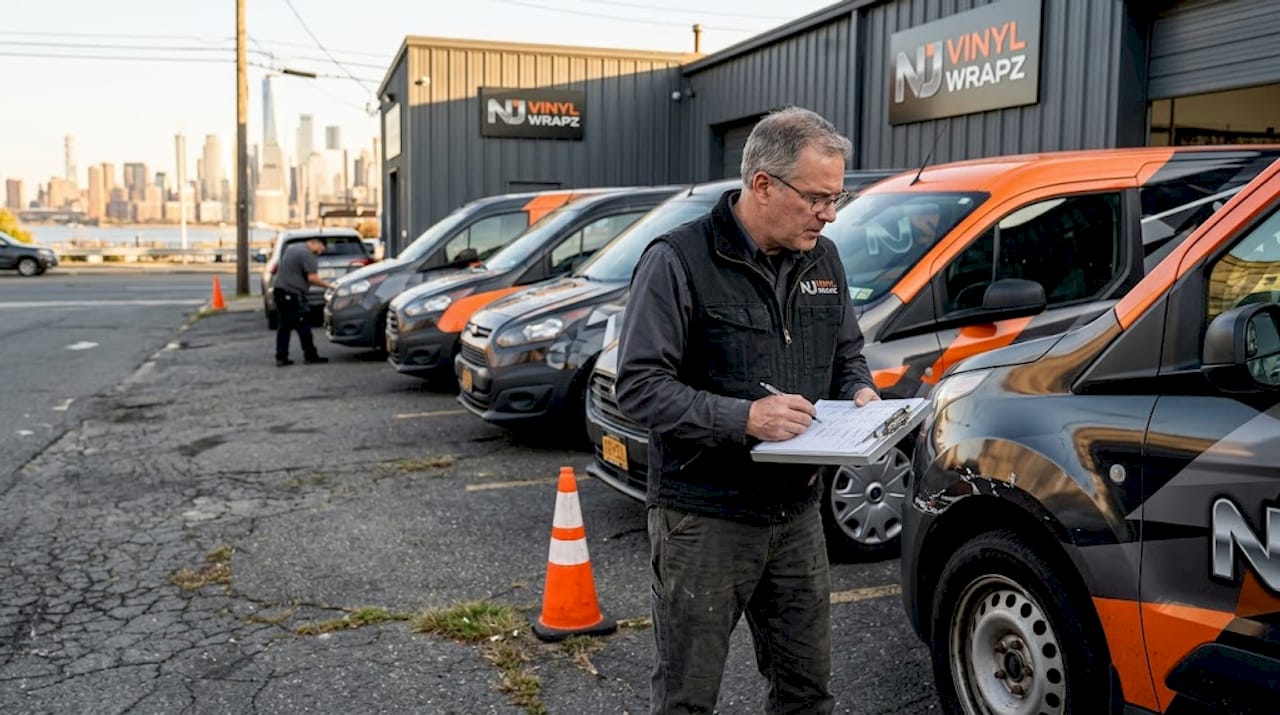
Most fleet managers in New Jersey default to paint when they think about branding their vehicles. It feels permanent, professional, and familiar. But that assumption is costing businesses time, money, and flexibility they cannot afford to lose. Understanding why vehicle wraps replace paint is not just about cost comparisons. It is about recognizing that the entire logic of fleet branding has shifted. This guide breaks down how wraps work, where they outperform paint, where they do not, and how New Jersey businesses can implement them without disrupting daily operations.
Table of Contents
- Understanding vehicle wraps: what they are and how they work
- Advantages of vehicle wraps over traditional paint for New Jersey businesses
- When paint is the better choice: limitations of vehicle wraps
- Vehicle wraps vs paint: a comparison for fleet branding decision-makers
- Implementing vehicle wraps effectively in your New Jersey fleet
- Why vehicle wraps are revolutionizing fleet branding in New Jersey
- Explore professional vehicle wraps with NJ Vinyl Wrapz
- Frequently asked questions
Key Takeaways
| Point | Details |
|---|---|
| Wraps protect and preserve paint | Vehicle wraps shield your factory paint from damage, preserving resale value when installed on healthy paint. |
| Cost-effective branding | Wraps provide long-lasting advertising exposure without ongoing fees and less downtime than paint. |
| Not a repair solution | Wraps require good underlying paint and do not fix rust, peeling, or body damage. |
| Flexible and reversible | Wraps allow businesses to update branding easily and reverse changes without harming the vehicle’s finish. |
| Professional installation matters | Proper pre-inspection and certified installers are essential for a successful wrap application and removal. |
Understanding vehicle wraps: what they are and how they work
A vehicle wrap is a high-quality vinyl film applied directly over your vehicle’s existing factory paint. Think of it as a second skin. It conforms to the contours of the vehicle, covers curves, handles, and bumpers, and can be printed with virtually any graphic, color, or finish you can imagine. Matte black, gloss white, brushed chrome, full company logos, branded color schemes. All of it is achievable without touching the original paint.
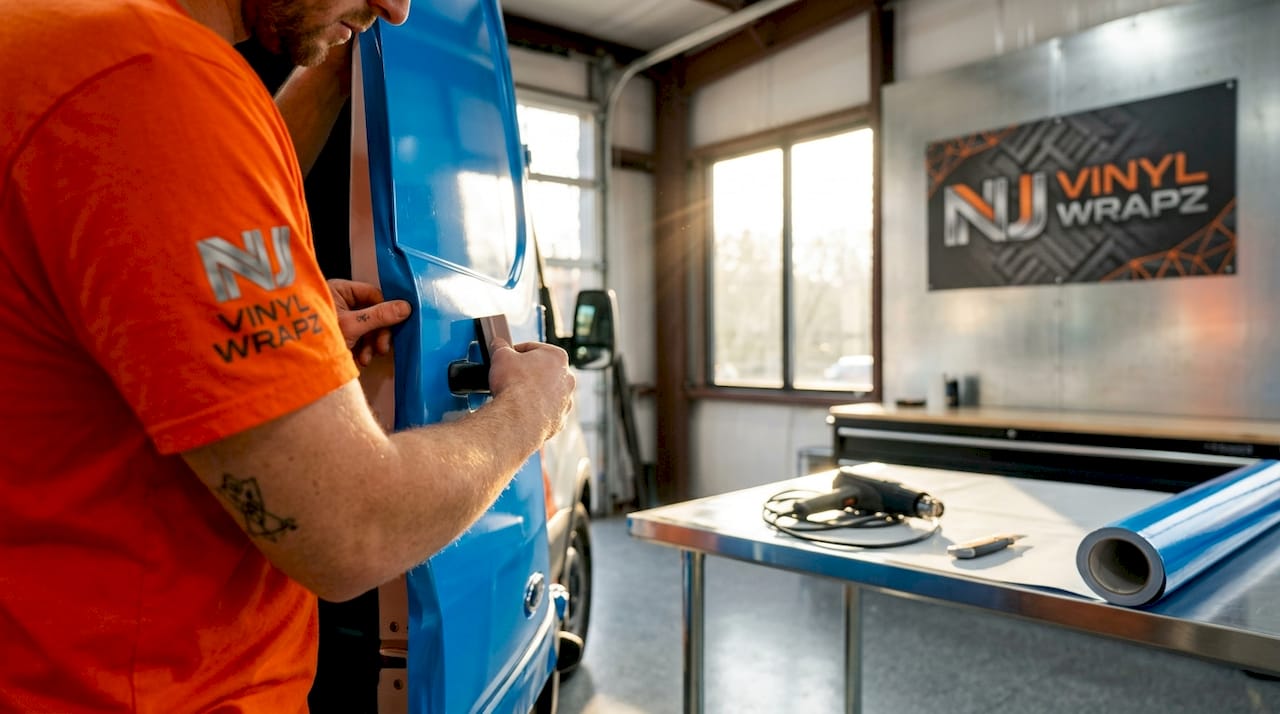
A vinyl wrap sits on top of the factory paint and can change color, add graphics, and finishes without replacing the original finish. This is the fundamental difference. You are not altering the vehicle permanently. You are adding a removable layer that can be replaced, updated, or removed entirely when the vehicle changes roles, gets sold, or your branding evolves.
The application process matters enormously. Installers clean the vehicle thoroughly, use heat guns and squeegees to apply the vinyl without air bubbles, and trim precisely around edges and trim lines. Professional shops do this in climate-controlled facilities to prevent contaminants from compromising adhesion. Before committing to any installer, understanding the process of preparing your vehicle for a wrap will help you know what questions to ask and what standards to expect.
Key materials used in professional wraps include:
- Cast vinyl: The premium option, designed to conform to complex curves and last longer in outdoor conditions
- Calendered vinyl: A more affordable option suited for flat or simple surfaces and shorter-term applications
- Laminate overlays: Applied on top of printed wraps to protect the ink from UV fading and surface abrasion
- 3M and Avery films: Industry-standard materials known for consistency, durability, and clean removal
Advantages of vehicle wraps over traditional paint for New Jersey businesses
The business case for vehicle wraps vs paint is not subtle. It shows up in your schedule, your budget, and your ability to adapt when your branding or fleet needs change.
Paint requires significant prep time, multiple coats, curing periods, and can take days or weeks per vehicle. Wraps offer faster application with less downtime than painting, allowing planned branding changes and preserving operational schedules. For a fleet of ten or twenty vehicles that are actively generating revenue, keeping downtime to a minimum is not a preference. It is a requirement.
The financial argument goes further than installation time. Vehicle wraps can last five to seven years, providing thousands of impressions without monthly advertising fees, offering long-term cost efficiency for small businesses. A single wrap on one delivery van rolling through Bergen County, Trenton, or Newark puts your brand in front of tens of thousands of people every month. No recurring fee, no contract with a media company, no performance algorithm to worry about.
Here is what wraps deliver that paint simply cannot match for fleet operations:
- Reversibility: Wraps can be removed without damaging the factory paint, making them ideal for leased vehicles or fleets with rotating needs. Read more on the benefits of color change wraps to see how this flexibility applies across different vehicle types.
- Paint protection: The vinyl layer shields the factory finish from UV rays, minor abrasions, and road debris, which directly supports resale value
- Branding agility: When your company rebrands, acquires a new client with different color requirements, or adds a service line, wraps can be updated without repainting
- Consistent fleet appearance: Digital printing ensures every vehicle in your fleet matches exactly, something hand-applied paint rarely achieves at scale
- Advertising without ongoing cost: Unlike billboards or digital ads, a wrapped vehicle keeps working whether it is parked or moving
Understanding why these factors matter collectively is why commercial wraps for fleet branding have become the standard for growth-oriented New Jersey businesses.
Pro Tip: If your fleet vehicles are leased, wraps are almost always the only viable branded option. Paint modifications can void lease agreements or trigger costly restoration fees when you return the vehicle. Wraps sidestep that problem entirely.
When paint is the better choice: limitations of vehicle wraps
Vehicle wrap advantages are real and significant. But wraps are not a cure-all, and applying one to the wrong vehicle will cost you more than a paint job ever would.
The critical factor is the condition of the existing paint surface. Vinyl adheres to smooth, intact factory finishes. When the underlying surface is compromised, the adhesive behaves unpredictably. Wraps will not fix peeling clear coat, rust, deep scratches, or bad bodywork. Weak underlying paint can cause the wrap to lift or pull paint when removed. This is not a minor risk. It can result in replacing the wrap early and then paying for paint repair anyway.
Situations where paint is the appropriate first step before considering a wrap:
- Active rust or corrosion: Must be treated at the metal level. Vinyl will not seal rust and will trap moisture, accelerating the damage underneath
- Peeling or flaking clear coat: The wrap will bond unevenly and begin lifting within months
- Deep scratches or dents: These will telegraph through the vinyl, making the wrap look poor and shortening its life
- Poorly repaired body panels: Amateur body filler work or mismatched paint repairs create an uneven substrate the vinyl cannot compensate for
- Recent repaints: Fresh paint needs at least 30 to 60 days to fully cure before wrapping
Paint repairs are not competition for wrapping. They are prerequisites. A vehicle with structural or cosmetic paint damage needs professional attention before vinyl goes anywhere near it.
For fleet managers, this means building a condition audit into your workflow before any wrap project begins. Protecting wraps and paint underneath starts with knowing exactly what condition each vehicle is in before the installation day.
Vehicle wraps vs paint: a comparison for fleet branding decision-makers
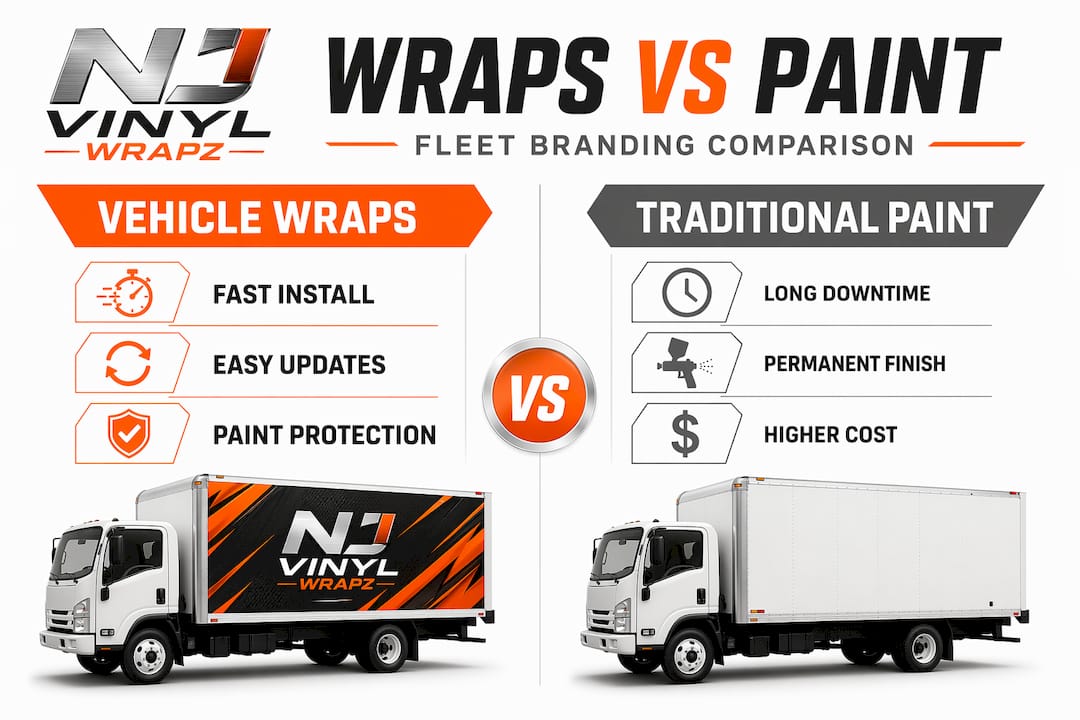
Here is a direct side-by-side look at the key factors that matter when choosing between wraps and paint for your New Jersey fleet. Wraps offer reversible, protective, and marketing-friendly branding solutions, while paint involves longer downtime and permanence.
| Factor | Vehicle wrap | Traditional paint |
|---|---|---|
| Application time | 1 to 3 days per vehicle | 3 to 10 days per vehicle |
| Cost range | $2,500 to $5,000+ | $3,000 to $10,000+ for quality work |
| Reversibility | Fully removable | Permanent |
| Branding flexibility | Update anytime | Requires full repaint |
| Paint protection | Yes, shields factory finish | N/A, it is the finish |
| Resale value impact | Positive (preserves OEM paint) | Varies by paint quality |
| Durability | 5 to 7 years | 10+ years if maintained |
| Lease compatibility | Yes | Often prohibited |
| Advertising capability | Full custom graphics possible | Limited to color only |
For fleet managers making this decision, consider these factors before signing off on any project:
- Lease status of vehicles: Leased units should almost always be wrapped, not painted
- How often your branding changes: Frequent updates favor wraps by a wide margin
- Condition of current paint: Poor condition may require paint work first
- Number of vehicles: The per-unit cost and time savings of wraps compound significantly with fleet size
- Resale plans: Wraps that preserve factory paint return higher resale values than repaints
Pro Tip: When calculating wrap ROI for your fleet, factor in the advertising impressions generated per month rather than treating it purely as a vehicle expense. A wrapped van traveling regular routes in New Jersey can generate 30,000 to 70,000 impressions monthly. On a per-impression basis, it competes favorably with virtually every paid media channel. See how wrapping fleet vehicles for brand impact translates into measurable marketing returns.
Implementing vehicle wraps effectively in your New Jersey fleet
Knowing the case for wraps is one thing. Executing the project without costly mistakes is another. Here is how to do it right.
-
Audit your vehicle condition first. Walk every vehicle scheduled for wrapping and document paint condition. Installer’s pre-check of the substrate is critical to avoid wrap failure from paint defects. Establish a go or no-go condition standard before any vehicle enters the shop. See the full checklist on preparation for professional wraps.
-
Work only with certified installers. 3M and Avery Dennison both certify installers who meet training and quality standards. Certification matters because improper installation is the leading cause of early wrap failure, edge lifting, and paint damage on removal.
-
Design for real-world viewing conditions. Fleet graphics need to be legible at 30 mph from 50 feet away. Work with a designer who understands vehicle templates and has produced wrap graphics before, not a general graphic designer adapting a print layout.
-
Schedule wraps around your operational calendar. Plan installations during lower-demand periods. Stagger vehicles through the shop so your fleet is never fully offline. Most professional shops can handle multiple vehicles simultaneously.
-
Build a maintenance routine. Hand washing with mild soap, avoiding automated brushes, and applying vinyl-compatible protectant sprays will extend wrap life significantly. Learn how wrap warranties for fleet vehicles are structured and what maintenance requirements apply to keep coverage valid.
Pro Tip: Create a vehicle wrap log for each unit in your fleet. Track installation date, material used, installer, and scheduled inspection dates. This makes warranty claims faster, helps you plan refresh cycles, and ensures no vehicle slips past its optimal replacement window.
Why vehicle wraps are revolutionizing fleet branding in New Jersey
After more than a decade of watching businesses choose between wraps and paint, the pattern is clear. The companies that stay with paint are almost always doing so out of habit, not logic. They inherited a process, never questioned it, and are now paying for that inertia in longer turnaround times, higher costs, and branding that cannot keep pace with their business.
The real shift is not just economic. It is strategic. Modern fleet branding is not about permanently marking a vehicle. It is about maintaining presence, staying visible, and retaining the ability to adapt. A business that rebrands, merges, or simply updates its visual identity every few years needs a branding method that can move at the same speed. Wraps do that. Paint does not.
The technology behind wraps has also advanced dramatically. Wrapmate’s launch of an AI-powered self-serve wrap platform signals a digital and operational shift making quality wraps more accessible for fleets. As design tools become more accessible and installation networks grow, the barrier between “I want branded fleet vehicles” and “my fleet is branded” keeps shrinking. That is good news for New Jersey businesses of every size.
There is also an asset protection argument that most fleet managers underestimate. A factory paint job, preserved under a vinyl wrap for the life of the vehicle, commands a meaningfully higher resale value than a repainted or visibly branded vehicle. You are not just advertising on wheels. You are protecting an asset. When you understand the commercial wrap design process from the start, it becomes obvious that wrapping is not a compromise. It is an upgrade.
Explore professional vehicle wraps with NJ Vinyl Wrapz
If you are ready to move your fleet away from outdated paint processes and into a smarter branding model, NJ Vinyl Wrapz is built exactly for that transition. With over 10 years of experience wrapping commercial fleets across New Jersey, their team handles everything from design to certified installation using 3M and Avery materials.
Whether you need full vehicle wraps for maximum brand impact, or a targeted partial approach that fits a tighter budget, their team works around your operational schedule to minimize downtime. Their fleet wraps solutions are designed for businesses managing multiple vehicles, with consistent output across every unit. Browse their full range of wrap options to find the right fit for your fleet size, budget, and branding goals. Contact NJ Vinyl Wrapz to schedule your fleet consultation and see what professional vehicle wrapping looks like when it is done right.
Frequently asked questions
Can vehicle wraps damage the original paint on my fleet vehicles?
When installed and removed by professionals on healthy paint, wraps do not damage the factory finish. Risk rises when the paint is already weak, peeling, poorly repaired, rusted, or not fully cured.
How long does a typical vehicle wrap last on commercial fleet vehicles?
A professionally installed wrap can last five to seven years. Thousands of impressions are generated during that period without any recurring advertising spend.
Is it cheaper to wrap a vehicle than to repaint it for branding purposes?
Wraps generally cost less upfront than quality full paint jobs and require significantly less downtime per vehicle. Changing paint means more downtime, more prep, and a result that is not easy to reverse.
Can vehicle wraps be customized to match my business branding and updated easily?
Yes. Wraps support full custom graphics, brand colors, and messaging, and can be updated or removed without any permanent changes to the vehicle’s paint. They are a reversible branding solution ideal for leased or evolving fleets.
Recommended
- How to wrap fleet vehicles for max brand impact in NJ | NJ Vinyl Wrapz
- Smart ways to protect fleet paint and build brand visibility in NJ | NJ Vinyl Wrapz
- Fleet wrap costs explained: value, savings, and ROI for NJ fleets | NJ Vinyl Wrapz
- Fleet wrap design ideas to boost your New Jersey brand | NJ Vinyl Wrapz