
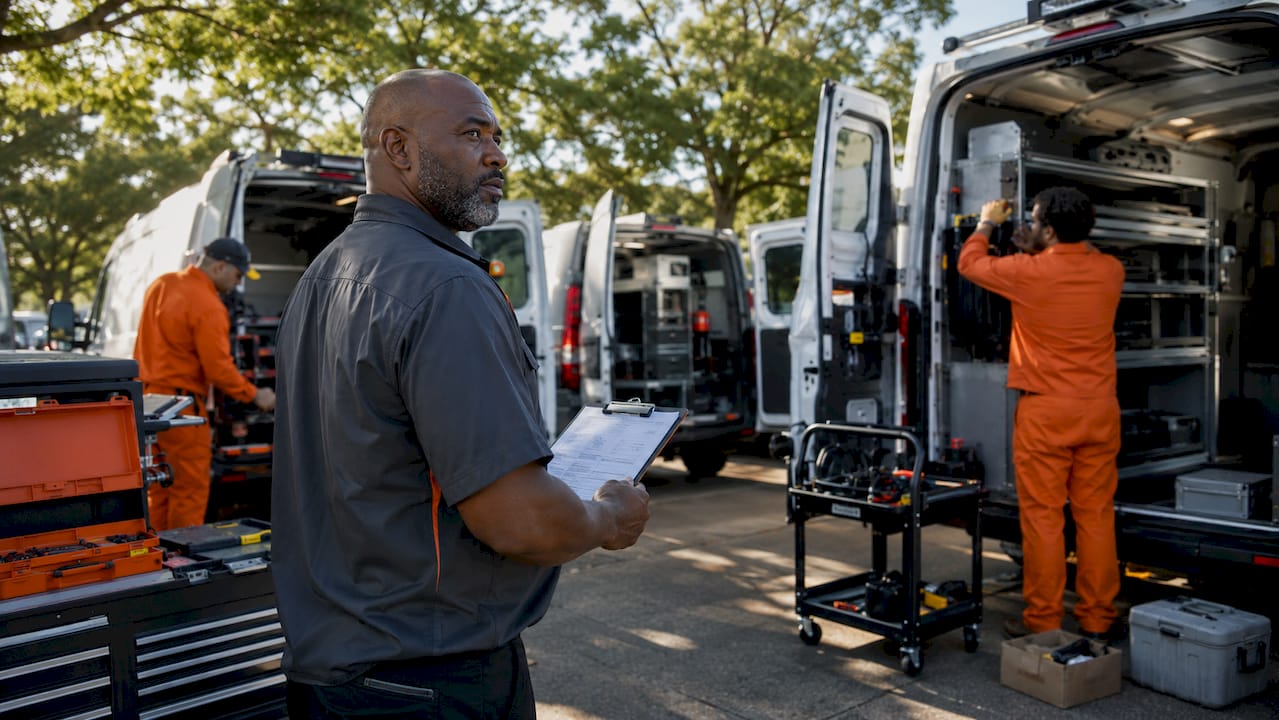
Business fleet customization is the process of modifying commercial vehicles through upfitting and branding to optimize their functionality, safety, and visual impact for specific business needs. Fleet managers who treat this as a one-time purchase decision rather than an infrastructure investment consistently underperform those who plan it deliberately. The industry separates these modifications into two distinct categories: upfitting, which engineers vehicles for job functions, and branding, which turns vehicles into mobile advertising. Understanding what is business fleet customization means understanding both categories and how they serve different goals.
What is business fleet customization, and why does it matter?
Business fleet customization is defined as the deliberate adaptation of commercial vehicles to match a company’s operational workflows and brand identity. The industry term most professionals use is “fleet upfitting and branding,” though fleet customization has become the standard shorthand for both practices combined.
Upfitting directly impacts productivity by optimizing workflow layout and storage efficiency, with the potential to eliminate 30 minutes of daily search time for technicians. That is not a minor gain. Across a fleet of 20 technicians, that adds up to 10 hours of recovered productive time every single day.
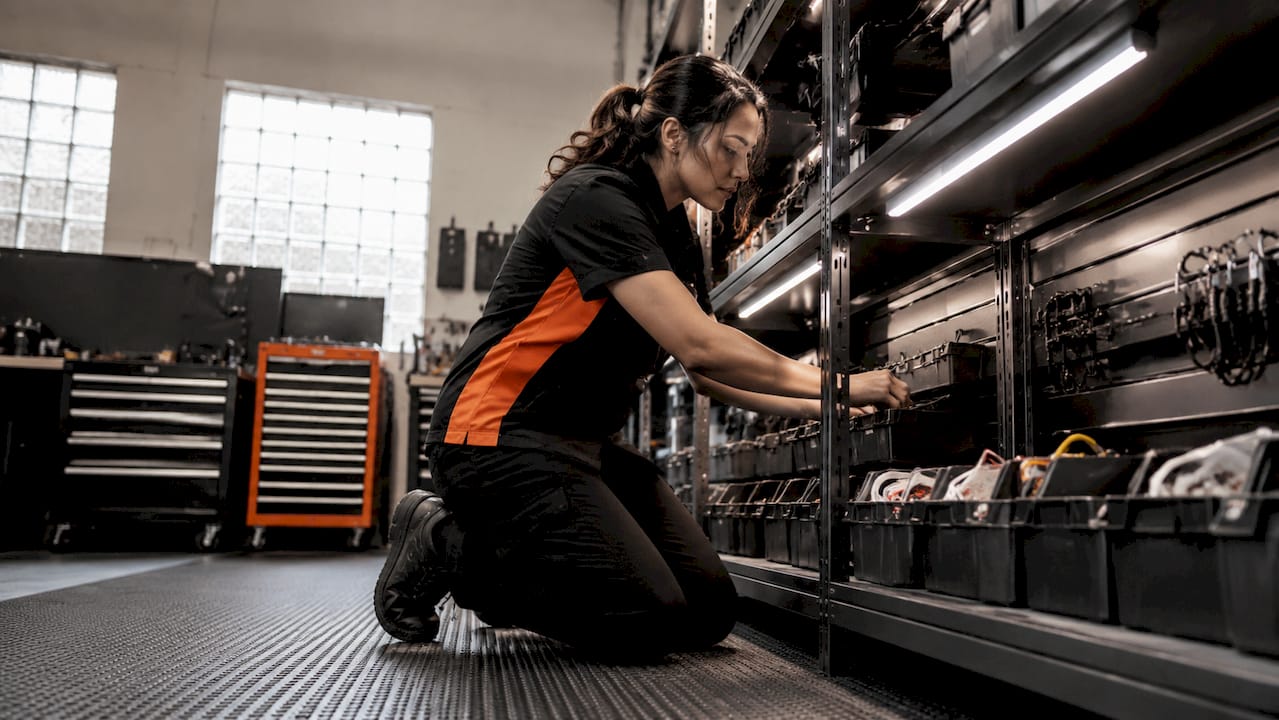
Branding, on the other hand, applies visual assets such as vinyl wraps, decals, and graphics to turn vehicles into rolling advertisements. A well-branded fleet builds corporate identity in every neighborhood your drivers pass through. These two objectives require separate strategies, separate budgets, and separate specialists.
What are the main types of fleet customization?
Fleet customization options fall into two primary categories: upfitting and branding. Confusing them leads to poor planning and wasted money.
Upfitting: engineering for the job
Upfitting involves professional modifications to storage, utility, and electrical systems, creating mobile workspaces tailored to specific operational needs. A plumbing company might add custom pipe racks and lockable tool drawers. An HVAC contractor might need integrated electrical outlets and parts bins organized by job type. A utility crew might require ladder racks, generator mounts, and cable management systems.
Upfitting benefits include:
- Faster job starts: Tools and parts are exactly where technicians expect them.
- Reduced vehicle damage: Properly secured equipment does not shift during transit.
- Safety compliance: Custom tie-downs and storage meet OSHA and DOT load requirements.
- Technician consistency: Any driver can operate any vehicle in the fleet without relearning layouts.
Branding: turning vehicles into advertising
Branding applies wraps, decals, and graphics to create a consistent visual identity across every vehicle. Effective branding aligns marketing goals with vehicle appearances to avoid clutter and maintain a professional image. A cluttered wrap with too many phone numbers and slogans reads as noise. A clean, bold design with a logo, one tagline, and a single contact point reads as authority.
| Feature | Upfitting | Branding |
|---|---|---|
| Primary goal | Operational efficiency | Marketing and visibility |
| Key methods | Storage, electrical, utility mods | Wraps, decals, graphics |
| Measured by | Productivity and downtime | Brand recognition and leads |
| Specialist needed | Upfitter or fleet modifier | Wrap shop or graphic designer |
| Timing | Before or at vehicle purchase | Any time, ideally at purchase |
Both categories deliver real business value. The mistake is treating them as the same project.
How does upfitting improve fleet efficiency and workflow?
Upfitting changes how work actually gets done inside and around the vehicle. The layout of a service van is not an aesthetic choice. It is a workflow decision that affects every job your technicians complete.
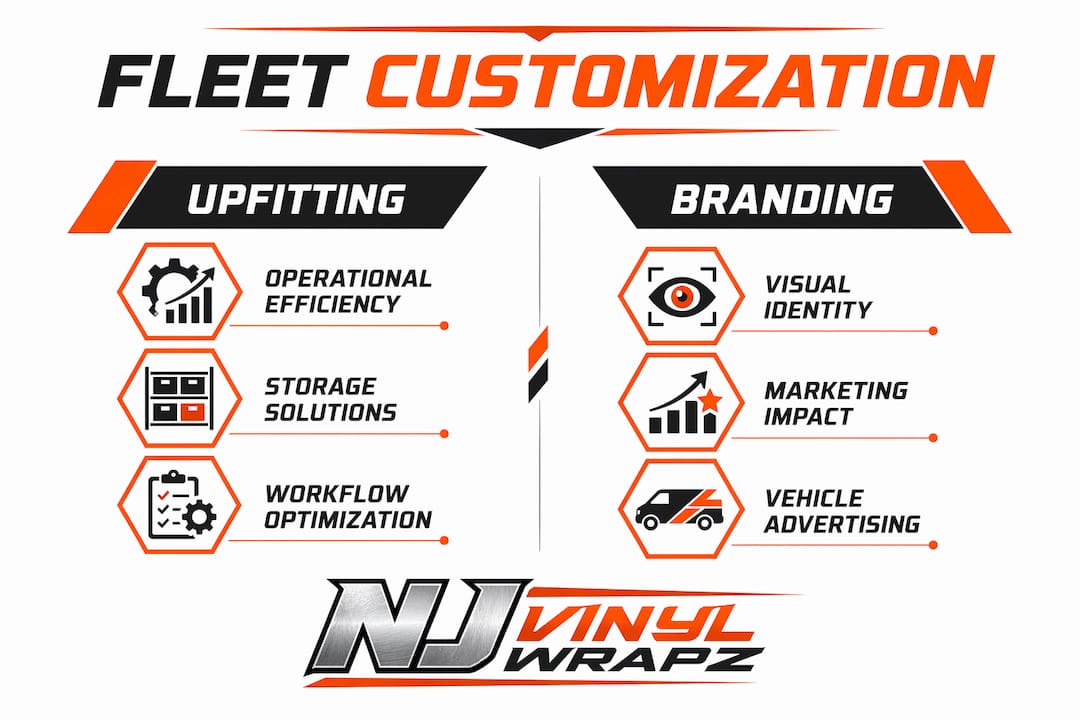
Standardization in upfitting allows any technician to locate equipment within seconds, improving productivity across the entire fleet. When every van has the same drawer layout, the same bin labeling system, and the same tool placement, a technician who switches vehicles loses zero time getting oriented. That consistency compounds across hundreds of jobs per year.
Workflow layout optimization means mapping the sequence of tasks a technician performs and designing storage around that sequence. If a technician always reaches for a voltage tester first, that tool goes in the most accessible position. If heavy parts are loaded and unloaded frequently, they go at waist height near the rear doors, not on a high shelf.
Electric vehicle fleets add a layer of complexity. Upfitting for EV fleets requires specialized expertise to ensure utility equipment integrates correctly with electrical systems without voiding warranties or reducing range. Adding high-draw equipment to an EV without accounting for battery load can cut range significantly and void the manufacturer warranty. This is a non-negotiable planning step for any fleet moving toward electrification.
Key upfitting considerations for fleet managers:
- Map technician workflows before specifying any equipment.
- Account for payload capacity when adding shelving and storage systems.
- Verify electrical compatibility for any powered equipment, especially on EVs.
- Standardize layouts across all vehicles of the same type.
- Plan for maintenance access so upfit components do not block service points.
Pro Tip: Conduct a full operational needs analysis before purchasing vehicles, not after. Retrofitting upfits onto an already-purchased chassis costs more and often produces a worse result than specifying the right chassis from the start.
What are best practices for integrating branding into your fleet?
Fleet vehicle branding works best when it is treated as a marketing channel with its own strategy, not as a cosmetic add-on. A branded fleet generates impressions in every neighborhood, job site, and parking lot your vehicles visit. That reach is continuous and costs nothing beyond the initial wrap investment.
Fleet vehicle branding trends in 2026 emphasize balanced design that avoids clutter while maximizing brand impact on vehicle wraps and decals. The most effective fleet wraps use high-contrast color schemes, large logo placement, and a single clear call to action. Designs that try to communicate everything communicate nothing.
Vinyl wraps are the most versatile branding tool for fleets. Materials from 3M and Avery are the industry standard for durability and print quality. A properly installed wrap on a well-prepared surface lasts five to seven years and protects the underlying paint, which preserves resale value. Partial wraps and vehicle lettering offer lower-cost entry points for smaller fleets or tighter budgets.
Effective fleet branding practices include:
- Use consistent colors, fonts, and logo placement across every vehicle.
- Limit contact information to one phone number or website address.
- Choose wrap materials rated for the climate and use conditions your fleet operates in.
- Work with a designer who understands vehicle contours, not just flat graphic design.
- Review the design at full vehicle scale before approving production.
The goal is brand recognition at 60 miles per hour. Simplicity wins every time.
What strategic planning is essential when customizing a business fleet?
Strategic planning separates fleet managers who get results from those who get expensive regrets. Failing to plan upfits leads to scattered retrofits, inefficiencies, and increased costs. The same principle applies to branding: a fleet that gets wrapped vehicle by vehicle with no consistent design standard looks unprofessional and wastes money.
Follow these planning steps before any customization begins:
- Define operational requirements first. List every task your vehicles support and every tool or material they carry.
- Analyze vehicle chassis compatibility. Not every chassis supports every upfit. Payload ratings, wheelbase, and electrical capacity all constrain your options.
- Set a branding standard document. Define colors, fonts, logo versions, and placement rules before the first vehicle goes to a wrap shop.
- Plan for scalability. If you add vehicles in 18 months, your upfit and branding specs should apply to new vehicles without redesign.
- Budget for maintenance. Wraps need periodic inspection and repair. Upfit components wear and need replacement. Build both into your fleet operating budget.
Customization is a competitive asset, not merely an expense. Adapting vehicles to workflows reduces downtime and builds a measurable advantage over competitors running generic, unmodified vehicles. Fleet managers who integrate charging stations, diagnostic tools, and custom power sources at the build stage maximize uptime across the vehicle’s full service life.
Pro Tip: Partner with an experienced upfitter and a professional wrap shop before you finalize your vehicle order. Both specialists can identify chassis or design issues that are far cheaper to solve before purchase than after delivery.
Key Takeaways
Business fleet customization delivers the strongest results when upfitting and branding are planned as separate strategies before vehicle purchase, not retrofitted as afterthoughts.
| Point | Details |
|---|---|
| Two distinct categories | Upfitting improves operations; branding builds visibility. Treat them as separate projects with separate specialists. |
| Upfitting drives productivity | Standardized layouts eliminate wasted search time and improve consistency across every technician and vehicle. |
| Branding requires simplicity | Clean, high-contrast designs with one call to action outperform cluttered wraps every time. |
| Plan before purchase | Specifying upfits and branding standards before buying vehicles prevents costly retrofits and chassis mismatches. |
| EV fleets need extra care | Electric vehicle upfits require compatibility checks to protect warranties and preserve driving range. |
Why I think most fleet managers get customization backwards
Fleet managers almost always prioritize branding first because it is visible and exciting. A wrapped van looks like progress. A custom shelving layout does not photograph well for the company newsletter. That bias is expensive.
The fleets I have seen perform best treat upfitting as infrastructure and branding as the finish coat. You build the operational foundation first: the right chassis, the right storage, the right electrical capacity. Then you brand it. When you reverse that order, you end up with a beautiful van that frustrates every technician who works out of it.
The other mistake I see constantly is treating fleet customization as a one-time event. Vehicles change. Job requirements change. A wrap that made sense three years ago may no longer reflect your current services or contact information. A shelving system designed for gas-powered tools may not work with the battery-powered equipment your team now uses. Build a review cycle into your fleet management calendar, at minimum every two years, and treat customization as a living system rather than a sunk cost.
The businesses that get the most from their fleets are the ones that connect vehicle customization ideas directly to business goals, not just aesthetics. Every modification should answer the question: does this make my team more effective or my brand more visible? If it does neither, it does not belong on the vehicle.
— Krunal
How Njvinylwrapz helps New Jersey fleets build stronger brands
Fleet branding is only as good as the materials and installation behind it. Njvinylwrapz has over 10 years of experience wrapping commercial fleets across New Jersey, using 3M and Avery materials installed in climate-controlled facilities for results that last.
Whether you need full vehicle wraps for a single van or a consistent branding program across a 50-vehicle fleet, Njvinylwrapz delivers custom design, professional printing, and expert installation under one roof. The team works with fleet managers to align wrap designs with brand standards, vehicle contours, and long-term durability requirements. Contact Njvinylwrapz for a free quote and see what a professionally branded fleet looks like for your business.
FAQ
What is business fleet customization?
Business fleet customization is the process of modifying commercial vehicles through upfitting and branding to improve operational efficiency and brand visibility. It covers both functional modifications like storage and electrical systems and visual changes like wraps and decals.
What is the difference between upfitting and branding?
Upfitting engineers a vehicle for specific job functions through storage, utility, and electrical modifications. Branding applies visual assets like vinyl wraps and decals to create a consistent marketing identity across the fleet.
How does fleet upfitting improve productivity?
Standardized upfit layouts allow technicians to locate tools and equipment within seconds, eliminating wasted search time and improving consistency across every vehicle in the fleet.
When should fleet customization be planned?
Fleet customization should be planned before vehicle purchase. Planning upfits after purchase leads to costly retrofits and chassis compatibility problems that reduce the effectiveness of the final result.
How long do fleet vehicle wraps last?
A professionally installed vinyl wrap using materials from brands like 3M or Avery typically lasts five to seven years when properly maintained, while also protecting the vehicle’s original paint and preserving resale value.