
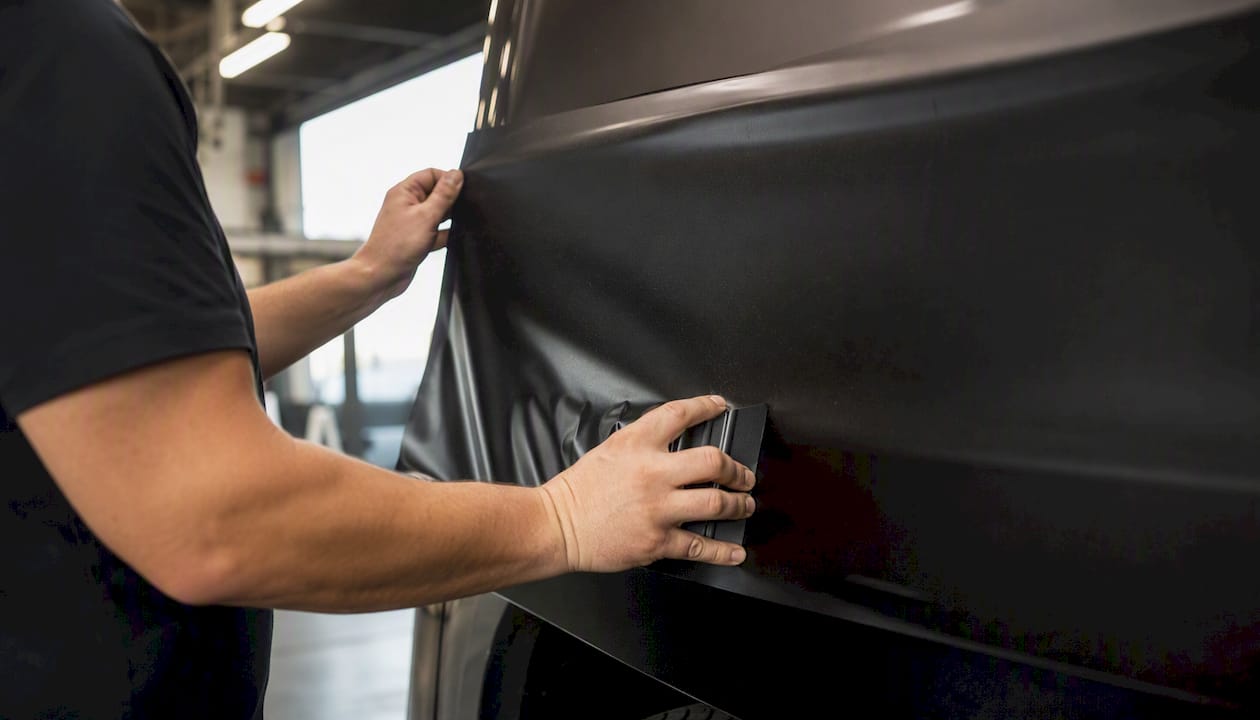
A typical partial wrap usually costs a few hundred to a couple of thousand dollars, though commercial vehicles and specialty finishes can push that figure higher. Partial wrap ranges reported by The Wrap Map confirm this band, with full wraps starting near $2,500 and climbing past $6,000 for larger vehicles. Shops using premium cast vinyl from 3M or Avery sit toward the upper end of that range; economy calendered films land lower but wear faster.
The partial wrap is the right call when you need targeted branding or a style accent without committing to a full color change. It costs less, installs faster, and still delivers real visual impact on high-traffic panels like doors and rear quarters. Just budget for the extras that rarely appear in a headline price: surface prep, badge removal, and any old vinyl that needs to come off first.
Key Takeaways
Partial wrap cost ranges from $500 to $2,500 for most vehicles, with commercial vans and specialty finishes reaching $3,500 or more depending on coverage, materials, and prep.
| Point | Details |
|---|---|
| Typical price range | Most partial wraps fall between $500 and $2,500; commercial vans can reach $3,500+. |
| Biggest cost drivers | Coverage area, panel complexity, material grade (3M/Avery vs. economy film), and prep work. |
| Why 50% coverage ≠ 50% price | Design, templating, and surface prep are largely fixed costs that don’t scale down with coverage. |
| Always ask about materials | Request 3M or Avery by name and get a written warranty on both materials and installation. |
| NJ Vinyl Wrapz | Offers panel-by-panel estimates using 3M and Avery materials with written warranties and climate-controlled installation. |
Table of Contents
- How Much Does a Partial Wrap Cost by Coverage and Vehicle?
- What Drives Partial Wrap Cost the Most?
- Partial Wrap vs. Full Wrap: Which One Makes Sense for You?
- How Installers Build a Partial-Wrap Quote
- How Long Does a Partial Wrap Take, and How Long Will It Last?
- How to Get an Accurate Quote from a Wrap Shop
- Design and Planning Tips That Lower Your Cost Without Losing Impact
- An Installer’s Perspective on Partial Wrap Pricing
- Getting a Quote from NJ Vinyl Wrapz
- Sources
- FAQ
How Much Does a Partial Wrap Cost by Coverage and Vehicle?
The table below reflects national planning ranges. Your local quote will vary based on shop rates, material availability, and vehicle condition.
| Coverage Level | Sedan | Compact SUV | Full-Size Pickup | Cargo Van | Box Truck |
|---|---|---|---|---|---|
| Spot graphics / decals | $150–$400 | $150–$400 | $200–$500 | $300–$500 | $400+ |
| Single panel (hood or roof) | $350+ | $400+ | $450+ | $500+ | $600–$1,000 |
| Accent package (roof + mirrors + pillars) | $600–$1,000 | $650+ | $700+ | $800+ | $900+ |
| Half-side partial (lower or upper body) | $800+ | $900+ | $1,000+ | $1,200+ | $1,500+ |
| Large commercial partial (sides + rear) | $1,200+ | $1,300+ | $1,400+ | $1,500+ | $1,000–$3,500+ |
SalesThumb’s per-panel pricing guide places roof-only jobs and hood-only jobs within typical cost ranges for sedan and compact SUV partial wraps. Blink Signs reports that commercial partials for vans and service vehicles commonly run $1,000–$3,500+ because of larger panel sizes and print complexity.
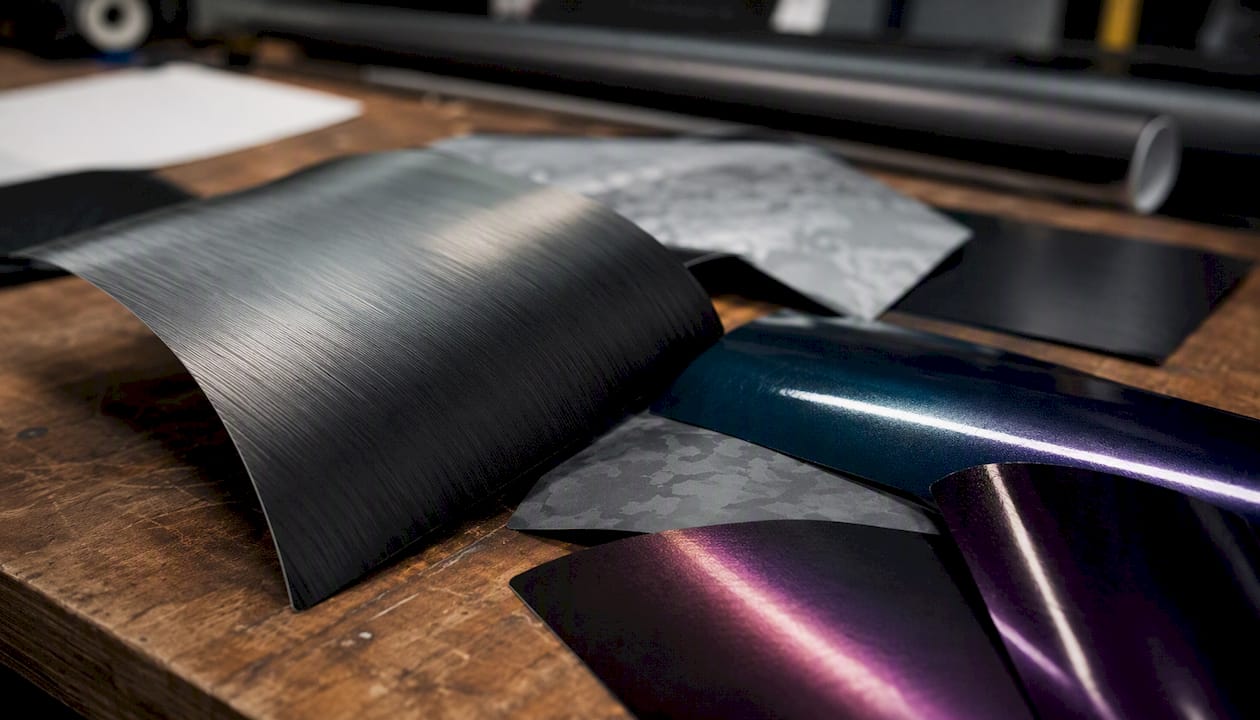
Specialty finishes, chrome delete, color-shift films, or brushed-metal textures add $200–$600 or more to any row. These materials cost significantly more per square foot and require more careful installation.
What Drives Partial Wrap Cost the Most?
Six factors account for most of the price variance you’ll see between quotes.
- Coverage percentage and panel selection. A hood-and-roof combo uses far less vinyl than a full-side partial. Which panels you choose matters more than the percentage alone, because some panels (fenders, bumpers, curved rear quarters) take two to three times longer to install than flat doors.
- Vehicle size and surface complexity. A Ram 1500 with a long bed has more square footage than a compact sedan, and its body lines and trim gaps create more seams to work around. Cab style and bed length alone can shift a pickup wrap estimate by several hundred dollars. Fleet managers shopping for new commercial vehicles should factor wrap area into the total cost of ownership before finalizing a model.
- Material grade. Cast vinyl from 3M or Avery conforms to curves, resists shrinkage, and lasts years longer than economy calendered films. Material typically accounts for 30–40% of total wrap cost, so the grade you choose has a direct and proportional effect on the final number.
- Design complexity. A simple two-color cut vinyl logo takes minutes to prep. A full-bleed printed graphic with gradients, photos, and multiple colors requires template creation, proofing rounds, and print production time. That design and setup work is a fixed cost, meaning it doesn’t scale down much even if the coverage area is small.
- Installation prep. Surface decontamination, paint correction, badge and trim removal, and stripping old vinyl all add labor hours before a single piece of new film goes on. Skipping prep is the fastest way to a wrap that lifts at the edges within a year.
- Shop labor rates and environment. A climate-controlled install bay with experienced technicians costs more per hour than a garage operation. That overhead is worth it: temperature and humidity directly affect how vinyl adheres and whether air pockets form.
Pro Tip: Use your vehicle’s factory paint color as a deliberate design element. A white cargo van with a bold printed graphic on the lower half and clean white above it uses half the vinyl of a full wrap and often looks sharper. Industry specialists consistently note that integrating factory paint reduces material cost and simplifies installation.
Partial Wrap vs. Full Wrap: Which One Makes Sense for You?
| Dimension | Partial Wrap | Full Wrap |
|---|---|---|
| Coverage | varies depending on the coverage percentage | full coverage |
| Average cost range | $500–$2,500 | $2,500–$6,000+ |
| Installation time | 1–2 days | 2–4 days |
| Paint protection | Covered panels only | Full vehicle |
| Typical use case | Targeted branding, accent styling, short campaigns | Full color change, maximum protection, long-term campaigns |
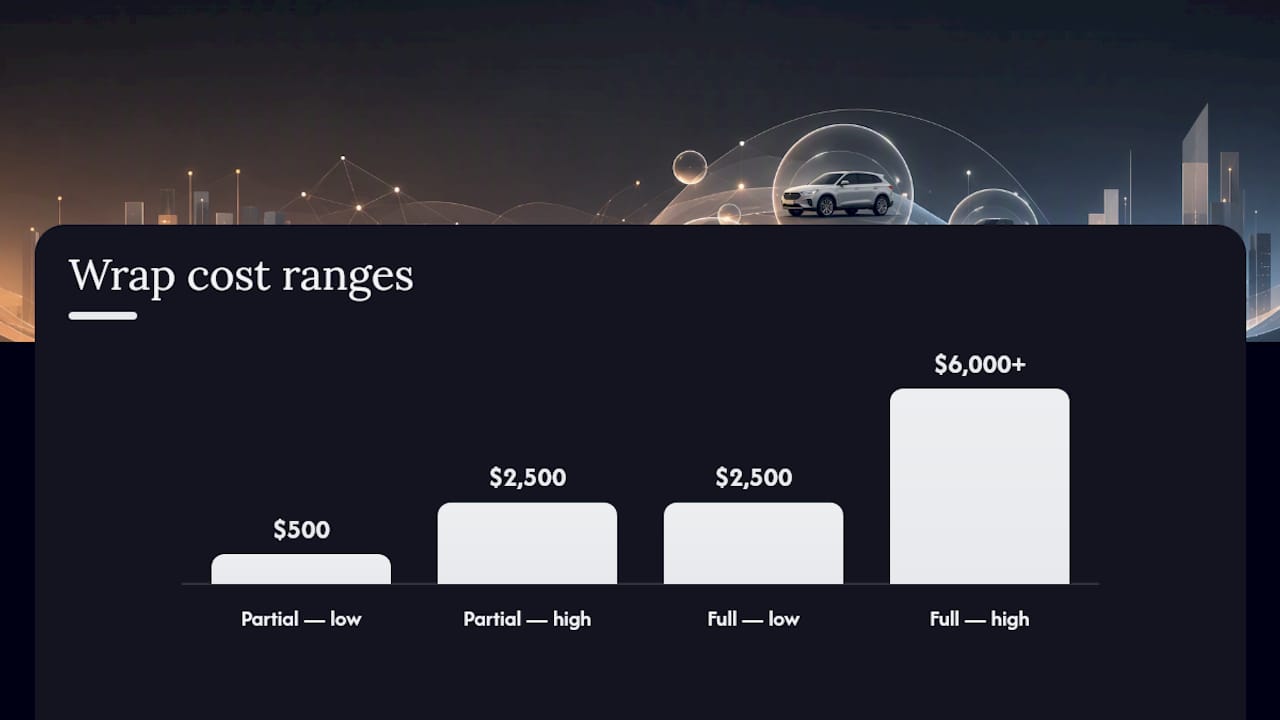
Partial wraps win on cost and speed. For a fleet running a seasonal promotion or a business owner who wants a logo and contact info on the doors and rear, a partial delivers the visibility without the full-wrap price tag. The ROI rule from The Wrap Map is straightforward: prioritize high-visibility panels (sides and rear doors) for short campaigns or tight budgets.
Full wraps make more sense when paint protection is the goal, when you need a complete color change, or when a long-term campaign demands a consistent brand canvas across every surface. The protection benefits of full wraps are meaningful: the vinyl acts as a sacrificial layer over the factory paint, which matters for resale value on commercial fleets.
One practical rule: if the design requires continuity across the roof, hood, and sides without visible breaks, a full wrap is usually cleaner and more cost-effective than a complex partial that tries to achieve the same look.
How Installers Build a Partial-Wrap Quote
Understanding the line items in a quote helps you spot whether an estimate is realistic or suspiciously low.
- Material cost. Shops measure each panel, add a waste factor (typically 10–20% for curves and overlaps), and price the vinyl at their material cost plus markup. A 3M or Avery cast film costs more per square foot than a generic calendered film, and that difference shows up directly in the material line.
- Laminate (if applicable). Printed graphics usually get a clear overlaminate for UV protection and scratch resistance. This adds cost but extends the life of the print significantly.
- Labor hours by panel. Flat panels like doors are fast. Fenders, bumpers, and curved rear quarters take two to three times longer per square foot. A shop pricing a partial wrap that includes a bumper and fender will charge more labor per square foot than one covering only the doors, even if the total area is similar.
- Design and file setup. Template creation, artwork proofing, and print production are largely fixed costs. A partial wrap that covers 40% of the vehicle doesn’t cost 40% less on design than a full wrap. Wrapquotes illustrates this with a mid-size SUV full-wrap example that arrives near $3,100 after material, laminate, labor, overhead, and margin are applied. The fixed-cost components in that calculation don’t shrink proportionally with coverage.
- Overhead and margin. Shop rent, equipment, insurance, and technician wages are allocated across every job. A well-run shop with a climate-controlled bay and certified installers carries higher overhead, and that’s reflected in the quote.
The takeaway: 50% coverage does not equal 50% of a full-wrap price. Design, prep, and overhead costs are largely fixed, so the savings from a partial wrap come mainly from reduced material and some labor reduction on the panels you skip.
How Long Does a Partial Wrap Take, and How Long Will It Last?
Installation time depends on job complexity. Simple spot graphics or a single-panel accent can be done same-day. A standard partial wrap covering the hood, roof, and both sides typically takes one to two days. Complex jobs with multiple panels, intricate designs, or vehicles that need significant prep work can run up to three days.
Lifespan for quality cast vinyl from 3M or Avery commonly falls in the 3–7 year range, depending on climate, care, and how much sun exposure the vehicle gets. Economy films tend to fade, shrink, and lift well before that window closes.
Maintenance matters as much as material quality. Hand-washing with a pH-neutral soap extends wrap life significantly. Automatic brush car washes are the fastest way to introduce edge lifting and micro-scratches. Inspect the edges and seams every few months, especially around door handles and mirrors, and address any lifting early before water gets underneath.
Premature failure usually traces back to one of four causes: inadequate surface prep before installation, harsh chemical cleaners used during washing, physical damage from road debris at lifted edges, or a calendered film that was never suited for the application in the first place. The maintenance practices that protect vinyl wraps are simple but non-negotiable if you want the wrap to reach its rated lifespan.
How to Get an Accurate Quote from a Wrap Shop
Shops that price by panel measurement rather than category average give you far more reliable estimates. Here’s what to send and what to ask.
- Send clear photos of all four sides plus close-ups of any panels with damage, previous vinyl, or unusual trim. Shops need to see surface condition before they can quote accurately.
- Provide year, make, model, and trim level. Trim level matters because it affects body line details and badge placement. For trucks, include cab style and bed length.
- Include a coverage diagram or description. A rough sketch or annotated photo showing which panels you want wrapped eliminates ambiguity and prevents mid-project surprises.
- Share brand assets if you’re printing graphics. High-resolution logos and brand color codes (Pantone or CMYK) let the shop quote print production accurately.
- Ask which material brand they use. The answer should be 3M, Avery, or another named cast vinyl manufacturer. “Premium vinyl” with no brand name is a red flag.
- Ask about warranty terms and shop insurance. A reputable shop offers a written warranty on both materials and installation. Ask specifically whether the warranty covers edge lifting and color fade.
- Ask whether they remove badges and trim. Wrapping over badges creates edges that lift. Good shops remove them; budget shops often don’t.
- Ask about their install environment. Climate-controlled bays aren’t optional for quality work. Temperature and humidity affect adhesion during installation.
Red flags to watch for: vague coverage percentages with no panel breakdown, no material brand named in the quote, a labor line that seems dramatically low compared to other estimates, or no written warranty offered.
Design and Planning Tips That Lower Your Cost Without Losing Impact
Smart design decisions at the planning stage can meaningfully reduce both material and labor costs.
Design to the flat panels. Doors and rear quarter panels are the fastest and most cost-effective surfaces to wrap. A design that lives primarily on these panels avoids the labor-intensive curves of fenders and bumpers. For fleet vehicles, this approach also makes panel replacement easier if a door gets damaged.
Pro Tip: Let the factory paint do some of the work. A dark-colored van with a printed graphic band across the middle and bare paint above and below it uses roughly half the vinyl of a full wrap. The contrast between the graphic and the factory color often reads as intentional and polished, not incomplete. This approach consistently reduces material cost and simplifies installation.
For fleet identification where the goal is contact information and a logo rather than a full brand canvas, cut vinyl lettering and spot graphics are significantly cheaper than printed wraps. A set of door logos and a phone number on a cargo van can run $150–$400 and last just as long as a printed wrap when installed with quality cast vinyl. The fleet ROI guide from NJ Vinyl Wrapz covers how to balance visibility and cost across a multi-vehicle fleet.
For fleets with multiple identical vehicles, modular panel designs reduce one-off setup costs. If the same graphic repeats across ten vans, the templating and file setup cost is amortized across the whole fleet rather than charged per vehicle.
An Installer’s Perspective on Partial Wrap Pricing
The question we hear most often is some version of: “Why doesn’t a partial wrap cost exactly half of a full wrap?” The short answer is that design, prep, and overhead don’t scale linearly with coverage. Templating a vehicle, decontaminating the surface, and setting up the print file takes nearly the same time whether you’re covering three panels or ten.
After more than ten years working with commercial fleets and individual vehicle owners, using 3M and Avery materials in climate-controlled install bays, the pattern is consistent: clients who get the best results are the ones who come in with a clear coverage plan and realistic expectations about prep time. A partial wrap on a vehicle with old vinyl, paint chips, or surface contamination will cost more than the same job on a clean, well-maintained vehicle. That’s not a surprise fee; it’s just physics.
Fleet managers asking for panel-by-panel estimates rather than a single lump-sum quote get far more useful numbers for budgeting across multiple vehicles. It’s worth asking for that breakdown.
Getting a Quote from NJ Vinyl Wrapz
Skip the guesswork on pricing. NJ Vinyl Wrapz installs partial and full wraps using 3M and Avery cast vinyl, with every job done in a climate-controlled facility by experienced, licensed technicians. That combination of materials and environment is what separates a wrap that lasts five-plus years from one that starts lifting at the edges by year two.
To get started, send photos of all four sides of your vehicle, your year/make/model/trim, and a description of which panels you want covered. From there, the process is straightforward: panel-by-panel templating, a design proof for your approval, production, and scheduled installation. Every project comes with a written warranty on materials and workmanship.
Whether you’re wrapping a single personal vehicle or planning a fleet rollout, request a quote through the NJ Vinyl Wrapz wrap options page to get a panel-specific estimate you can actually budget from.
Sources
Use these sources to cross-check quotes, verify pricing ranges, and dig deeper into how wrap shops calculate their estimates.
- How to Price a Vehicle Wrap: Complete Guide | Wrap Quotes
- Partial vs. Full Wrap: Cost & Coverage Comparison (2026) | The Wrap Map Blog
- Vehicle wrap pricing in 2026: what to charge · SalesThumb
- How Much Does a Vehicle Wrap Cost in 2026? | Blink Signs
- How Much Does It Cost to Wrap a Car? Honest Pricing Guide (2026) | TheHowMuch
FAQ
How much does a partial wrap typically cost?
Most partial wraps fall between $500 and $2,500 for personal vehicles, with commercial vans and larger vehicles commonly reaching $1,000–$3,500+ depending on coverage, panel complexity, and material grade.
Is it cheaper to wrap a car or paint it?
A quality paint job from a reputable body shop typically costs more than a partial wrap and offers no easy removal option. A partial wrap using 3M or Avery cast vinyl is usually the more cost-effective choice for branding or accent styling, and it’s fully removable.
What does a partial wrap look like?
A partial wrap covers specific panels, such as the hood, roof, doors, or lower body, while leaving the rest of the vehicle in its factory paint. When designed well, the transition between vinyl and paint reads as intentional rather than incomplete.
How long will a partial wrap last?
Quality cast vinyl from 3M or Avery commonly lasts 3–7 years with proper care, including hand-washing with pH-neutral soap and avoiding automatic brush car washes. Economy films typically fall short of that range.
Recommended
- Vehicle Wraps Cost per Square Foot: 2026 Pricing Guide | NJ Vinyl Wrapz
- Pickup Truck Wrap Cost: What Owners and Fleets Should Budget | NJ Vinyl Wrapz
- Car Wrap Color Options 2026: Top Trends and Finishes | NJ Vinyl Wrapz
- Fleet wrap costs explained: value, savings, and ROI for NJ fleets | NJ Vinyl Wrapz