
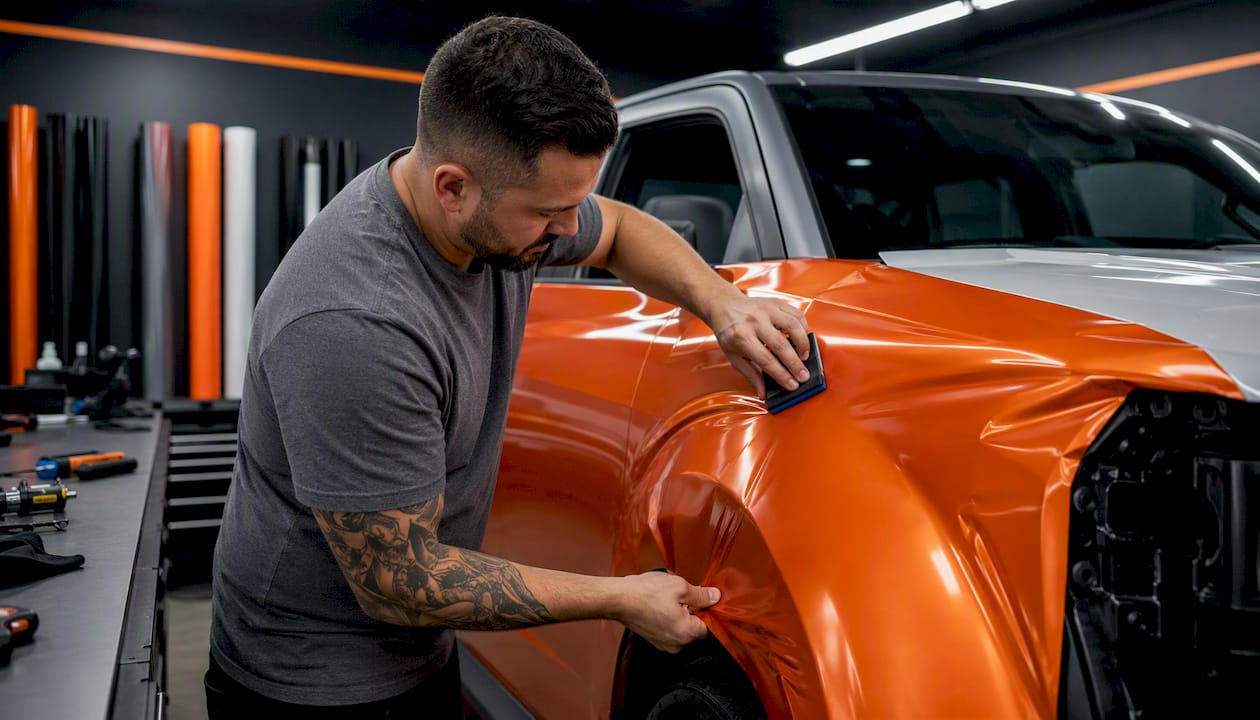
A full pickup truck wrap typically runs several thousand dollars at most U.S. shops, while partial wraps and spot graphics land considerably lower. Here’s the fast version before we get into the details:
- Full wrap (F-150, Silverado, RAM 1500, crew cab): generally in the several-thousand-dollar range, with specialty finishes pushing higher on oversized or complex builds
- Partial wrap (hood, roof, bed sides, or tailgate panel): usually costs less depending on coverage
- Door lettering and spot graphics: typically cost less and vary based on complexity
Quotes vary because no two trucks are the same. A base-model work truck with flat panels wraps faster than a lifted crew cab with a toolbox, aftermarket fenders, and a tonneau cover. Material grade, finish type, and your shop’s location all move the number. For a vehicle-specific figure, send photos and your truck’s year, make, and model to a certified installer.
Key Takeaways
A full pickup truck wrap costs $3,000–$6,000 at most U.S. shops, with material brand, finish type, and vehicle complexity being the three factors that move the number most.
| Point | Details |
|---|---|
| Full wrap ballpark | Most full pickup truck wraps fall between $3,200 and $6,000; specialty finishes can exceed $7,000. |
| Partial wrap range | Partial wraps usually cost less depending on coverage. |
| Top cost drivers | Material grade (cast vs. calendared), finish type, and vehicle complexity affect price most. |
| Material brands matter | 3M and Avery Dennison cast vinyl is the professional standard; always confirm the brand before signing. |
| NJ Vinyl Wrapz | Offers certified installation with 3M/Avery materials, design proofing, and warranty coverage in New Jersey. |
Table of Contents
- How much does a pickup truck wrap cost? A full price breakdown
- What factors change the final quote for your truck?
- Which vinyl and finish options are available, and how do they affect price?
- What happens during installation, and how long will your truck be in the shop?
- DIY vs. professional installation: what’s the real cost difference?
- How long does a truck wrap last, and what does maintenance look like?
- How to get an accurate quote for your pickup truck wrap
- Why installer choice matters more than most buyers realize
- Get a quote from NJ Vinyl Wrapz for your pickup truck
- Sources
- FAQ
How much does a pickup truck wrap cost? A full price breakdown
The sticker price on a wrap quote isn’t just “vinyl + labor.” Several line items stack up, and knowing what each one covers helps you read a quote intelligently.
What makes up a wrap invoice:
- Design and setup: Custom artwork, template creation, and proofing. Ranges from included-in-price at full-service shops to $150–$500 billed separately for complex branded designs.
- Printing: Wide-format digital printing on the vinyl film itself. Print complexity (photographic imagery vs. flat color) affects both cost and turnaround.
- Vinyl material: The film itself. Cast vinyl costs more than calendared but conforms better to curves and lasts longer on a daily-driven truck.
- Laminate: A protective overlaminate layer that adds UV and scratch resistance. Skipping it to save money shortens wrap life noticeably.
- Installation labor: The largest single line item on most quotes. Expect 1–3 days of skilled labor for a full pickup wrap.
- Surface prep: Paint decontamination, panel cleaning, and sometimes minor paint correction before film goes down.
- Old wrap removal: If your truck already has vinyl on it, removal adds $300–$600 or more depending on how long it’s been on and how cleanly it comes off.
According to market pricing data, full pickup truck wraps commonly fall within a mid-range price bracket. Partial wraps and door lettering are generally less expensive.
| Coverage scope | Typical U.S. price range | Notes |
|---|---|---|
| Full wrap, standard cab/half-ton | generally several thousand dollars | Flat color or simple design; cast vinyl |
| Full wrap, crew cab with specialty finish | can be higher due to finish types | Matte, metallic, chrome, or photographic print |
| Partial wrap (hood, roof, or bed sides) | usually less expensive | Coverage-dependent; cast vinyl recommended |
| Door lettering / spot graphics | typically lower-priced | Calendared vinyl acceptable for flat surfaces |
Old wrap removal, a cracked panel edge that needs prep, or a last-minute finish upgrade can each add a few hundred dollars that weren’t in the original scope.*
What factors change the final quote for your truck?
Two shops can quote the same truck $1,500 apart and both be pricing fairly. Here’s what’s actually moving the number.
Coverage level is the biggest single lever. A full wrap uses three to four times the material and labor of a partial, so the price gap between them is real. Deciding upfront whether you need full coverage or just the cab sides and tailgate saves money and avoids scope creep.
Vehicle size and panel complexity matter more on pickups than on sedans. A standard cab F-150 has fewer panels and less surface area than a crew cab Silverado with an 8-foot bed. Add a toolbox, a bed cap, or aftermarket fenders and the installer has to trim, heat-form, and hand-wrap around every edge. That’s billable time. Contractor-focused pricing guides note that major metro shops often run higher than national averages, and complex trucks amplify that gap further.
Material brand and grade affect both price and longevity. Premium cast vinyl from 3M or Avery Dennison costs more per roll than entry-level calendared film, but it’s the standard for commercial trucks that see daily use. Premium-brand wraps from recognized manufacturers typically start in the low thousands and can exceed $7,000 for oversized or specialty projects.
Finish type changes material cost. Gloss is the baseline. Matte, satin, metallic, and chrome finishes each carry a price premium, with chrome being the most expensive by a significant margin.
Design complexity affects print cost and proofing time. A flat two-color logo wraps faster and cheaper than a full-bleed photographic mural.
Geographic labor rates create real spread across the country. Shops in major metros tend to run higher than regional or suburban installers, and that difference can be meaningful on a full wrap.
Pro Tip: Before dropping your truck off, ask the shop specifically about your toolbox, bed cover, and any aftermarket trim. These areas require extra trimming and heat work. Getting that labor scoped upfront prevents a surprise line item on pickup day.
Always ask for a quote broken down by line item: design, material, laminate, labor, and prep. A single lump-sum number tells you nothing about where the money is going.
Statistic callout: Geographic location alone can create meaningful price differences between shops in major metros and those in smaller markets. Always get at least two local quotes before committing.
Which vinyl and finish options are available, and how do they affect price?
The vinyl itself is where a lot of cost decisions live. Two categories cover most of what shops use.
Cast vs. calendared vinyl:
- Cast vinyl is manufactured by pouring liquid PVC onto a casting sheet, which produces a thin, flexible film that conforms to compound curves and recessed panels. It’s the right choice for full wraps on trucks with complex body lines, and it’s what professional shops use for commercial fleet work. Comprehensive wrap cost guides confirm that material grade is one of the primary cost drivers, with cast vinyl commanding a premium over calendared.
- Calendared vinyl is made by pressing PVC through rollers, producing a thicker, stiffer film. It works fine for flat surfaces, door lettering, and spot graphics, but it tends to shrink over time on curved panels and isn’t recommended for full wraps on daily-driven trucks.
Premium brands: 3M and Avery Dennison
3M™ Vehicle Wrap Films and Avery Dennison wrap films are the two most widely specified materials at professional shops. Both offer cast films with conformability ratings suited for complex vehicle panels, and both back their products with manufacturer warranties that certified installers can pass on to customers. Using a recognized brand matters not just for durability but for warranty coverage. A shop that won’t tell you which brand of vinyl they’re using is a red flag.
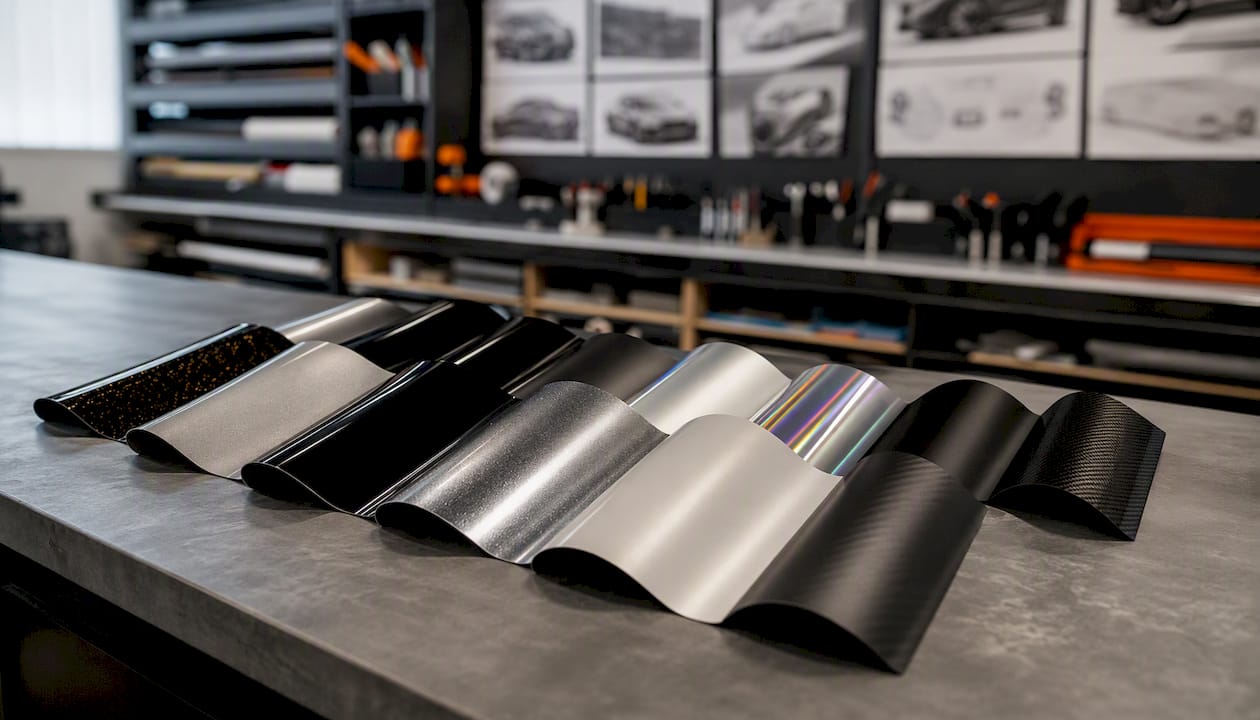
Finish options and their cost effect:
| Finish | Cost relative to gloss | Notes |
|---|---|---|
| Gloss | Baseline | Most common; easiest to maintain |
| Matte | Moderate premium | Popular for color-change and fleet work |
| Satin | Moderate premium | Between gloss and matte in sheen |
| Metallic | Higher premium | Adds depth; more material cost |
| Chrome / mirror | Highest premium | Specialty film; significant labor increase |
Laminate is the overlaminate film applied on top of the printed or colored vinyl. A quality laminate adds UV protection, scratch resistance, and extends the wrap’s service life. Shops using 3M or Avery materials typically pair them with matching laminates to maintain warranty coverage. Skipping the laminate to cut costs is a short-term saving that shortens the wrap’s lifespan. For cost per square foot details on how material and labor scale with truck surface area, that breakdown is worth reviewing before you request quotes.
What happens during installation, and how long will your truck be in the shop?
A professional wrap installation isn’t a same-day job, and understanding the sequence helps you plan around it.
The installation sequence:
- Site prep and intake: Shop photographs the vehicle, documents existing paint condition, and confirms the scope.
- Disassembly: Trim pieces, door handles, mirrors, and sometimes emblems are removed to allow clean film edges underneath.
- Surface cleaning and prep: The entire vehicle is decontaminated. Any paint contamination, wax, or silicone residue will cause adhesion failure.
- Layout and printing: For custom-printed wraps, panels are printed and laminated before installation begins. This step may happen before the truck arrives if artwork was approved in advance.
- Panel-by-panel installation: Film is applied section by section in a climate-controlled environment. Temperature and humidity affect adhesion, which is why a proper shop facility matters.
- Finishing and QA: Edges are heat-sealed, seams are inspected, and any bubbles or lifts are corrected.
- Curing and pickup: The wrap needs time to fully adhere before the vehicle returns to service.
Scheduling expectations:
- Partial wrap or lettering: Typically 1–2 days in-shop; lead time for design approval is 3–7 business days.
- Full wrap, standard design: Usually 2–3 days in-shop; allow 1–2 weeks from design approval to installation slot.
- Full wrap with custom print or specialty finish: 3–5 days in-shop; lead time can extend to 2–3 weeks depending on shop volume.
Before you drop off your truck:
- Remove personal items from the cab and bed
- Note any existing paint chips, scratches, or dents (document them with photos)
- Confirm whether the shop handles emblem removal or whether you need to do it beforehand
- Ask about their return-to-service policy (when you can wash it, park in the sun, etc.)
Pro Tip: Schedule your installation for early in the week. Most shops are slower Monday through Wednesday, which means your truck gets more focused attention and is less likely to sit waiting behind a Friday rush.
DIY vs. professional installation: what’s the real cost difference?
The appeal of DIY is obvious. Vinyl film is available online, and tutorial videos make it look manageable. For a pickup truck, though, the math and the risk both shift quickly.
DIY wrap: the honest picture
Materials-only cost for a full pickup truck wrap runs roughly $500–$1,200 for a quality cast vinyl film, depending on the truck’s surface area and the finish you choose. That sounds like a significant saving against a $3,500–$5,000 professional quote. The gap closes fast when you account for:
- Waste: First-time installers typically waste 20–40% of their material on misaligned panels, tears, and do-overs.
- Tools: A proper install requires a heat gun, squeegees, knifeless tape, and a clean, temperature-controlled workspace. Budget $150–$300 for tools if you don’t already have them.
- Time: A professional crew wraps a full pickup in 2–3 days. A solo DIYer with no experience can spend a full week and still end up with visible seams, lifted edges, and bubbles.
- No warranty: DIY installs carry no material warranty and no workmanship guarantee. If the film lifts or fails, you’re buying new material and starting over.
Wrapping generally costs less than repainting for commercial work vehicles when you factor in labor, downtime, and long-term flexibility. That comparison holds for professional wraps. DIY attempts that fail can end up costing more than a professional install once rework is factored in.
When DIY is a bad idea:
- Your truck has compound curves, deep recesses, or aftermarket body modifications
- The wrap is for a company fleet where brand consistency matters
- You need a manufacturer warranty to protect the investment
- You’re using specialty films (matte, metallic, chrome) that require precise heat application
Pro Tip: If you want to test your skills before committing to a full wrap, practice on a flat panel like a hood or a door. A partial DIY attempt on a single panel costs little and tells you quickly whether a full truck is realistic.
For a broader look at mobile install options and what shop-based versus mobile installs involve, this overview of car wrap services covers the process differences worth knowing before you choose.
How long does a truck wrap last, and what does maintenance look like?
A professionally installed cast vinyl wrap on a pickup truck can last several years under normal use with proper care. Neglect it and you’ll see premature fading, edge lift, and adhesion failure well before that window closes.
Routine maintenance:
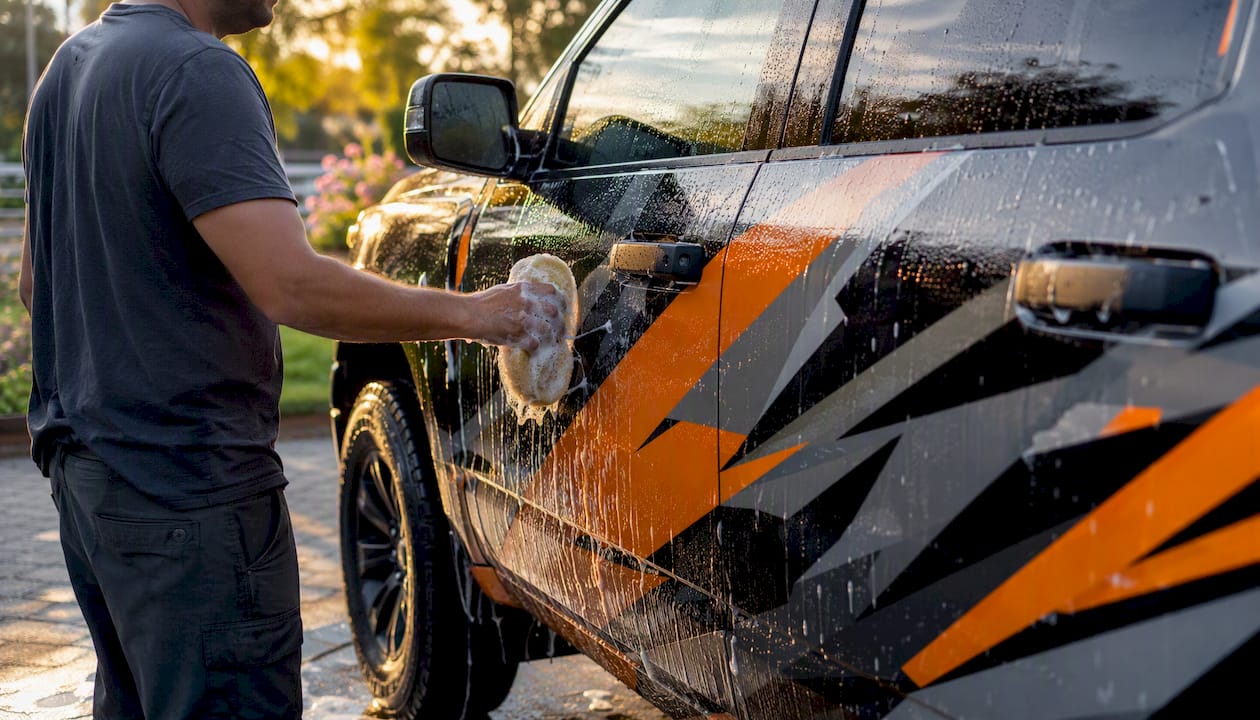
- Hand wash with a mild automotive soap and a soft cloth or sponge
- Wash in the shade or when panels are cool; manufacturer guidance specifically recommends avoiding washing in direct sun on hot surfaces to preserve film adhesion and finish
- Avoid pressure washers at close range or with a narrow-angle nozzle; keep the wand at least 12 inches from the surface
- Park in a garage or shaded area when possible to reduce UV exposure
- Wipe fuel spills immediately; gasoline and diesel degrade adhesive over time
Will a wrap damage your paint?
A properly installed and properly removed wrap protects paint rather than damaging it. The film acts as a barrier against minor abrasion, UV, and road debris. Damage occurs when wraps are left on well past their service life or removed incorrectly. For more on protecting vinyl wraps and keeping fleet vehicles looking sharp, that’s a practical resource.
Warranty and removal costs:
Most professional shops offer a warranty covering material defects and delamination, typically 1–3 years on the workmanship and up to 5–7 years on the material itself when installed with 3M or Avery Dennison films. Removal, when the time comes, typically adds $300–$600 to your lifetime cost depending on how long the wrap has been on and the condition of the film.
Pro Tip: For fleet trucks, schedule a quick visual inspection every 6 months. Catching a lifted edge on a tailgate early costs almost nothing to fix. Left alone for a season, that same lift can peel back a large section and require a partial re-wrap.
How to get an accurate quote for your pickup truck wrap
A vague request gets a vague quote. Shops need specific information to price a project accurately, and the more you give them upfront, the fewer surprises appear after you sign.
What to send when requesting a quote:
- Clear photos of all four sides, the front, rear, bed, and roof
- Truck year, make, model, cab configuration, and bed length
- Current paint or wrap condition (note any chips, rust, or existing vinyl)
- A coverage map or description (full wrap, partial, lettering only)
- Desired finish and any material brand preferences (3M or Avery Dennison)
- Your target timeline and whether the truck is a fleet vehicle
Questions to ask every shop:
- What vinyl brand and product line will you use?
- Is the laminate included, and what brand is it?
- Are your installers certified by 3M or Avery Dennison?
- Can I see examples of previous full wraps on similar trucks?
- What’s your cure time and return-to-service policy?
- What does removal cost if I want to change the wrap in five years?
- For fleet orders: do you separate design/setup fees from per-vehicle installation pricing?
Red flags in a quote:
- No material brand specified
- A single lump-sum number with no line-item breakdown
- A price significantly below every other quote you received (usually means cheaper film or rushed labor)
- No mention of laminate
- No warranty offered on workmanship
For fleet managers placing multi-vehicle orders, separating the design and setup fee from the per-vehicle installation cost matters. Once a template is approved, subsequent vehicles in the same fleet run faster and cheaper. Ask for that breakdown explicitly. The wrap options page at NJ Vinyl Wrapz outlines the coverage tiers and what’s typically included at each level.
Why installer choice matters more than most buyers realize
Most buyers focus on price. The shops that consistently produce wraps that still look sharp at year four aren’t always the cheapest quote in the stack, and the gap between a well-installed wrap and a rushed one shows up within the first winter.
The detail that separates average installs from durable ones is edge work. Tailgates, bed caps, and door jambs are where wraps fail first. Improper edge sealing on a tailgate lets moisture wick under the film, which lifts the adhesive from the inside out. By the time it’s visible, the damage covers a large section. A shop with real experience on pickup trucks heat-forms the film around every edge and seals it properly the first time.
NJ Vinyl Wrapz has been doing this for over 10 years, working with 3M and Avery Dennison materials in a climate-controlled facility. The controlled environment isn’t a marketing detail. Temperature and humidity during installation directly affect how the adhesive bonds. A garage install on a cold morning produces a different result than a proper shop at 65–75°F. The portfolio speaks to the consistency, and the material partnerships mean customers get the manufacturer warranty that backs the investment.
Get a quote from NJ Vinyl Wrapz for your pickup truck
NJ Vinyl Wrapz gives pickup truck owners and fleet managers a faster path from “I need a quote” to “truck is wrapped and back on the road.” Every full-wrap project includes design proofing, premium 3M or Avery Dennison cast vinyl, matching laminate, certified installation in a climate-controlled facility, and a material warranty.
Common inclusions and add-ons available with a standard quote:
- Vehicle template and custom artwork
- Door jambs and interior edge sealing
- Chrome delete
- Old wrap removal (priced separately based on condition)
- Window graphics and vehicle lettering
Ready to move forward? Request a full wrap quote directly, or visit NJ Vinyl Wrapz to review the full range of wrap options and contact the team with your truck details and photos.
Sources
- Vehicle Wrap Pricing: Real Costs, calculator and Price Factors
- How Much Does a Vehicle Wrap Cost in 2026?
- Truck Wraps for Contractors
- 41 - Tips on Cleaning a Wrapped Car - ANZ_EN - Arlon Graphics
FAQ
How much is a wrap for a pickup truck?
Most full pickup truck wraps cost between $3,200 and $6,000 at U.S. professional shops, with specialty finishes pushing past $7,000 on complex builds. Partial wraps and door lettering run $300–$2,000 depending on coverage.
Is it cheaper to wrap a truck or paint it?
Wrapping is generally less expensive than a quality repaint for commercial work trucks when you factor in labor, downtime, and the ability to remove or update the wrap later. A professional wrap also requires less surface prep than a full paint job.
How long does a full truck wrap last?
A professionally installed cast vinyl wrap on a daily-driven pickup typically lasts 5–7 years with proper care, including regular hand washing and avoiding prolonged direct sun exposure.
Can you wash a wrapped truck?
Yes. Hand wash with mild automotive soap and a soft cloth, and avoid pressure washing at close range. Manufacturer guidance recommends washing in the shade on cool panels to preserve film adhesion and finish quality.