
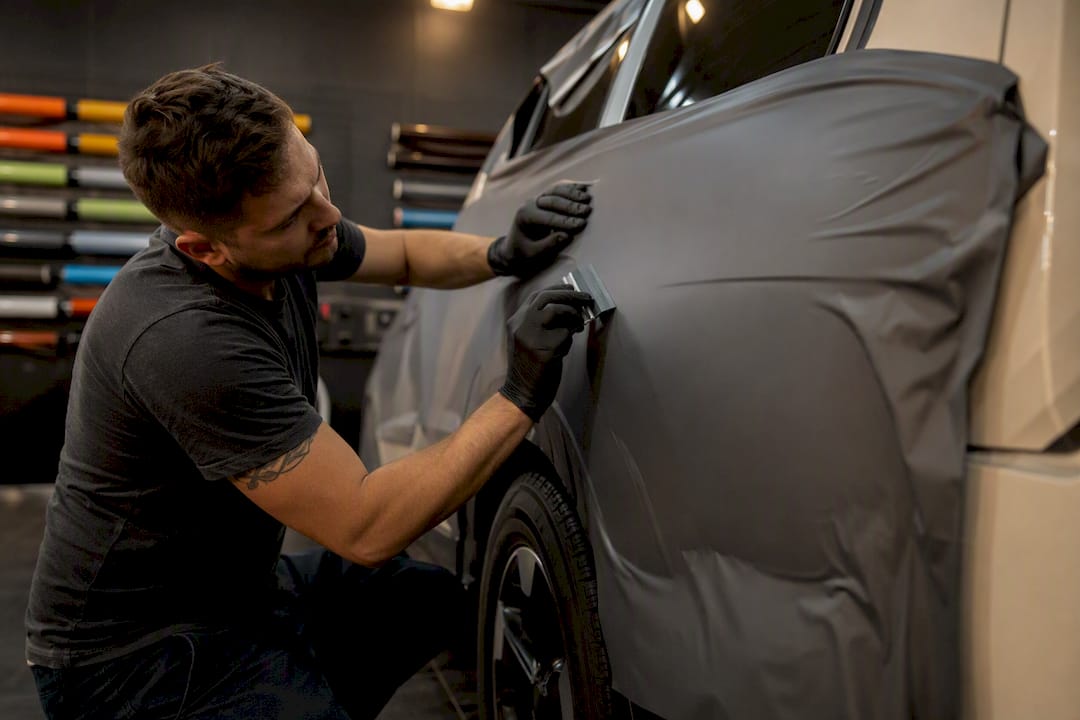
A professional full vehicle wrap in the U.S. typically runs $2,500 to $7,000 for standard gloss, matte, or satin finishes, with specialty finishes like chrome or color-shift pushing that to $5,000 to $12,000 or more. Partial wraps land much lower, usually $300 to $2,000 depending on which panels you cover. Fleet and box truck jobs run higher because of surface area and printed graphics complexity; businesses can explore multiple options by checking commercial vehicles for sale to find the best fleet vehicle for branding.
Here’s the short version before you get into the weeds:
- Full color-change wrap: $2,500–$7,000 (sedan to van)
- Partial wrap (hood, roof, mirrors, accents): $300–$2,000
- Fleet/box truck full wrap: often $3,500–$9,000+ per vehicle
- Specialty finishes (chrome, color-shift): add 40–80% over standard film
Pro Tip: Don’t chase the lowest quote. A wrap that uses certified 3M or Avery film and a trained installer will outlast a bargain job by two or three years, which makes the “cheap” option the expensive one.
Key Takeaways
Vehicle wrap cost in the U.S. is driven primarily by surface area, film grade, and labor hours, and any honest quote should let you trace those three factors back to the final number.
| Point | Details |
|---|---|
| Full wrap price band | Expect $2,500–$7,000 for standard finishes, more for chrome or color-shift film. |
| Partial wraps save money | Hood, roof, or mirror packages run $300–$2,000 and avoid full-vehicle labor costs. |
| Cast vinyl lasts longer | Quality cast film from brands like 3M or Avery lasts 5–7 years versus 3–5 for calendared film. |
| Ask for itemized pricing | Request material, labor, and film brand as separate line items to spot lowball quotes. |
| NJ Vinyl Wrapz builds transparent quotes | Pricing follows the material plus labor plus overhead plus profit formula, installed in a climate-controlled facility with 3M and Avery film. |
Table of Contents
- Vehicle Wrap Cost Breakdown: Materials, Labor, and Overhead
- How Much Does a Vehicle Wrap Cost by Vehicle Type?
- What Do Specialty Finishes Cost, and Are They Worth It?
- Partial Wraps and the Add-Ons That Change Your Quote
- How Shops Calculate Your Quote (With a Real Example)
- Questions to Ask Before You Sign a Wrap Contract
- What Pros Notice That Buyers Often Miss
- Our Take: What This Pricing Data Actually Tells You
- Get an Honest Quote Built on Real Numbers, Not Guesswork
- Sources
- FAQ
Vehicle Wrap Cost Breakdown: Materials, Labor, and Overhead
Every quote you get is built from four ingredients: material, labor, overhead, and profit. Understanding each one tells you which parts of a price you can negotiate and which parts you can’t.
Material typically makes up 30% to 40% of the total job cost. Shops use either calendared vinyl, a thinner film good for short-term or flat-panel work, or cast vinyl, which molds around curves and recesses without lifting. Consumer-grade jobs commonly price out at $8 to $16 per square foot, while fleet work using bulk-purchased film runs $6 to $12 per square foot. Add laminate for UV and scratch protection, and the film cost climbs again before a single hour of labor gets billed.
Labor is usually the biggest variable on the invoice. A straightforward sedan wrap might take 12 to 16 hours; a lifted truck with body lines, mirrors, and door jambs can eat 20 to 30 hours. Shops bill against a fully loaded labor rate that covers wages, insurance, and shop supplies, not just the installer’s hourly pay.
- Waste factor adds 10% to 20% to material usage on complex vehicles with wheel wells, bumpers, and mirrors
- Vehicles with more curves and cutouts (SUVs, trucks) waste more film than flat panel vans
- Overhead (rent, equipment, climate control, insurance) gets allocated per job, not billed as a line item
- Profit margin is layered on top, which is why two shops using identical film can quote very different totals
That waste factor matters more than most buyers realize.
How Much Does a Vehicle Wrap Cost by Vehicle Type?
Vehicle size and shape drive cost more than almost anything else in a quote. Here’s what to expect across common categories, based on national averages:
- Compact car: $2,000–$3,500 full wrap, 1 to 2 days install
- Mid-size sedan: $2,500–$4,500 full wrap, 1.5 to 2 days
- SUV/crossover: $3,000–$5,500 full wrap, 2 to 3 days
- Full-size truck: $3,500–$6,500 full wrap, 2 to 3 days
- Cargo van: $3,800–$7,000 full wrap, 2 to 4 days
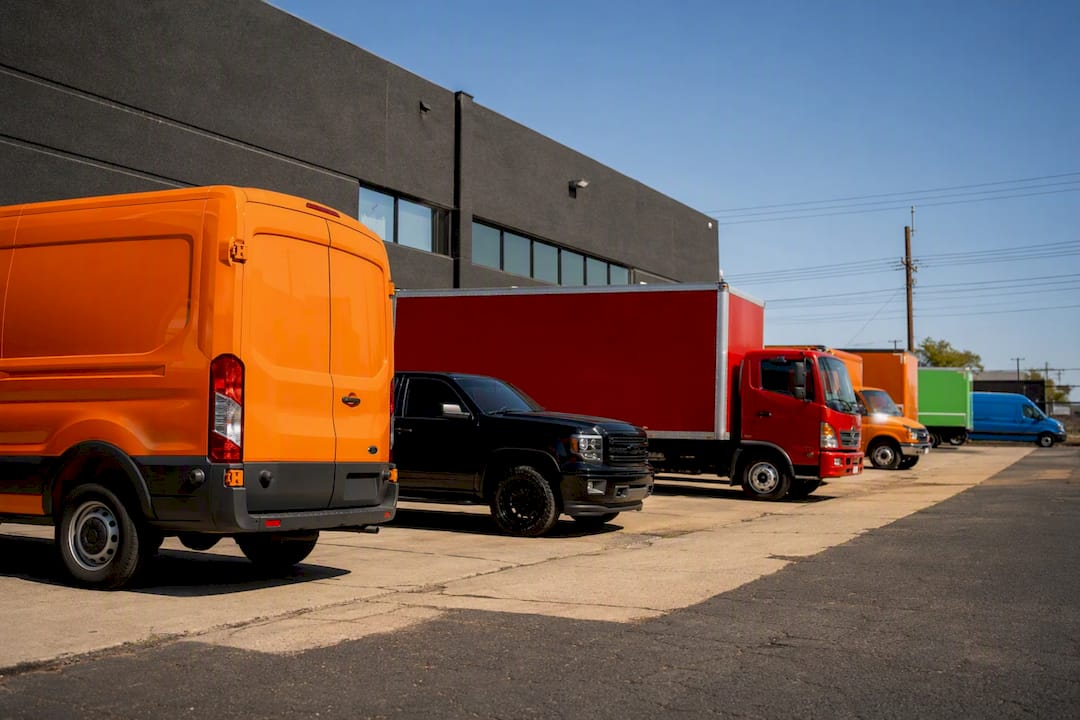
- Box truck (16–26 ft): $4,500–$9,000+ full wrap with printed graphics, 3 to 5 days
Install time tracks closely with surface area and complexity. A sedan with simple gloss film might be back in your driveway in a day and a half. A box truck getting a full printed wrap with laminate needs the extra days for design proofing, printing, lamination, and a careful multi-panel install that avoids seams lining up in the wrong spots.
Where you live changes these numbers too. Coastal metro markets in the Northeast and California run 15% to 45% above national averages because of higher labor and rent costs, while rural markets often price 10% to 25% below the national midpoint. If you’re in New Jersey, New York, or Philadelphia, expect quotes to sit toward the higher end of these ranges, not the low end. Fleet buyers typically pay a one-time design fee up front, then a lower per-vehicle rate for each additional truck in the fleet since the artwork is already built.
What Do Specialty Finishes Cost, and Are They Worth It?
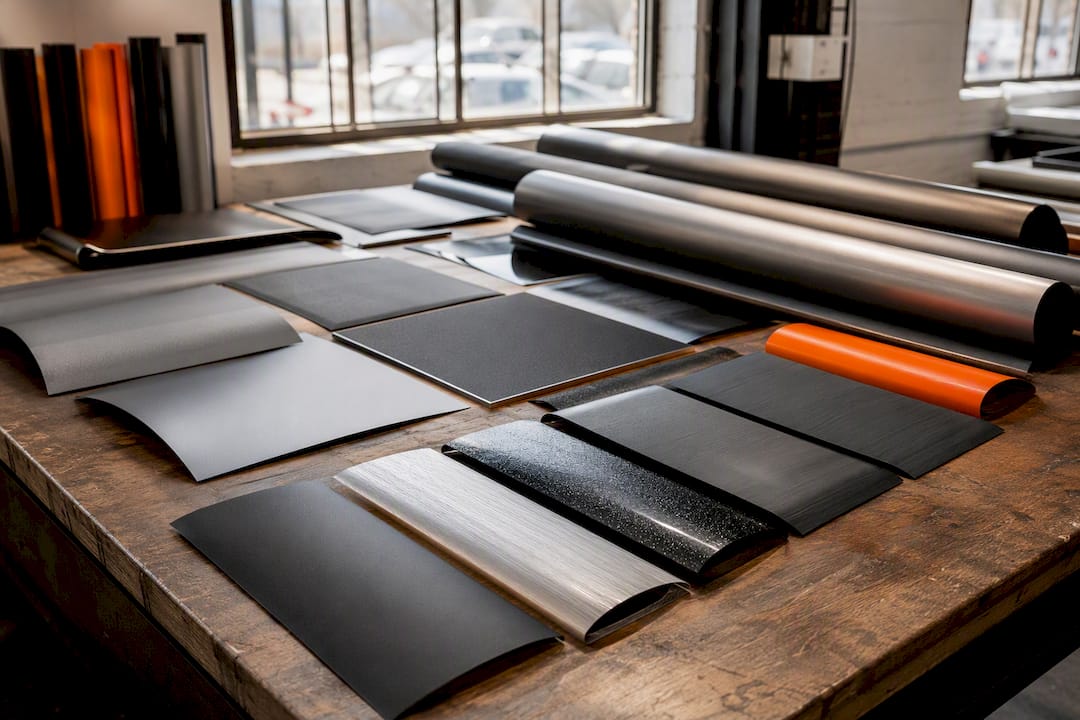
Gloss, matte, and satin films sit at the baseline price. Chrome and color-shift finishes cost dramatically more, and the reason isn’t just the film itself.
Chrome-look vinyl and color-shift wraps require more skilled labor because the film shows every imperfection in the surface prep. A wrinkle or trapped bubble that’s invisible under gloss black becomes a glaring flaw under chrome. Shops also waste more chrome film during application, since it can’t be stretched or manipulated the way standard cast vinyl can.
- Gloss/matte/satin: baseline pricing, no premium
- Carbon fiber texture: adds roughly 10–20% over standard film
- Chrome finishes: adds 40–80% over standard film, reflecting higher material and rework risk
- Color-shift/pearlescent: similar premium to chrome, sometimes higher depending on the brand
Specialty finishes also tend to have shorter usable lifespans than standard cast vinyl, often 2 to 4 years versus 5 to 7. If your goal is long-term paint protection rather than a dramatic look, a clear paint protection film or a ceramic coating over factory paint will usually serve you better and last longer for the dollar.
Partial Wraps and the Add-Ons That Change Your Quote
A partial wrap is the budget-conscious middle ground between vinyl decals and a full color change. Pricing depends entirely on which panels you cover:
- Hood or roof alone: $250–$650
- Mirrors, spoiler, or small accent pieces: often under $200 each
- Half-wrap packages (hood, roof, mirrors, pillars): $1,200–$2,500
- Racing stripes or accent graphics: $400–$900 depending on complexity
Add-ons are where quotes often surprise people. Old wrap removal typically costs $200 to $600 depending on how brittle the film has gotten. Door jamb wrapping, which gives a finished, factory-look edge, usually adds $100 to $300. Chrome delete on trim pieces runs $150 to $400. Bundling a window tint package into the same visit often saves you a return trip and sometimes a modest discount. Read more about partial wrap pricing if you’re weighing a smaller project.
How Shops Calculate Your Quote (With a Real Example)
Most reputable shops build a quote using the same basic formula, whether they say so explicitly or not:
- Material cost: square footage × price per square foot × waste factor
- Labor cost: estimated install hours × fully loaded shop labor rate
- Overhead allocation: a share of rent, equipment, and climate-control costs assigned to the job
- Profit markup: applied on top of the combined cost, commonly a 1.8× to 2.5× multiplier
Here’s what that looks like on a mid-size SUV full color-change job:
That lands squarely in the $3,000 to $5,500 SUV range from the earlier vehicle breakdown, which is exactly how a legitimate quote should behave. Usually it’s film grade, labor hours, or both. For a deeper walkthrough of the per-square-foot math, see this square-foot pricing guide.
Questions to Ask Before You Sign a Wrap Contract
Before you commit to any shop, ask these directly:
- What brand of film are you using, and is it cast or calendared?
- What warranty covers lifting, fading, or edge peeling, and for how long?
- How do you handle prep, including old wrap removal or paint correction?
- What’s your realistic timeline, including design proofing if graphics are involved?
- Is the quote itemized by material, labor, and add-ons, or a flat number?
Walk away from any shop that won’t name their film brand, has no visible portfolio of completed work, or hands you a number dramatically below every range in this article. A missing warranty or a verbal-only agreement with no contract is a serious red flag on a job this expensive.
If you’re trying to lower cost without sacrificing quality, go partial instead of full, bundle window tinting or PPF into the same appointment, ask about volume pricing if you’re wrapping multiple fleet vehicles, or choose a mid-tier cast film instead of a premium specialty finish. All four moves save real money without dropping you into calendared-film territory.
What Pros Notice That Buyers Often Miss
Shops with 10 or more years in business and formal partnerships with 3M and Avery Dennison price differently than a garage operation, and that difference shows up in your warranty coverage, not just your invoice.
- Licensed and insured shops build liability coverage into overhead, which is part of why their quotes run higher than a mobile installer’s
- Removing a prior wrap or discovering old PPF underneath adds $150 to $500 in unplanned labor almost every time
- Non-factory body kits or aftermarket parts extend install time because film doesn’t hug custom panels the way it does OEM surfaces
- Climate-controlled bays matter more than most buyers assume, since temperature-controlled prep and application reduce lifting and bubbling that shows up months later
The single biggest hidden cost we see isn’t the wrap itself. It’s what’s underneath: an old wrap nobody mentioned, a prior PPF layer, or body filler that was never disclosed. That’s why a proper quote always starts with an in-person inspection, not a phone estimate.
Our Take: What This Pricing Data Actually Tells You
The conventional wisdom on wrap pricing treats it like a commodity: get three quotes, take the cheapest. That advice falls apart the moment you understand the cost-build. Material and labor are largely fixed by physics, not haggling. It’s cutting film grade, skipping prep steps, or underbilling labor hours that will show up as lifting edges in eight months instead of five years.
What we’d prioritize first isn’t the lowest number. It’s the itemized breakdown. Ask any shop to show material cost, labor hours, and film brand separately. A shop that can’t or won’t do that is usually the one hiding a shortcut somewhere in the job.
The reader’s real question isn’t “what should this cost?” It’s “how do I know if this quote is honest?” The formula in this guide, material plus labor plus overhead plus profit, is the actual answer. Everything else is negotiating tactics on top of that math.
— NJ Vinyl Wrapz
Get an Honest Quote Built on Real Numbers, Not Guesswork
NJ Vinyl Wrapz prices every job the same way this article just walked you through: material, labor, overhead, and a clear markup, laid out in writing before work starts. That’s the difference between a shop that shows its math and one that just hands you a number.
We handle full color-change wraps, fleet branding, partial wraps, paint protection film, and ceramic coatings, all installed in a climate-controlled facility using 3M and Avery Dennison film. With more than a decade in the business across New Jersey and the surrounding region, we’re licensed, insured, and built specifically for fleet managers and individual owners who want a quote they can actually verify against real cost math. If you’re ready to see what your vehicle would run, request a full wrap quote and we’ll walk the breakdown with you line by line.
Sources
- How Much Does It Cost to Wrap a Car? Honest Pricing Guide (2026) | TheHowMuch
- How to Price a Vehicle Wrap: Complete Guide | Wrap Quotes
- Vinyl wrap pricing guide for shops: Charge more, earn more – HighCool
- Vehicle Wrap Pricing: Real Costs, calculator and Price Factors
FAQ
Is It Cheaper to Wrap a Car Than to Paint It?
Yes, in most cases. A quality paint job on a full-size vehicle often costs more than a full wrap and takes longer, and a wrap is also reversible if you want your original color back later.
How Long Will a Car Wrap Last?
Cast vinyl from brands like 3M or Avery typically lasts 5 to 7 years with proper care, while calendared film usually holds up for 3 to 5 years. Specialty finishes like chrome tend to last on the shorter end of that range.
Which Is Better, PPF or Wrap?
They solve different problems. A vinyl wrap changes color or adds branding, while paint protection film protects the factory finish from rock chips and scratches without changing its appearance; many owners combine both.
Can I Wash a Wrapped Car?
Yes, but hand wash with a soft cloth and mild soap, and avoid automatic car washes with abrasive brushes, which can lift edges and shorten the wrap’s lifespan. Full maintenance guidance can help you hit the full expected lifespan on your film.