
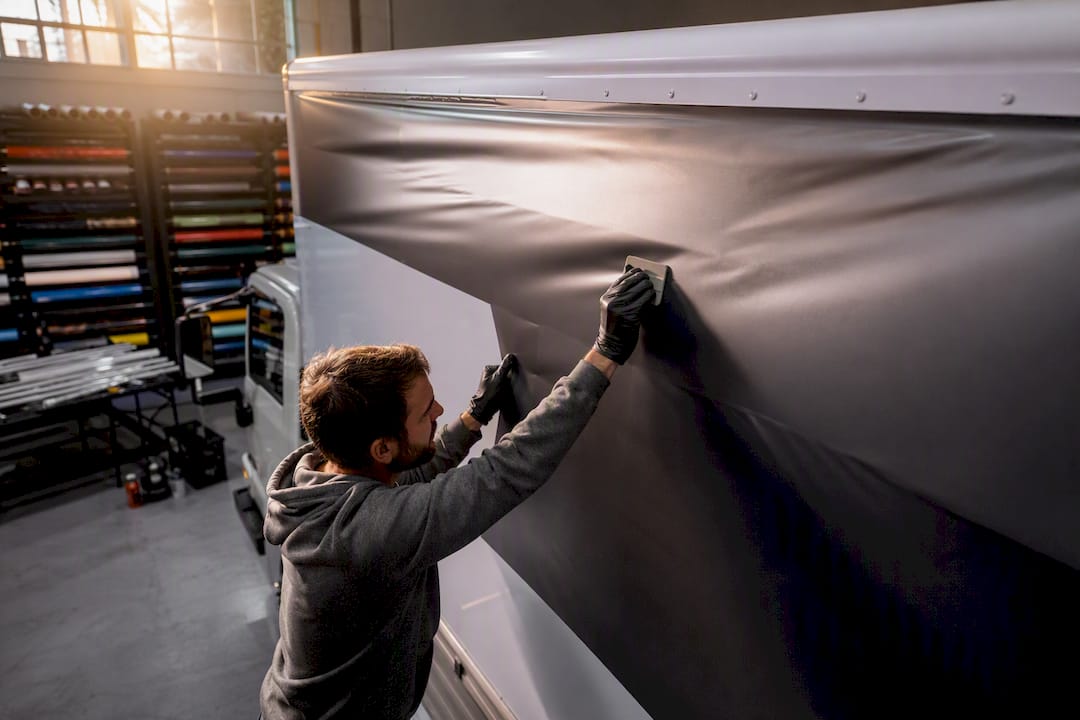
A full box truck wrap typically runs $3,200 to $10,000+, depending mostly on truck length and coverage level. Partial wraps land around $1,500 to $5,500, and lettering or basic logo packages start near $300 to $1,200. These figures generally include design, printing, and installation. Removal of old graphics, paint repair, and rush scheduling usually cost extra.
The fastest way to nail down your real number: measure your truck (or find the spec sheet), snap photos of all four sides plus the roof, and send that to a shop for an itemized quote.
- Full wrap: a wide price range depending on truck size and coverage
- Partial wrap: $1,500–$5,500
- Lettering/basic graphics: $300–$1,200
- Usually included: design, print, install
- Usually extra: old-graphic removal, paint prep, expedited turnaround
TL;DR:
- Full truck wraps typically cost between $3,200 and over $10,000, mainly influenced by truck length and coverage level, with larger trucks and full wraps costing more.
- Partial wraps, rear-only, or door-only graphics can reduce costs significantly, often amounting to 40-60% of full wrap prices, and are suitable for trucks with limited exposure.
- Using premium cast vinyl from brands like 3M or Avery Dennison extends wrap lifespan to 5-7+ years, compared to 2-4 years for budget calendered vinyl, impacting long-term value.
- Fleet discounts are available for orders of 10 or more trucks, with per-vehicle savings increasing as fleet size grows, especially when ordering multiple with same design templates.
- Accurate quotes require detailed truck specifications, photos, and clear breakdowns of material, design, labor, and removal costs to compare suppliers effectively.
Table of Contents
- Box Truck Wrap Cost by Size and Coverage Level
- What Actually Drives Your Box Truck Wrap Price
- How Long Does a Box Truck Wrap Last?
- Sample Box Truck Wrap Quotes to Budget From
- How to Get an Accurate Box Truck Wrap Quote
- Does Wrapping a Box Truck Affect Your Insurance?
- Negotiating Fleet Pricing on Multiple Box Truck Wraps
- Why the Right Materials and Installer Matter More Than the Lowest Bid
- Get an Itemized Box Truck Wrap Quote
- Key Takeaways
- Sources
- FAQ
Box Truck Wrap Cost by Size and Coverage Level
Truck length drives cost more than any other single factor because it determines square footage, and square footage determines both material and labor hours. A 12’ box truck sits at the low end of the range because it needs less vinyl and fewer install hours than its bigger siblings. A 24’ or 26’ truck can push past $10,000 once you account for the extra panels, roll-up door graphics, and the additional crew time needed to wrap a much larger surface cleanly.
Coverage level matters just as much as length. A full wrap covers every visible panel, which maximizes ad exposure but also maximizes material use. A partial wrap, covering roughly half the surface in a strategic pattern, commonly costs 40% to 60% of a full wrap. Rear-only or door-only graphics cost even less and work well for trucks that spend most of their time backed up to loading docks, where the rear panel gets the most eyeballs anyway.
| Truck Size | Full Wrap Range | Partial Wrap Range |
|---|---|---|
| 12’ box truck | $3,200–$5,500 | $1,500–$2,500 |
| 15’ box truck | $4,500–$5,500 | $1,500–$2,500 |
| 20’ box truck | $5,500+ | $2,500–$3,500 |
| 24’–26’ box truck | $7,000–$10,000+ | $3,200–$5,500 |
A few practical notes on where trucks land within these bands:
- Trucks with smooth, flat panel sides price toward the lower end of each range.
- Trucks with corrugated or riveted panels price toward the top, since installers work around each seam and rivet.
- Roll-up rear doors add both material complexity and labor time compared to swing doors.
- Fleet trucks ordered in matching sets often get a lower per-vehicle rate than a single one-off wrap.
What Actually Drives Your Box Truck Wrap Price
Two trucks of the same length can get quotes $2,000 apart, and it almost always comes down to five factors: material, labor, design, prep work, and geography.
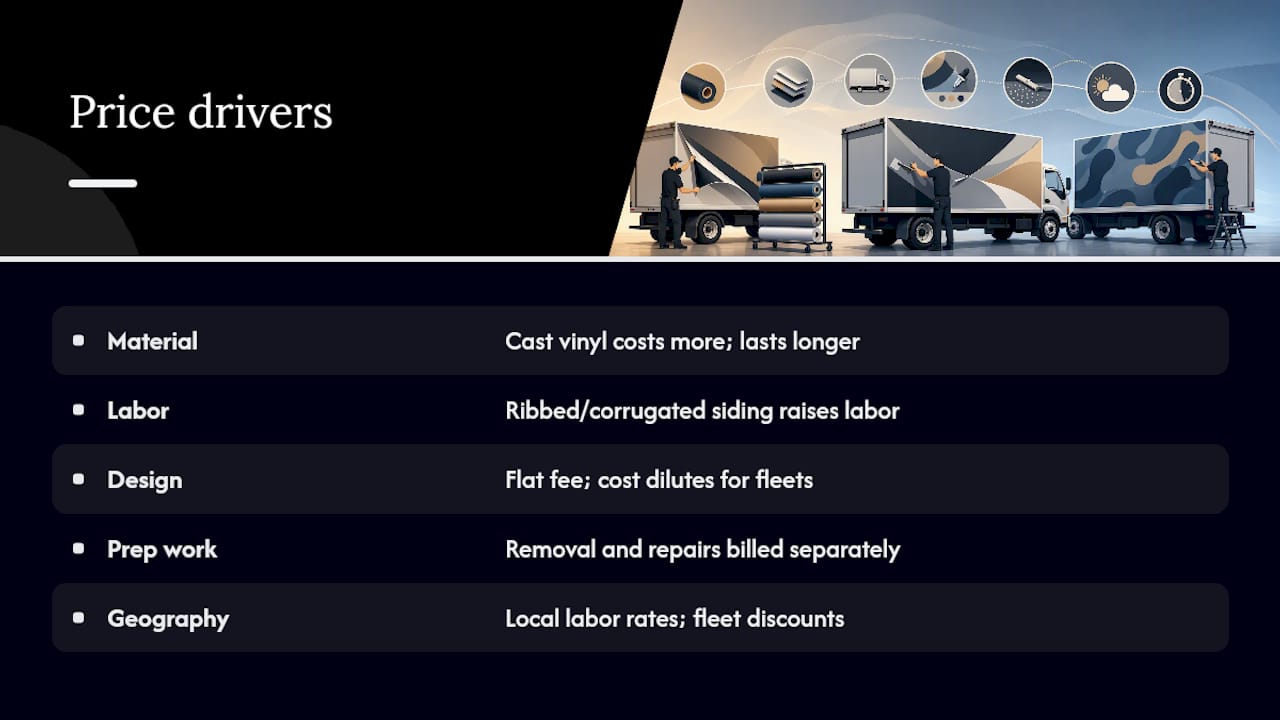
Material grade separates the budget quotes from the premium ones. Cast vinyl from brands like 3M and Avery Dennison conforms better to rivets and curves, resists shrinking, and holds color longer than calendered vinyl. It costs more per square foot but wraps faster on complex surfaces and lasts years longer.
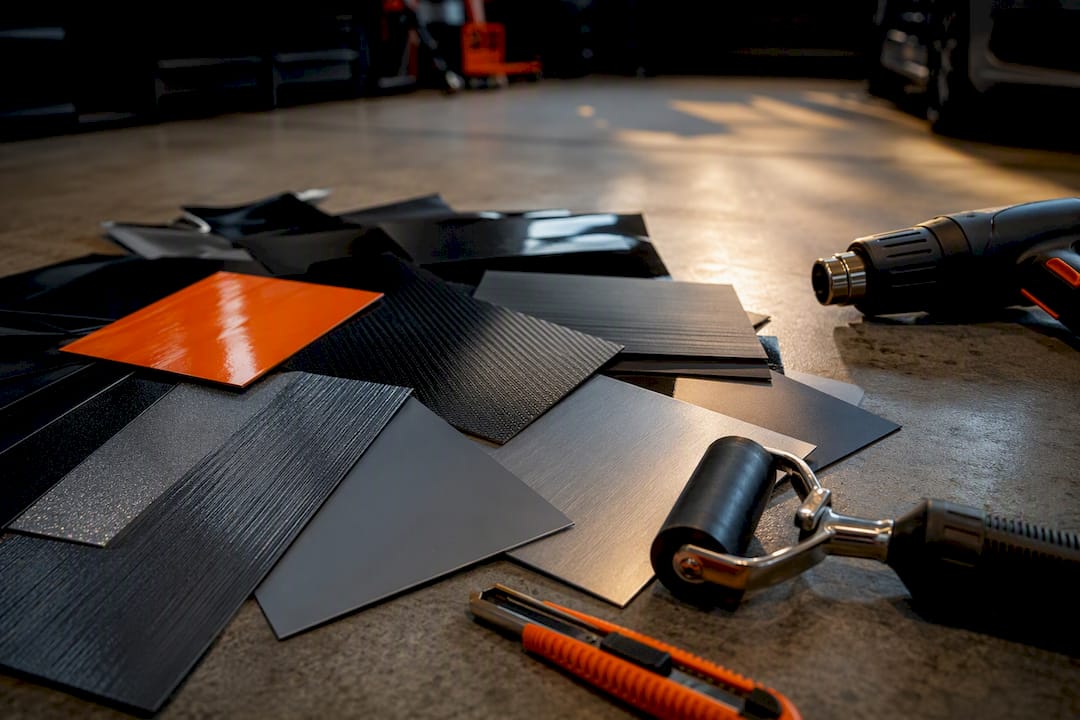
Labor is where box trucks get expensive compared to sedans or vans. A crew wrapping a flat-panel truck moves efficiently, but ribbed, riveted, or corrugated siding slows the install significantly, and some shops apply a per-square-foot surcharge for that extra time. Roll-up doors and multiple access panels add hours too.
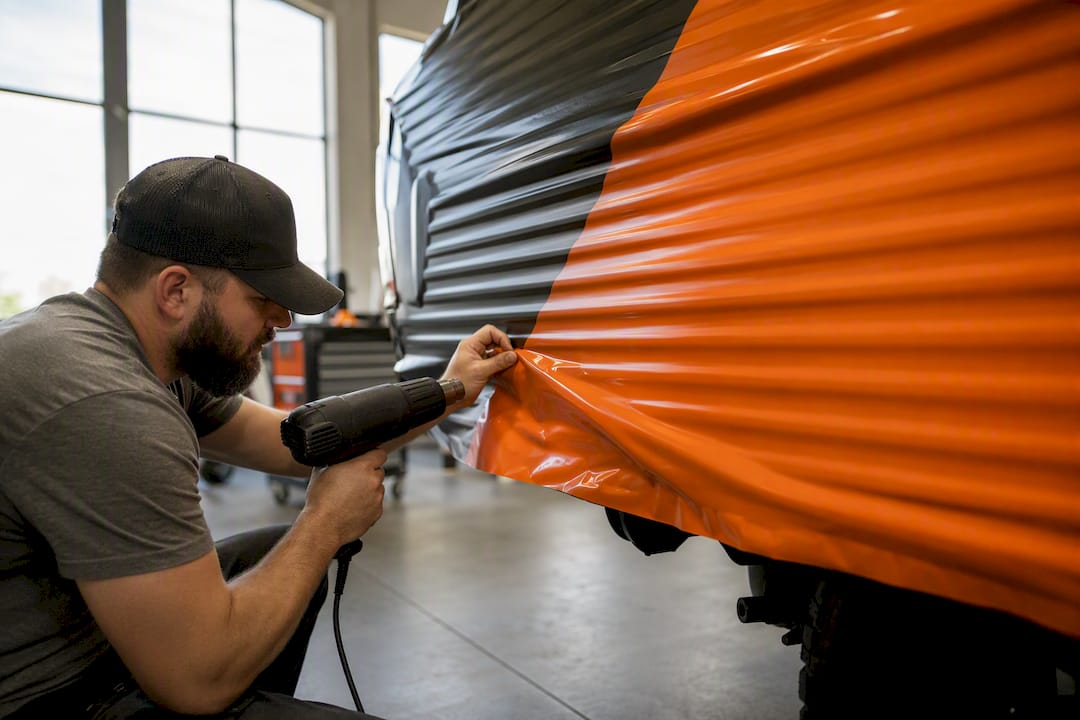
Design fees usually run as a flat rate for the first vehicle. For fleets ordering multiples of the same design, that cost dilutes fast since the template just gets reapplied.
Removal and prep get billed separately from the new install. Peeling off old, sun-baked vinyl and repairing chipped paint underneath adds a line item most first-time buyers don’t budget for.
Geography shifts labor rates in either direction, and fleet volume works the opposite way: order 10 or more trucks and expect a meaningfully lower per-vehicle rate than a single truck at retail pricing.
Pro Tip: Ask your installer whether their quote already accounts for vinyl waste from roll widths. Experienced shops build in a waste allowance rather than billing only the exact applied square footage, and that difference can explain a quote that looks “too good” compared to competitors.
How Long Does a Box Truck Wrap Last?
Premium cast vinyl from 3M or Avery Dennison typically holds up 5 to 7 years or more under normal U.S. weather conditions. Calendered vinyl, the budget alternative, usually lasts closer to 2 to 4 years before fading or cracking becomes noticeable. The gap in material cost is modest compared to the gap in lifespan, which is why cast film tends to be the better fleet investment over a truck’s full service life.
Before you sign off on any quote, confirm exactly what the warranty covers:
- Print durability against fading and cracking
- Laminate performance against UV and abrasion
- Installation workmanship, separate from material defects
- Exclusions for environmental damage like hail, vandalism, or improper washing
Simple habits stretch that lifespan further: regular washing removes grit that scratches the laminate, parking out of direct summer sun when possible slows fading, and repairing small chips or lifted edges quickly prevents them from spreading into a full panel replacement.
Sample Box Truck Wrap Quotes to Budget From
Real-world shop quotes give you a sharper sense of where your project will likely land than a national average alone. One shop’s published pricing lists a 15’ box truck partial wrap around $1,500–$2,500 and a full wrap around $4,500–$5,500, which tracks closely with the broader industry ranges.
A typical itemized breakdown for a 20’ full wrap might look like this:
- Material (cast vinyl, laminate): $1,800
- Design and template setup: $400
- Installation labor (2 techs, roughly 2 days): $2,600
- Old graphic removal: $350
- Total: approximately $5,150
| Truck Size | Full Wrap | Partial Wrap |
|---|---|---|
| 12’ | $3,200–$5,500 | $1,500–$2,500 |
| 15’ | $4,500–$5,500 | $1,500–$2,500 |
| 20’ | $5,500+ | $2,500–$3,500 |
| 26’ | $7,000–$10,000+ | $3,200–$5,500 |
Expect a bump if you’re in a major metro. Markets like New York City, Chicago, and Los Angeles often run 15% to 25% above national averages due to higher shop rent and labor costs.
How to Get an Accurate Box Truck Wrap Quote
Vague quotes lead to surprise invoices. Give shops enough detail up front and you’ll get numbers you can actually compare side by side.
- Send truck specs first. Make, model, year, box length, and whether it has roll-up doors or riveted panels.
- Provide photos of every side, plus the roof if you want a top wrap included.
- Flag existing graphics that need removal, and mention if the paint underneath is original or has known damage.
- Ask for an itemized breakdown, not a single lump number: vinyl brand and grade, laminate type, estimated labor hours, removal cost, and warranty terms.
- Confirm the install location. A climate-controlled indoor bay produces a cleaner, more durable result than an outdoor install exposed to dust and temperature swings.
Pro Tip: Ask to see photos of a similar box truck the shop has wrapped, ideally one with the same panel style as yours. Riveted trucks and flat aluminum trucks install very differently, and a portfolio that’s all sedans and vans tells you little about how they handle your specific surface.
Does Wrapping a Box Truck Affect Your Insurance?
A vinyl wrap itself generally doesn’t change your commercial auto insurance premium, but it can affect a claim if you’re not careful about how you handle documentation. Most standard commercial policies treat a wrap as an aftermarket addition similar to signage or a lift gate, meaning it may not be automatically covered under your base liability or collision policy.
Before you invest several thousand dollars in graphics, call your insurance agent and ask two specific questions: whether the wrap needs to be listed as a scheduled item or rider, and whether your policy’s total loss valuation accounts for wrap replacement cost if the truck is totaled or stolen. Some carriers will reimburse for the unamortized value of a recent wrap; others won’t mention it unless you ask.
It’s also worth keeping your itemized wrap invoice on file. If you ever need to file a claim after an accident that damages the graphics, having a dated receipt showing material grade and installation cost makes it far easier to get a fair settlement rather than a generic depreciation estimate. Fleet managers running multiple wrapped trucks sometimes negotiate a blanket endorsement covering all vehicles under one rider, which simplifies the paperwork considerably compared to filing separate riders truck by truck.
Negotiating Fleet Pricing on Multiple Box Truck Wraps
Ordering more than one truck is where you have the most real leverage in this whole process. Shops price design and setup as a mostly fixed cost, so the second, third, and tenth truck with the same template cost the shop far less to produce than the first one did, and a good vendor will pass some of that savings to you.
Ask directly for volume tiers rather than waiting for a shop to offer them. A common structure looks like a small discount for 2 to 4 vehicles, growing to a noticeably larger per-vehicle discount once you cross 10 trucks, since batch scheduling lets installers work more efficiently across the whole fleet.
Beyond straight discounts, negotiate on scheduling and payment terms too. Ask whether staggering installs over a few weeks, rather than demanding all trucks done in one week, gets you a better rate, since it lets the shop fit your fleet in around other jobs instead of clearing their whole schedule. If you’re planning to add trucks to the fleet over the next year or two, ask about locking in your current design and pricing for future vehicles rather than requoting from scratch each time.
Finally, get every negotiated term in writing, including what happens if a future truck in the batch has a different door configuration or added rust that needs extra prep. A verbal “we’ll work something out” on fleet pricing rarely survives contact with an actual invoice.
Why the Right Materials and Installer Matter More Than the Lowest Bid
Ten-plus years of wrapping commercial fleets across New Jersey has taught us that the cheapest quote on a box truck almost never turns out to be the cheapest outcome. Calendered vinyl installed in a dusty outdoor lot might save $800 up front, then need replacing in half the time.
We build our fleet pricing around cast films precisely because the math favors the buyer over a multi-year horizon, and we run every install through a climate-controlled bay for that reason.
— NJ Vinyl Wrapz
Get an Itemized Box Truck Wrap Quote
NJ Vinyl Wrapz gives fleet owners a real alternative to guessing at national averages: a quote built specifically around your trucks, your route conditions, and your timeline, using premium 3M and Avery Dennison films installed in a climate-controlled facility rather than an open lot. Every quote we send breaks out material grade, design, labor, and removal separately, so you know exactly what you’re paying for and can compare it against anyone else’s number.

Fleets ordering multiple trucks get volume-based pricing, and most standard box truck wraps turn around within a matter of days per vehicle rather than weeks, depending on panel complexity and design revisions. If you manage two trucks or twenty, start by sending us your specs and photos and request a detailed, itemized quote through our full vehicle wraps service page.
Key Takeaways
Box truck wrap cost scales primarily with truck length and coverage level, running from roughly $300 for basic lettering to $10,000 or more for a full wrap on a 26’ truck.
| Point | Details |
|---|---|
| Full wraps by size | Expect $3,200–$5,500 for a 12’ truck and $7,000–$10,000+ for a 26’ truck. |
| Partial wraps save money | Partial coverage runs about 40–60% of a full wrap and works well for rear or door-only branding. |
| Material grade drives lifespan | Cast vinyl from 3M or Avery lasts 5–7+ years versus 2–4 years for calendered vinyl. |
| Fleet volume unlocks discounts | Shops typically offer larger per-vehicle savings once orders exceed 10 trucks. |
| Get itemized quotes | Ask for material, design, labor, and removal broken out separately before comparing bids. |
| Work with an experienced installer | NJ Vinyl Wrapz builds fleet quotes around premium cast films and climate-controlled installation for longer-lasting results. |
Sources
- 3M — Vehicle wraps and graphics
- Avery Dennison — Supreme Wrapping Film
- How Much Does a Vehicle Wrap Cost? Full vs Partial — Complete Graphics
FAQ
How much does it cost to wrap a 24’ box truck?
A 24’ to 26’ box truck typically costs $7,000 to $10,000 or more for a full wrap, depending on panel complexity and material grade, or $3,200 to $5,500 for a partial wrap.
Is it cheaper to paint or wrap a truck?
Custom paint jobs on commercial trucks generally cost more upfront than a vinyl wrap and take longer to complete, while a wrap offers comparable visual impact at a lower price and can be removed without damaging the factory paint.
Is a 3M wrap worth the money?
Cast vinyl from 3M costs more per square foot than calendered vinyl, but it typically lasts 5 to 7 years or more against 2 to 4 years for cheaper film, which usually makes it the better value over a truck’s service life.
How long do wraps last on trucks?
Premium cast vinyl wraps last 5 to 7 years or longer under normal conditions, while budget calendered vinyl tends to fade or crack within 2 to 4 years.
What’s usually included in a box truck wrap quote?
A standard quote includes design, printing, and installation labor; removal of old graphics and paint repair are typically billed as separate line items.