
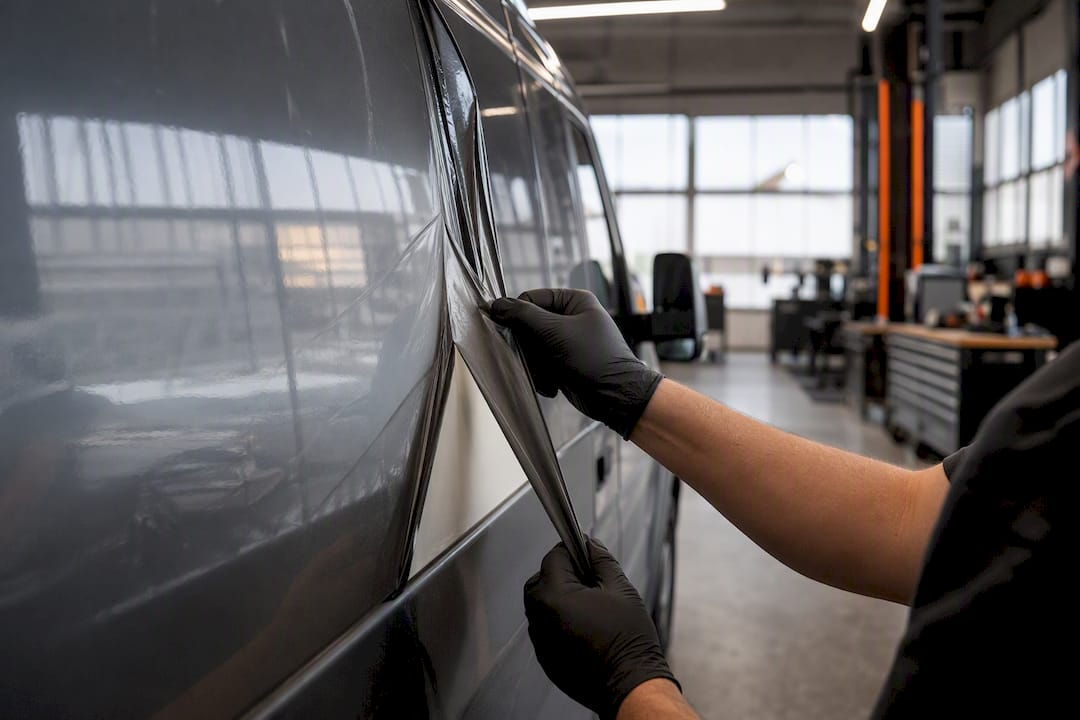
Professional wrap removal in the U.S. typically runs $300 to $1,200 for most passenger vehicles, with specialty films, chrome finishes, or wraps left on past their rated life pushing that toward $1,500 to $2,000. Hire a professional if the wrap is older than five years, involves textured or chrome vinyl, or covers a fleet vehicle. Fresh wraps on small panels are the only real candidates for a DIY attempt.
TL;DR:
- Wrap removal for most passenger vehicles costs between $300 and $1,200, with specialty films and older wraps increasing the price to over $1,500.
- Wrapping material type, age, and vehicle complexity significantly impact removal difficulty and cost, often requiring professional equipment and expertise.
- DIY removal may take 8 to 20 hours and risks damaging paint, especially on older, baked-on wraps, making professional removal advisable for most cases.
- Additional charges for adhesive cleanup, paint decontamination, or partial-panel removal can add hundreds of dollars to the initial estimate.
- Accurate quotes require detailed photos, vehicle information, and a clear understanding of hidden costs, with reputable shops providing written, itemized estimates.
Table of Contents
- How Much Does Wrap Removal Cost by Vehicle Type?
- What Drives Wrap Removal Cost Up or Down?
- Should You Remove a Wrap Yourself or Hire a Pro?
- How Long Does Wrap Removal Actually Take?
- What Extra Charges Show Up on a Wrap Removal Quote?
- How Do You Get an Accurate Wrap Removal Quote?
- Why Shop Credentials Matter for Wrap Removal
- The Real Cost Conversation Nobody’s Having
- Ready to Get a Written Estimate on Your Wrap Removal?
- Sources
- FAQ
How Much Does Wrap Removal Cost by Vehicle Type?
Shop quotes hinge on three things: how big the vehicle is, how old the wrap is, and what kind of film went on in the first place. A wrap that’s been baking in New Jersey sun for six summers behaves nothing like one installed eight months ago, and the price reflects that.
Here’s a realistic breakdown based on typical U.S. shop rates:
| Vehicle Type | Low | Average | High |
|---|---|---|---|
| Compact sedan | $300 | $300 to $1,200 | $300 to $1,200 |
| Midsize SUV/crossover | $450 | $300 to $1,200 | $300 to $1,200 |
| Full-size truck or van | $600 | $300 to $1,200 | $1,500 to $2,000 |
| Specialty film (chrome, textured, color-shift) | $300 to $1,200 | $1,500 to $2,000 | $2,000+ |
These figures assume a shop rate in the standard range, a wrap under five years old, and a vehicle with reasonably standard trim. Add a decade-old wrap, a dozen badges and mirrors to work around, or a matte finish that’s turned brittle, and you land at the top of each bracket or beyond it.
Three quick scenarios make this concrete. A three-year-old cast-vinyl wrap on a Honda Civic runs close to the compact sedan average, maybe $450 to $600. A midsize SUV with a five-year-old calendared wrap and some sun-baked panels lands closer to $800. A full-size box truck wrapped in textured or chrome film that’s been on for seven years can realistically hit $1,800, especially with fleet-standard trim pieces to navigate around. Real quote data on Yelp confirms this kind of local and job-specific variation, which is exactly why photo-based estimates beat phone quotes every time.
What Drives Wrap Removal Cost Up or Down?
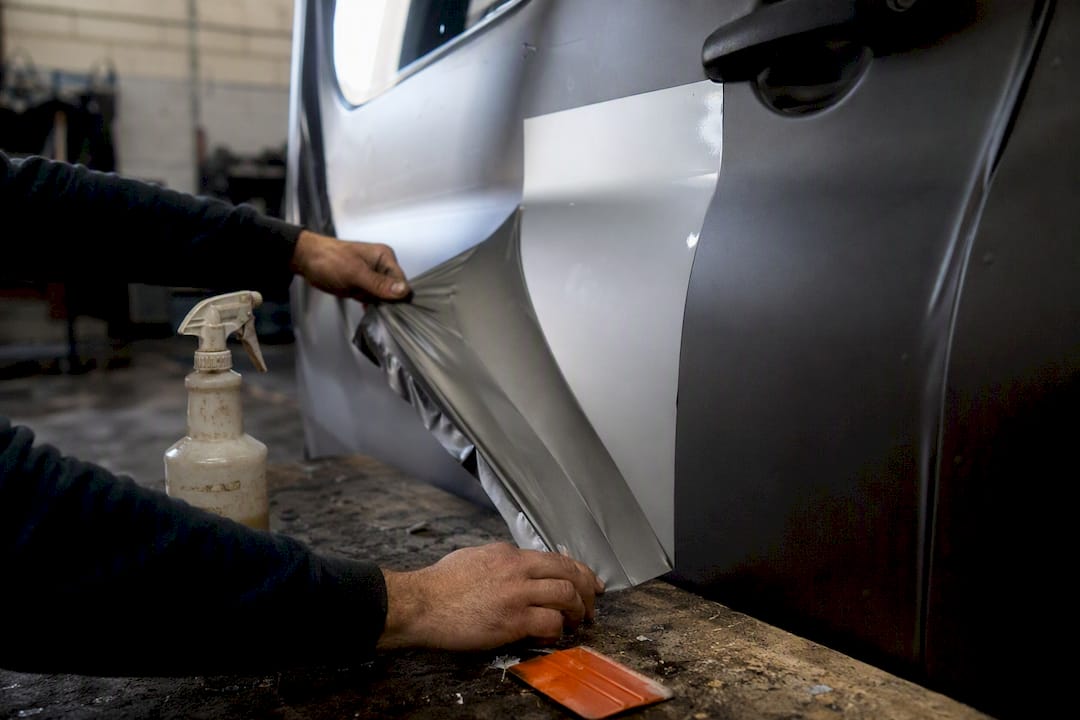
Not all wraps come off the same way, and the differences aren’t cosmetic. They’re mechanical.
- Film type matters more than most people expect. Cast vinyl is thinner and more conformable, which makes it excellent for curves and rivets, but it can also bond more stubbornly over time. Calendared film, the thicker, more affordable option often used for shorter-term wraps, tends to lift more predictably.
- Adhesive hardens with age. Somewhere around the five to seven year mark, UV exposure and heat cycling bake adhesive into a harder bond. That single factor accounts for a large share of the labor-hour swings between a “quick job” and a “long day.”
- Vehicle complexity adds real time. Badges, side mirrors, door handles, roof racks, and body kit trim all require careful hand work instead of a heat gun and a fast pull.
- Regional labor rates shift the baseline. Hourly shop rates commonly run $40 to $150 depending on region, with the Northeast and West Coast typically running above the national average.
Should You Remove a Wrap Yourself or Hire a Pro?
DIY removal looks tempting on paper. Tools and chemicals run roughly $100 to $300, and you skip the labor bill entirely. The catch is time and risk: a full DIY job on a passenger vehicle often takes 8 to 20-plus hours for someone doing it for the first time, compared with 3 to 8 hours for a trained technician working with the right heat and pull angle.
The bigger issue is what happens when it goes wrong. Aggressive scraping, an overheated panel, or the wrong solvent can strip clear coat or leave etching that costs far more to fix than the removal would have cost a shop in the first place. Improper technique is one of the most common causes of paint damage reported across the industry, and it’s rarely reversible without a repaint.
- DIY is reasonable when: the wrap is under a year old, you’re only removing a small panel or decal, and the paint underneath isn’t a delicate factory clear coat.
- Stop and call a pro when: the wrap is over five years old, the vehicle is leased (residue on a lease return gets billed to you), or you notice bubbling, edge lifting, or a film that tears instead of peeling.
- Before you start: test a hidden corner with low heat first, and never use a metal blade or razor directly against paint.
How Long Does Wrap Removal Actually Take?
Most full-vehicle jobs take several hours from start to finish. Difficult cases, old adhesive, specialty film, heavy trim, can stretch that to 12 hours or more.
- A standard sedan or SUV with a wrap under five years old: 3 to 5 hours.
- A full-size truck or van with average complexity: 5 to 8 hours.
- Chrome, textured, or badly aged wraps: 8 to 12-plus hours, sometimes split across two days.
- Fleet jobs run faster per vehicle once a shop standardizes the process, since technicians repeat the same panel sequence across similar vehicle models.
A typical appointment includes prep and masking, heated removal panel by panel, adhesive cleanup, and a final inspection with spot polishing on any problem areas.
What Extra Charges Show Up on a Wrap Removal Quote?
The base removal price rarely covers everything. Ask specifically about these before you agree to a number.
- Adhesive remediation: $100 to $300, and it’s often the single biggest hidden cost on older wraps with heavily baked-on residue.
- Paint decontamination or light polish: $75 to $200 to clear haze, residue shadows, or light oxidation revealed once the vinyl comes off.
- Partial-panel removal: roughly $75 to $300 per panel depending on size, with a real risk of a visible seam or color mismatch if the rest of the wrap is faded and only one section comes off.
- Optional add-ons: post-removal ceramic coating to protect bare paint, plus rush or weekend surcharges at many shops.
How Do You Get an Accurate Wrap Removal Quote?
Vague quotes lead to surprise invoices. A shop that can’t give you a real number from photos alone is one to be cautious about.
- Send clear, well-lit photos of every panel, including close-ups of any bubbling, edge lifting, or peeling corners.
- Include the vehicle’s year, make, and model, plus your best estimate of the wrap’s age.
- Ask for the shop’s hourly rate and their estimated hour range for your specific vehicle.
- Confirm whether adhesive remediation and paint inspection are included or billed separately.
- Ask about warranty coverage on the workmanship and whether the shop carries liability insurance.
- Request references or examples of similar removal jobs, especially if your wrap uses chrome or textured film.
- Get the estimate in writing, itemized by labor, adhesive removal, and any polish or decontamination work.
- If you’re removing wraps from multiple vehicles, ask how the shop handles fleet scheduling and whether they guarantee consistent results across the batch.
Pro Tip: Push for a written, itemized estimate before any tools touch your vehicle. A flat number with no breakdown almost always means adhesive remediation or polish work gets added later as a “surprise.”
Why Shop Credentials Matter for Wrap Removal
NJ Vinyl Wrapz has spent over 10 years pulling wraps off everything from personal sedans to 40-vehicle commercial fleets, and that experience shows up in details most car owners never think to ask about. The shop is licensed and insured, works with 3M and Avery materials, and removes wraps inside a climate-controlled facility where temperature and humidity stay consistent regardless of the season outside.
That control matters mechanically. Reputable technicians monitor surface temperature during removal to avoid overheating clear coat, and they match solvent choice to the specific adhesive rather than reaching for whatever’s on the shelf. For fleet debranding jobs, that same discipline gets applied vehicle after vehicle, so paint condition stays consistent whether it’s the first van in the lot or the twentieth.
The Real Cost Conversation Nobody’s Having
Most cost guides treat wrap removal like a fixed menu item: pick your vehicle size, get your number. That’s backwards. The single biggest lever in this whole conversation is timing, not vehicle size. A wrap pulled at year three costs meaningfully less to remove than the same wrap pulled at year seven, because adhesive chemistry does the damage, not the vinyl itself.
The conventional advice to “just get a few quotes” also misses something. Quotes without photos are guesses, and guesses on adhesive condition are where budgets blow up mid-job. If there’s one thing worth prioritizing above all the line items in this guide, it’s sending real photos before you ever ask for a number. That single step turns a rough estimate into a reliable one.
Where most guides also fall short is on the DIY math. The tool cost looks cheap until you factor in 15 hours of your own labor and the real possibility of a $600 paint repair. Run that math honestly before deciding removal is a weekend project.
— NJ Vinyl Wrapz
Ready to Get a Written Estimate on Your Wrap Removal?
Skip the guesswork of a phone quote. NJ Vinyl Wrapz offers photo-based estimates and in-person inspections backed by 3M and Avery material partnerships, licensed and insured operations, and a climate-controlled facility built for clean, damage-free removal across New Jersey, Pennsylvania, New York, and Delaware.
Send a few clear photos of your vehicle and you’ll get back an itemized written quote covering estimated labor hours, adhesive remediation if needed, and any recommended paint decontamination. If you’re planning to re-wrap right after removal, NJ Vinyl Wrapz’s full vehicle wrap services use the same premium materials and climate-controlled install process. Reach out today to schedule your inspection and get a real number instead of a rough guess.
Sources
Car wrap removal cost guide for U.S. buyers — Cost Insider; Vinyl wrap removal cost and process guide — Gilroy Blackout; How much does vehicle wrap removal cost? — Yelp; Safely remove fleet wraps without damaging paint — Craftsmen Ind; How to remove swirl marks from your car’s paint
- Car wrap removal cost guide for U.S. buyers — Cost Insider
- How much to get a car wrap taken off
- The ultimate guide to vehicle wrap removal — Wrap Wisdom / CarWrapInfo
- How much does vehicle wrap removal cost? — Yelp
FAQ
How much should I expect to pay for wrap removal?
Most professional jobs run $300 to $1,200, with specialty films or wraps older than five years pushing toward $1,500 to $2,000.
How difficult is it to remove a car wrap?
It’s more time-consuming than difficult: expect 3 to 8 hours for a trained technician and potentially 8 to 20-plus hours for a first-time DIY attempt, with real risk of paint damage if heat or solvent use goes wrong.
Does a car lose value if you wrap it?
A wrap itself doesn’t reduce value and can actually protect the factory paint underneath, but poor installation or improper removal that damages the clear coat can hurt resale value.
Can I remove my own car wrap?
You can attempt it on a small panel or a wrap under a year old, but wraps older than five years, leased vehicles, or specialty films are better left to a professional to avoid costly paint repairs.